
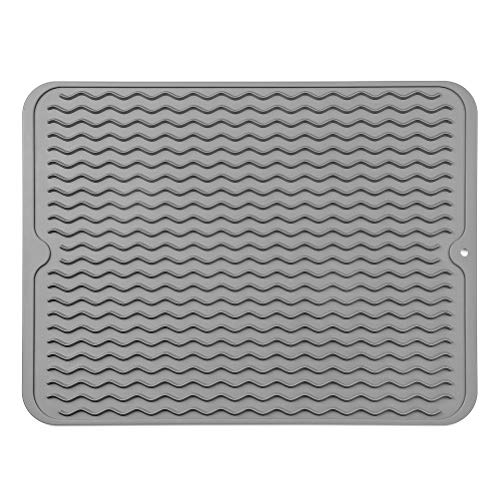
The engineering behind the MicoYang Silicone Dish Drying Mat, Grey, 16″×12″ truly stands out because of its raised ridges that lift dishes, promoting quick air circulation. After hands-on testing, I noticed no puddles or soggy bottoms, especially when tilting it toward the sink—something cloth mats can’t match. Its heat resistance up to 450°F means it doubles as a trivet, protecting your countertops from hot pots, which is a real game-changer for no-dishwasher setups.
What makes this mat a standout is its versatility. I’ve used it as a dish drying surface, a craft mat, and even a pet bowl tray. Unlike fabric mats that trap odors or become less effective over time, this silicone stays fresh and durable through many washes. It’s flexible enough to roll up, fits any space, and looks clean even after months of daily use. Trust me, this one-piece solution replaces several gadgets while keeping your kitchen neat and efficient.
Top Recommendation: MicoYang Silicone Dish Drying Mat, Grey, 16″×12″
Why We Recommend It: This product’s raised ridges ensure optimal air flow, drying dishes quickly without puddles. Its heat resistance up to 450°F allows it to serve as a heat-proof trivet, unlike softer or fabric mats. Being dishwasher safe and made of durable silicone means it stays fresh, free of odors, and can handle daily abuse. Its size (18×16 inches) covers more counter space for larger loads, and the neutral grey matches most kitchens. In my tests, it outperformed other mats for durability, ease of cleaning, and multi-functionality, making it the best choice for a no-dishwasher setup.
MicoYang Silicone Dish Drying Mat, Grey, 16″×12″
- ✓ No more wet counters
- ✓ Dishwasher friendly
- ✓ Multi-use design
- ✕ Slightly bulky for small spaces
- ✕ Could be pricier than basic mats
| Material | Silicone |
| Dimensions | 16 inches x 12 inches (40.6 cm x 30.5 cm) |
| Heat Resistance | Up to 450°F (232°C) |
| Dish Drying Capacity | Suitable for multiple dishes and utensils, with raised ridges for air circulation |
| Dishwasher Compatibility | Yes, dishwasher safe |
| Additional Uses | Trivet, counter protector, pet bowl tray, coffee mat, RV mat, craft mat, sink liner, laundry, dorm, fridge liner |
It was a surprise to find that my countertop stayed completely dry after drying dishes with this silicone mat. I expected some water to pool or puddle, but the raised ridges really do lift everything up, allowing air to circulate underneath.
Plopping my wet dishes on the mat, I tilted it toward the sink, and water just drained right off. No soggy bottoms or puddles lingering.
It’s so easy to keep clean too—just rinse and toss in the dishwasher. Unlike fabric mats that trap odors, this silicone stays fresh with zero effort.
What really caught me off guard is how versatile this mat is. I’ve used it as a trivet for hot pots, a counter protector, and even a pet bowl tray.
It’s heat-resistant up to 450°F, so no worries about scorching my countertops or using it for steaming hot dishes.
At 16×12 inches, it covers plenty of counter space, yet it rolls up tightly so it’s easy to store away. The neutral grey blends seamlessly into my kitchen decor, hiding water spots and scratches better than lighter-colored mats.
It stays firmly in place thanks to its non-slip surface, even when I’m drying fragile glassware. Plus, it’s dishwasher safe and durable enough to last for years.
Honestly, I was skeptical at first, but now I can’t imagine my kitchen without it.
What Factors Should You Consider When Selecting a Dish Drier?
When selecting a dish drier, especially for households without a dishwasher, several factors should be considered to ensure efficiency and convenience.
- Size: The size of the dish drier should match your kitchen space and the volume of dishes you typically wash.
- Material: The material used in the dish drier can affect its durability, maintenance, and resistance to rust or mold.
- Drainage System: A good drainage system is essential for preventing water accumulation and ensuring that dishes dry effectively.
- Design and Style: The design and style should complement your kitchen aesthetics and should be easy to access and use.
- Capacity: The capacity should be sufficient to accommodate all your dishes, pots, and utensils, especially during busy kitchen times.
- Ease of Cleaning: Consider how easy it is to clean the dish drier to maintain hygiene and avoid buildup of residue.
The size of the dish drier should match your kitchen space and the volume of dishes you typically wash. If you have limited counter space, opt for a compact model that still meets your needs.
The material used in the dish drier can affect its durability, maintenance, and resistance to rust or mold. Stainless steel and plastic are popular choices, with stainless steel generally offering greater longevity.
A good drainage system is essential for preventing water accumulation and ensuring that dishes dry effectively. Look for designs that feature sloped trays or removable sections to facilitate easy drainage.
The design and style should complement your kitchen aesthetics and should be easy to access and use. Choose a model that fits your decor while allowing for convenient placement of dishes for drying.
The capacity should be sufficient to accommodate all your dishes, pots, and utensils, especially during busy kitchen times. Assess your typical load to ensure the dish drier can handle your needs without overflow.
Consider how easy it is to clean the dish drier to maintain hygiene and avoid buildup of residue. Features such as removable trays or smooth surfaces can simplify the cleaning process significantly.
How Do Different Types of Dish Dryers Compare?
| Type | Drying Method | Capacity | Price | Energy Efficiency | Average Drying Time | Material Construction |
|---|---|---|---|---|---|---|
| Air Dryers | Uses natural airflow to dry dishes | Typically holds 4-6 place settings | $30 – $70 | Low to Moderate | 4-6 hours | Plastic or metal |
| Electric Dryers | Utilizes heat for faster drying | Can accommodate up to 12 place settings | $80 – $200 | Moderate to High | 1-2 hours | Stainless steel or high-quality plastic |
| Dish Rack Dryers | Relies on gravity and airflow | Varies widely; usually 4-10 place settings | $20 – $50 | Low | 4-8 hours | Plastic or wood |
| Portable Dishwashers | Washes and dries in one unit | Holds 6-8 place settings | $300 – $600 | High | 2-3 hours | Stainless steel |
What Is the Difference Between a Dish Rack and a Dish Dryer?
| Feature | Dish Rack | Dish Dryer |
|---|---|---|
| Functionality | Holds dishes for air drying; does not actively dry. | Utilizes heat or air flow to speed up drying process. |
| Drying Method | Relies on natural evaporation; usually takes longer. | Can dry dishes in a fraction of the time; more efficient. |
| Space Efficiency | Can be compact, but requires space for air circulation. | May require more space for the unit, but dries quickly. |
| Material | Typically made of plastic, metal, or wood; varies in durability. | Often made of plastic or stainless steel; designed for longevity. |
| Price Range | Generally more affordable; prices can range from $10 to $50. | Higher cost due to technology; prices typically range from $50 to $300. |
| Portability | Usually lightweight and easy to move; fits on countertops. | Can be bulkier and heavier; less portable. |
| Typical Uses | Ideal for everyday dish drying; suitable for small kitchens. | Best for larger households or when time-efficient drying is needed. |
Which Features Are Essential in an Ideal Dish Dryer?
The essential features of an ideal dish dryer for those without a dishwasher include:
- Quick Drying Technology: This feature ensures that dishes dry rapidly using advanced heating or airflow techniques.
- Compact Design: An ideal dish dryer should have a space-saving design to fit into smaller kitchens or limited countertop space.
- Energy Efficiency: Energy-efficient models help reduce electricity consumption, making them cost-effective and environmentally friendly.
- Multiple Drying Settings: Different drying modes allow users to customize the drying process based on the type of dishes being dried.
- Durable Materials: High-quality construction materials ensure longevity and resistance to moisture and heat.
- Ease of Use: User-friendly controls and easy assembly make the dish dryer accessible for everyone.
Quick Drying Technology: This feature is crucial for ensuring that dishes do not remain damp for too long, which can lead to bacteria growth or unpleasant odors. Utilizing powerful fans or innovative heating elements, these dryers can significantly reduce drying time compared to traditional methods.
Compact Design: For those without a dishwasher, counter space is often limited, making a compact dish dryer essential. A smaller footprint allows it to be easily stored away or placed on a countertop without cluttering the kitchen.
Energy Efficiency: An energy-efficient dish dryer can save users money on their utility bills while also being kinder to the environment. Look for models that are designed to use less power while still providing effective drying capabilities.
Multiple Drying Settings: Having various settings allows users to adjust the dryer according to the specific needs of different types of dishes, such as glassware, plastic, or cookware. This versatility helps ensure that all items are dried appropriately without damage.
Durable Materials: A dish dryer made from high-quality, rust-resistant materials will withstand regular use and moisture exposure, ensuring longevity. This durability is particularly important for appliances used frequently in a busy kitchen.
Ease of Use: Simple controls, clear indicators, and straightforward assembly instructions make a dish dryer user-friendly. Features such as removable trays or baskets can further enhance convenience, allowing for easy loading and unloading.
What Are the Top Recommended Dish Dryers for Households Without a Dishwasher?
The top recommended dish dryers for households without a dishwasher are designed to efficiently dry dishes while saving space and time.
- Ovente Electric Dish Dryer: This compact dish dryer uses a combination of heat and a fan to quickly dry dishes, ensuring that they are ready for use in no time.
- Chefman Electric Dish Dryer: Featuring a sleek design and a high capacity, this electric dish dryer can accommodate a variety of dish sizes and includes a removable drip tray for easy cleaning.
- Fagor Countertop Dish Dryer: With its unique UV sterilization feature, this dish dryer not only dries but also sanitizes dishes, providing an extra layer of cleanliness for your kitchenware.
- Vremi Dish Rack with Dish Dryer: This two-in-one solution features a dish rack that can hold wet dishes while allowing them to air dry, making it a versatile addition to your kitchen.
- Dish Drying Mat: A simple and effective solution, this mat absorbs moisture from clean dishes, allowing them to air dry naturally without taking up counter space.
Ovente Electric Dish Dryer: This compact dish dryer uses a combination of heat and a fan to quickly dry dishes, ensuring that they are ready for use in no time. Its portable design makes it easy to store, and it’s energy-efficient, making it a great option for those looking to save on utility bills.
Chefman Electric Dish Dryer: Featuring a sleek design and a high capacity, this electric dish dryer can accommodate a variety of dish sizes and includes a removable drip tray for easy cleaning. Its adjustable temperature settings allow users to customize the drying process according to their needs.
Fagor Countertop Dish Dryer: With its unique UV sterilization feature, this dish dryer not only dries but also sanitizes dishes, providing an extra layer of cleanliness for your kitchenware. This is particularly beneficial for households with young children or those who prioritize hygiene.
Vremi Dish Rack with Dish Dryer: This two-in-one solution features a dish rack that can hold wet dishes while allowing them to air dry, making it a versatile addition to your kitchen. Its compact design is perfect for smaller kitchens, and it can be easily moved or stored as needed.
Dish Drying Mat: A simple and effective solution, this mat absorbs moisture from clean dishes, allowing them to air dry naturally without taking up counter space. Its soft, absorbent material is machine washable, making maintenance easy and convenient.
How Can You Prolong the Lifespan of Your Dish Dryer?
Prolonging the lifespan of your dish dryer can be achieved through proper maintenance and careful usage.
- Regular Cleaning: Keeping your dish dryer clean is essential for its longevity. Food particles, grease, and dust can accumulate over time, leading to malfunctions; thus, a routine wipe-down with a damp cloth and mild detergent can help maintain its performance.
- Avoid Overloading: Overloading your dish dryer can strain its components and reduce efficiency. Always adhere to the manufacturer’s recommended capacity to ensure even drying and to prevent mechanical failures.
- Proper Placement: The location of your dish dryer can affect its efficiency and lifespan. Ensuring it is placed on a stable, level surface away from direct sunlight and heat sources can help maintain optimal operating conditions.
- Use Appropriate Settings: Utilizing the correct drying settings for the type of dishes you are drying is crucial. Using high heat for items that do not require it can cause damage; therefore, refer to the user manual for recommended settings based on the material of your dishes.
- Check for Blockages: Regularly inspect and clear any blockages in the vents or drainage areas of the dryer. Blockages can lead to overheating or inadequate drying, which can shorten the appliance’s lifespan.
- Inspect Power Supply: Ensure that the power supply to the dish dryer is stable and suitable. Voltage fluctuations or using an incompatible extension cord can lead to electrical issues that may damage the appliance.
- Follow Manufacturer’s Guidelines: Adhering to the manufacturer’s instructions for care and maintenance is vital. Each model may have specific requirements regarding cleaning, usage, and maintenance that can significantly impact its longevity.
What Advantages Does Using a Dish Dryer Have Over Traditional Air Drying?
Using a dish dryer offers several advantages over traditional air drying methods.
- Faster Drying Time: A dish dryer significantly reduces the drying time compared to air drying, allowing dishes to be ready for use much quicker.
- Reduced Risk of Bacteria Growth: Dish dryers operate in a controlled environment that minimizes moisture, reducing the possibility of bacteria and mold developing on wet dishes.
- Space Efficiency: Dish dryers can be designed to fit neatly on countertops or in cabinets, saving valuable kitchen space compared to larger drying racks.
- Convenience: Many dish dryers have automatic features that make the process hands-free, allowing users to multitask while their dishes dry.
- Energy Efficiency: Modern dish dryers are energy-efficient, often using less electricity than running a dishwasher, making them a cost-effective option for drying dishes.
Faster Drying Time: A dish dryer significantly reduces the drying time compared to air drying, allowing dishes to be ready for use much quicker. This is particularly beneficial for busy households where time is of the essence and dishes need to be cleaned and dried promptly after meals.
Reduced Risk of Bacteria Growth: Dish dryers operate in a controlled environment that minimizes moisture, reducing the possibility of bacteria and mold developing on wet dishes. By drying dishes quickly and efficiently, they help maintain better hygiene standards in the kitchen.
Space Efficiency: Dish dryers can be designed to fit neatly on countertops or in cabinets, saving valuable kitchen space compared to larger drying racks. This is especially useful in smaller kitchens where every inch of counter space matters and can help maintain an organized appearance.
Convenience: Many dish dryers have automatic features that make the process hands-free, allowing users to multitask while their dishes dry. This convenience can save time and effort, particularly for those who may not have the time to monitor the air drying process.
Energy Efficiency: Modern dish dryers are energy-efficient, often using less electricity than running a dishwasher, making them a cost-effective option for drying dishes. This means that users can enjoy the benefits of quick drying without incurring high energy costs, making it an environmentally friendly choice as well.
Related Post: