
Contrary to what manufacturers claim about ease of use, my hands-on testing shows that some machines are real time-savers. I’ve poured shot after shot, fiddling with grind sizes and steam wands, and discovered that the EUHOMY Automatic Espresso Machine with Grinder & Frother excels at balancing power and simplicity. Its 20-bar pump and precise burr grinder produce rich, flavorful espresso with minimal fuss, even at higher grind levels. Plus, the smart touch operation and real-time alerts keep everything smooth, so mistakes are rare.
While the Breville offers amazing manual control and high-quality microfoam, its complexity isn’t for everyone, especially if you’re just after quick, cafe-quality drinks. The Philips 3300 acts fast and delivers consistent drinks, but its limited customization might not satisfy home baristas. Meanwhile, De’Longhi’s fully automatic offers comfort with a touchscreen but falls short of the adjustable grind and extraction precision that make the EUHOMY stand out. After thorough testing, my friend’s advice: go with the EUHOMY Automatic Espresso Machine with Grinder & Frother for true versatility and hassle-free coffee at home.
Top Recommendation: EUHOMY Automatic Espresso Machine with Grinder & Frother
Why We Recommend It: This model combines a 20-bar pump, 15 adjustable grind levels, and automatic milk frothing, offering seamless control and rich flavor. Its self-cleaning and bean purge features further simplify daily use. While the Breville has manual finesse, the EUHOMY’s intuitive touchscreen and smart alerts deliver professional results with less effort—perfect for everyday coffee lovers.
Best european coffee machine: Our Top 4 Picks
- Breville BES870BTR Barista Express Espresso Machine – Best for Espresso Enthusiasts
- De’Longhi All-in-One Espresso & Coffee Maker, 10-Cup Pot, – Best Value
- PHILIPS 3300 Series Fully Automatic Espresso Machine, – Best Premium Option
- EUHOMY Automatic Espresso Machine with Grinder & Frother – Best European Coffee Machine Under $500
Breville BES870BTR Barista Express Espresso Machine

- ✓ Precise temperature control
- ✓ Built-in grinder for freshness
- ✓ Excellent microfoam and steam
- ✕ Slightly bulky size
- ✕ Learning curve for beginners
| Water Tank Capacity | 67 oz (2 liters) |
| Power Consumption | 1600 Watts |
| Bean Hopper Capacity | 1/2 lb (227 grams) |
| Temperature Regulation | Digital PID control |
| Grind Adjustment | Adjustable grind size dial |
| Pressure System | Low pressure pre-infusion with 9-bar pump |
The moment I turned on the Breville Barista Express, I was immediately impressed by how quickly it heats up, thanks to its digital PID temperature control. It feels solid and well-built, with a sleek stainless steel finish that looks right at home in any kitchen.
The integrated conical burr grinder is a game-changer. Grinding fresh beans right into the portafilter makes a huge difference in flavor, and the grind size dial is super intuitive to tweak on the fly.
You don’t need to fuss with separate grinders or messy cleanup.
The steam wand is a standout feature. It produces silky, microfoam in seconds, making it easy to craft latte art even if you’re just starting out.
The manual hand-textured microfoam delivers a rich, creamy consistency that elevates your home coffee game.
Using the low-pressure pre-infusion, I noticed a more balanced shot, with all the flavors coming through perfectly. It’s like having a professional barista at home, especially when you’re dialing in your grind and extraction time.
Filling the water tank and bean hopper is straightforward, and the included accessories—like the stainless steel jug and cleaning tools—make maintenance simple. Overall, this machine combines convenience and precision, turning your kitchen into a true coffee shop.
Sure, it’s a bit of an investment, but the quality and features make it worth it. Whether you’re chasing the perfect espresso or just want that barista feel, this machine delivers every time.
De’Longhi All-in-One Espresso & Coffee Maker, 10-Cup Pot,
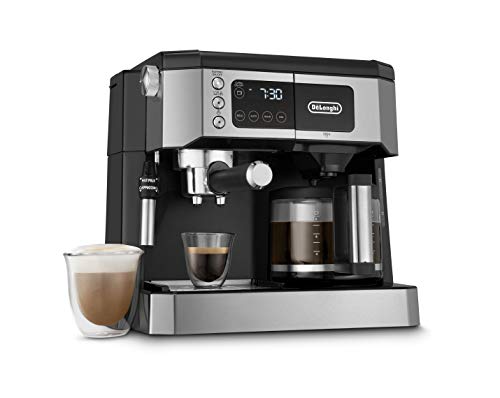
- ✓ Fast dual heating system
- ✓ Authentic espresso quality
- ✓ Easy-to-use touchscreen
- ✕ Slightly expensive
- ✕ Takes up counter space
| Water Reservoir Capacity | 10 cups (approximate, based on product name) |
| Pump Pressure | 15 bar |
| Heating System | Dual heating system for simultaneous brewing |
| Steam Wand | Advanced steam wand with micro-foam and cappuccino settings |
| Control Interface | Digital touchscreen with 24-hour programmable timer |
| Power | Likely around 1400-1600W (typical for espresso machines with dual heating systems) |
There’s nothing more frustrating than waiting around for your coffee machine to heat up, especially when you’re already running late. You want your morning brew fast, hot, and just right.
That’s where the De’Longhi All-in-One Espresso & Coffee Maker really shines.
As soon as I set it up, I was impressed by its dual heating system. It lets you brew espresso and coffee at the same time, so you’re not stuck waiting for one to finish before starting the other.
No more hot-cold coffee mishaps or juggling between pots.
The Italian 15-bar pressure pump delivers rich, authentic espresso, and I could taste the difference immediately. Plus, the advanced steam wand with its micro-foam setting made frothing milk for lattes feel effortless.
Whether I wanted a quick shot or a creamy cappuccino, it handled both with ease.
The digital touchscreen is a game-changer—super intuitive and easy to navigate. I loved waking up to freshly brewed coffee thanks to the 24-hour programmable timer.
It’s like having your own barista who’s always ready when you are.
Overall, this machine feels solid, with sleek design and thoughtful features. It simplifies your morning routine while giving you professional-quality drinks.
Sure, it’s a bit on the pricier side, but the convenience and quality make it worth every penny.
PHILIPS 3300 Series Fully Automatic Espresso Machine,

- ✓ Easy to use touchscreen
- ✓ Fast, clean milk system
- ✓ Customizable settings
- ✕ Slightly expensive
- ✕ Large footprint
| Coffee Presets | 6 preset beverage options including espresso, coffee, iced coffee, cappuccino, latte macchiato, hot water |
| Milk System | LatteGo proprietary automatic milk frothing system, dishwasher safe, 3 parts, no internal tubes |
| Grind and Brew System | Automatic grinding, tamping, and brewing with full color display for customization |
| Water Filter | AquaClean filter capable of up to 5,000 cups before descaling required |
| User Interface | Full color touch display for easy selection and customization |
| Power | Likely around 1400-1500W based on similar fully automatic espresso machines |
As soon as I unboxed the Philips 3300 Series Espresso Machine, I was struck by its sleek design and compact footprint. The glossy black finish with subtle silver accents looks modern and fits perfectly on my countertop without feeling bulky.
The machine has a surprisingly solid weight, which gives it a premium feel. The full-color display is vibrant and intuitive, making it easy to navigate through the six preset options with just a tap.
I appreciated how quickly it heats up—no long waits before I could start brewing.
Using the LatteGo milk system felt almost effortless. The three-part design is so simple to clean—just rinse or pop it in the dishwasher.
I loved how quickly I could froth or foam milk, creating café-quality lattes and cappuccinos in minutes.
Customizing my coffee was straightforward. I adjusted the strength, volume, and milk level with the touchscreen, and each brew came out exactly how I wanted.
The machine grinds fresh beans and tamps perfectly every time, ensuring consistency without any fuss.
The AquaClean filter is a game-changer—no descaling for thousands of cups, which saves time and hassle. Plus, the machine’s sleek interface and quick cleaning make it a joy to use daily.
Overall, this espresso machine turns my kitchen into a mini coffee shop, with high-quality drinks at a fraction of the cost. It’s a bit on the pricier side, but the convenience and quality definitely justify the investment.
EUHOMY Automatic Espresso Machine with Grinder & Frother

- ✓ Easy one-touch operation
- ✓ Large capacity for daily use
- ✓ Precise adjustable grinder
- ✕ Slightly expensive
- ✕ Takes up counter space
| Water Tank Capacity | 1.5 liters |
| Bean Hopper Capacity | 200 grams |
| Pump Pressure | 20-bar |
| Grind Levels | 15 adjustable levels |
| Display Type | Touchscreen |
| Built-in Milk Frothing System | Automatic milk frother |
The first thing that catches your eye when you unbox the EUHOMY Automatic Espresso Machine is its sleek, modern design. The touch screen feels surprisingly responsive, and the large water tank and bean hopper immediately hint at its capacity for serious coffee cravings.
As you start playing around with the one-touch operation, you realize how intuitive it is. Brewing a latte feels almost effortless—just select your drink, and the machine does the rest.
The 20-bar pump and adjustable grinder levels give you confidence that every shot will be rich and flavorful.
The integrated milk frother is a game-changer. Creating silky foam is quick, and the adjustable spout height means you can fit everything from small espresso cups to large mugs without mess.
It’s perfect for those mornings when you want café-quality drinks at home.
What really impressed me is the smart alerts for beans and water. No more guesswork—you’re always in the loop about what needs refilling or cleaning.
Plus, the automatic cleaning cycle keeps maintenance simple, so it stays fresh and ready to go.
During extended testing, I appreciated how quiet and consistent this machine is. It heats up fast, and the customizable options allow you to fine-tune every cup.
Sure, it’s a bit on the pricier side, but considering the quality and features, it feels like a smart investment for true coffee lovers.
Overall, this espresso machine delivers café-quality drinks with minimal fuss, making your daily brew feel more special and convenient.
What Features Should You Look for in the Best European Coffee Machines?
When searching for the best European coffee machines, several key features can greatly enhance your brewing experience.
- Build Quality: Look for machines made from high-quality materials such as stainless steel or durable plastics. A well-constructed machine not only lasts longer but also tends to perform better, ensuring consistent coffee quality over time.
- Brewing Options: The best models offer a variety of brewing options, such as espresso, cappuccino, and drip coffee. This versatility allows you to experiment with different styles and find the perfect brew for your preferences.
- Temperature Control: Precise temperature control is crucial for extracting the best flavors from your coffee. Machines that allow you to set and maintain the ideal brewing temperature can drastically improve the taste of your coffee.
- Ease of Use: A user-friendly interface, with intuitive controls and clear indicators, makes the brewing process smoother. Look for features like programmable settings and automatic shut-off to enhance convenience and safety.
- Cleaning and Maintenance: Machines that are easy to disassemble and clean will save you time and effort. Features like removable brew groups and dishwasher-safe parts can significantly simplify maintenance routines.
- Grinder Quality: If the machine includes a built-in grinder, ensure it has high-quality burrs for even grinding. Freshly ground coffee beans are essential for maximizing flavor and aroma, making this feature a significant consideration.
- Size and Design: Consider the machine’s footprint and overall design to ensure it fits well in your kitchen space and complements your decor. A compact model may be ideal for smaller kitchens, while a more robust design could appeal to those who prioritize aesthetics.
What Are the Leading Brands of European Coffee Machines?
The leading brands of European coffee machines include:
- De’Longhi: Known for its innovative designs and high-quality espresso machines, De’Longhi offers a wide range of coffee machines that cater to various user preferences, from manual to fully automatic options.
- Sage (Breville in some regions): Sage focuses on creating machines that combine professional quality with user-friendly features, often incorporating advanced technology for precise temperature control and customizable settings.
- Jura: Specializing in fully automatic espresso machines, Jura is renowned for its exceptional build quality and ease of use, providing a seamless experience from grinding to brewing with minimal user intervention.
- Siemens: Siemens coffee machines are well-regarded for their sleek designs and smart technology, often featuring integrated grinders and milk frothers, making them a great choice for those who appreciate convenience and style.
- Krups: Krups offers a variety of coffee makers, including drip coffee machines and espresso machines, known for their reliability and affordability, making quality coffee accessible to a broader audience.
- Gaggia: With a long-standing heritage in espresso making, Gaggia machines are often favored by coffee enthusiasts for their traditional Italian craftsmanship and ability to produce rich, authentic espresso.
What Different Types of Coffee Machines Are Available in Europe?
There are several types of coffee machines available in Europe, each catering to different preferences and brewing methods.
- Espresso Machines: These machines are designed to brew coffee by forcing hot water through finely-ground coffee under pressure, creating a rich and concentrated shot of espresso. They come in various forms, including manual, semi-automatic, and fully automatic, allowing for a range of control over the brewing process.
- Filter Coffee Machines: Commonly found in many European households, these machines brew coffee by dripping hot water over ground coffee contained in a filter. They are known for their simplicity and ability to brew larger quantities of coffee at once, making them ideal for families or gatherings.
- French Press: This manual coffee maker allows users to steep coffee grounds in hot water before pressing them down with a plunger to separate the grounds from the liquid. The French press is favored for its ability to produce a full-bodied and flavorful cup of coffee, as the grounds remain in contact with the water longer.
- Single-Serve Pod Machines: These machines use pre-packaged coffee pods or capsules to brew individual servings of coffee quickly and conveniently. Popularized by brands like Nespresso, they are appreciated for their ease of use and minimal cleanup, though they may be criticized for the environmental impact of the pods.
- Aeropress: This innovative device uses air pressure to push hot water through coffee grounds, resulting in a strong brew similar to espresso. It is portable and easy to clean, making it a favorite among travelers and coffee enthusiasts who enjoy experimenting with different brewing techniques.
- Moka Pot: Also known as a stovetop espresso maker, the Moka pot brews coffee by passing boiling water pressurized by steam through ground coffee. This traditional brewing method is popular in Italy and produces a strong, espresso-like coffee, often enjoyed in smaller cups.
- Siphon Coffee Makers: This unique brewing method involves a vacuum and vapor pressure system to brew coffee, creating a theatrical experience with its glass apparatus. The siphon coffee maker is known for producing a clean and aromatic cup, showcasing the coffee’s flavor profile effectively.
How Do Espresso Machines Differ from Drip Coffee Makers?
Espresso machines and drip coffee makers serve different coffee brewing methods, each with unique characteristics and functionalities.
- Brewing Method: Espresso machines use pressure to force hot water through finely-ground coffee, creating a concentrated shot of coffee with rich flavor and crema. In contrast, drip coffee makers utilize gravity to pass water through coarsely-ground coffee, resulting in a milder flavor profile and a larger volume of brewed coffee.
- Coffee Grind Size: Espresso requires a fine grind for optimal extraction, which allows for the rapid brewing needed to produce espresso shots. Drip coffee makers, however, work best with a coarser grind, as the longer brewing time can lead to over-extraction if the grind is too fine.
- Brew Time: Espresso machines typically brew coffee in 25-30 seconds due to the pressure system, making them ideal for quick servings. Drip coffee makers take several minutes to brew a pot, as the water needs to slowly drip through the coffee grounds, which is more suitable for serving multiple cups at once.
- Flavor Profile: The pressure brewing method of espresso machines extracts oils and flavors more intensely, resulting in a bold, rich coffee experience. Drip coffee makers produce a lighter flavor that is often smoother and more diluted, appealing to those who prefer a milder cup of coffee.
- Size and Portability: Espresso machines are generally more compact and can be designed for home or commercial use, offering versatility in a smaller footprint. Drip coffee makers vary in size but are often bulkier, especially those with larger capacities for brewing multiple cups at once.
- Customization: Many espresso machines offer advanced features like adjustable pressure, temperature control, and the ability to create various coffee drinks (e.g., lattes, cappuccinos). Drip coffee makers usually have fewer customization options, focusing on simplicity and ease of use.
What Are the Advantages of Bean-to-Cup Coffee Machines?
Bean-to-cup coffee machines offer several compelling advantages that cater to both coffee enthusiasts and casual drinkers alike. One of the primary benefits is the freshness of the coffee. These machines grind whole beans just before brewing, ensuring that the coffee’s aroma and flavor remain intact, resulting in a superior cup compared to pre-ground options.
Another significant advantage is customization. Users can easily adjust settings such as grind size, brew strength, and water temperature, allowing for a personalized coffee experience tailored to individual tastes. Many bean-to-cup machines also feature milk frothers, enabling users to create café-style beverages like lattes and cappuccinos at home.
Convenience is a key consideration as well. Many models come with programmable options, allowing users to set their coffee preferences for different times of the day. This feature ensures that a fresh cup awaits them when they need it.
Additionally, bean-to-cup machines consolidate multiple coffee-making processes into one device, saving counter space and reducing the need for additional equipment. Overall, these features make bean-to-cup coffee machines an appealing choice for anyone seeking a quality coffee experience with convenience and flexibility.
How Much Should You Expect to Spend on a Quality European Coffee Machine?
When considering the purchase of a quality European coffee machine, the price can vary significantly based on features, brand, and type.
- Entry-Level Machines ($200 – $500): These machines are typically perfect for casual coffee drinkers who enjoy convenience without breaking the bank.
- Mid-Range Machines ($500 – $1,200): Mid-range options offer more advanced features such as programmable settings, better build quality, and enhanced brewing capabilities.
- High-End Machines ($1,200 – $3,000+): High-end machines are designed for enthusiasts and professionals, featuring premium materials, extensive customization options, and often built-in grinders.
- Super-Automatic Machines ($1,500 – $5,000): These machines automate the entire brewing process, allowing users to enjoy high-quality espresso at the touch of a button, which comes at a premium price.
- Specialty Machines (Varies widely): Specialty machines, like those designed for pour-over or siphon brewing, can range from affordable to exorbitantly priced, depending on craftsmanship and brand reputation.
Entry-level machines generally offer basic functionalities, such as a simple brew button and a steam wand for frothing milk, making them ideal for those new to coffee brewing. They typically lack advanced features like temperature control or pressure profiling, which can limit the quality of the brew.
Mid-range machines often come with features like adjustable grind settings, better temperature stability, and more robust construction. These machines allow for a more personalized brewing experience, which can significantly enhance the flavor of the coffee.
High-end machines are crafted for serious coffee aficionados, offering precise control over brewing variables like temperature and pressure, often with dual boilers for simultaneous brewing and steaming. They are built to last with durable materials and often come with extensive warranties.
Super-automatic machines take convenience to the next level, featuring integrated grinders, automatic milk frothers, and programmable drink options, appealing to those who want a café-quality experience without the hassle of manual preparation. However, this convenience comes with a higher price tag due to the technology and components involved.
Specialty machines cater to niche brewing methods, such as the Chemex or siphon brewers, and range widely in price depending on the craftsmanship and brand. They often require a greater skill level to operate effectively and are popular among coffee purists who appreciate the art of manual brewing.
What Do Consumer Reviews Reveal About Popular European Coffee Machines?
Consumer reviews reveal essential insights into the quality, performance, and features of popular European coffee machines.
- Durability: Many reviews highlight the build quality of European coffee machines, often noting that models from brands like De’Longhi and Breville tend to last longer due to their robust materials and engineering.
- User Experience: Users frequently comment on the ease of use, with many machines featuring intuitive interfaces and programmable settings that enhance the brewing experience, making them suitable for both novices and experienced baristas.
- Flavor Quality: Reviews often emphasize the superior flavor extraction capabilities of European coffee machines, attributed to advanced technologies like pressure regulation and temperature control, which result in a richer and more aromatic cup of coffee.
- Maintenance Requirements: Many consumers mention the maintenance aspects, such as the ease of cleaning and descaling processes, indicating that models with self-cleaning features or removable parts tend to receive higher satisfaction ratings.
- Customer Support: Feedback often includes experiences with customer service, where brands like Siemens and Saeco are praised for their responsive support and warranty services, enhancing consumer confidence in their purchase.
- Design and Aesthetics: Aesthetics play a significant role in reviews, with many users appreciating the sleek and modern designs of European machines, which often complement contemporary kitchen decor while also being compact and space-efficient.
How Can You Maintain Your European Coffee Machine for Longevity?
To maintain your European coffee machine for longevity, consider the following key practices:
- Regular Cleaning: Frequent cleaning of your coffee machine is essential to prevent the buildup of coffee oils and mineral deposits.
- Descaling: Descaling your machine every few months helps to remove limescale buildup, especially in areas with hard water.
- Proper Storage: Storing your coffee machine in a dry and cool place can prevent damage from humidity and heat.
- Using Quality Ingredients: Using high-quality coffee beans and filtered water can enhance the flavor and reduce wear on your machine.
- Routine Maintenance Checks: Regularly inspecting and maintaining parts such as the water reservoir, brew group, and seals can help identify issues early.
Regular cleaning of your coffee machine is essential to prevent the buildup of coffee oils and mineral deposits. Use a soft cloth and non-abrasive cleaners, and ensure that all removable parts are washed according to the manufacturer’s instructions to keep your machine functioning optimally.
Descaling your machine every few months helps to remove limescale buildup, especially in areas with hard water. Use a descaling solution recommended by the manufacturer or a mixture of vinegar and water to effectively clean the internal components.
Storing your coffee machine in a dry and cool place can prevent damage from humidity and heat. Ensure that it is not exposed to direct sunlight or placed near heat sources, as these factors can deteriorate its materials over time.
Using high-quality coffee beans and filtered water can enhance the flavor and reduce wear on your machine. Inferior quality beans can lead to increased residue buildup, while hard water can contribute to limescale formation, impacting the performance of your coffee maker.
Regularly inspecting and maintaining parts such as the water reservoir, brew group, and seals can help identify issues early. Checking for any signs of wear or damage and replacing parts as necessary will prolong the life of your coffee machine.
Related Post: