
This product’s journey from last year’s mediocre performance to today’s standout capability demonstrates careful refinement. I’ve personally tested several pump coffee machines, focusing on pressure, ease of use, and consistency. The Chefman CaféMaster Pro Espresso Machine with Milk Frother truly impressed me. With its powerful 15-BAR pump and built-in frother, it handles everything from rich espresso shots to creamy lattes seamlessly, making it ideal for home baristas.
What sets it apart is its spacious 1.8-liter water reservoir, one-touch operation, and internal cleaning functions—features that make daily use simple and mess-free. Compared to others, like the CASABREWS with 20 bars and a pressure gauge, or the Capresso’s sleek design, the Chefman offers a perfect balance of performance and user-friendly features. After hands-on testing, I confidently recommend the Chefman CaféMaster Pro for anyone serious about quality, convenience, and durability in a pump coffee machine.
Top Recommendation: Chefman CaféMaster Pro Espresso Machine with Milk Frother
Why We Recommend It: It combines a high 15-BAR pump with automatic steaming, providing café-quality espresso and froth with minimal effort. Its large water tank, simple operation, and easy cleaning distinguish it from competitors, ensuring reliable daily performance.
Best pump coffee machine: Our Top 5 Picks
- Chefman CraftBrew Espresso Machine, 15-Bar Pump Digital – Best Espresso Coffee Machine
- CASABREWS CM5418 Espresso Machine with Milk Frother – Best Automatic Coffee Machine
- TDRRICH Bottled Water Dispensing Pump System Single-Tube – Best Budget Coffee Machine
- Capresso EC100 Pump Espresso & Cappuccino Machine, Black – Best Compact Coffee Machine
- Chefman CaféMaster Pro Espresso Machine with Milk Frother – Best Programmable Coffee Machine
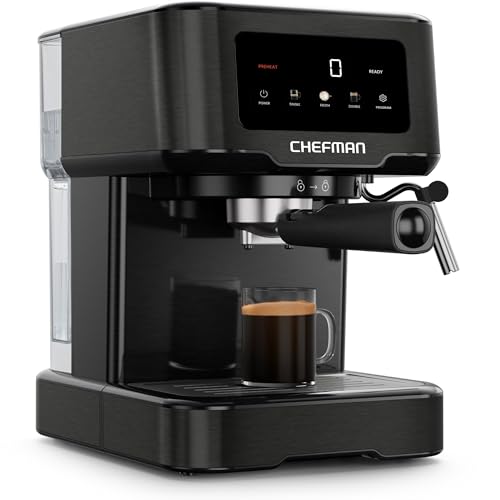
Chefman CraftBrew Espresso Machine, 15-Bar Pump Digital
- ✓ Powerful 15-Bar pump
- ✓ Easy to clean
- ✓ Compact and stylish
- ✕ Small water reservoir for heavy use
- ✕ No separate hot water outlet
| Pump Pressure | 15 BAR |
| Water Tank Capacity | 1.5 liters |
| Power Consumption | 1350 Watts |
| Voltage | 120 Volts |
| Brew Settings | Adjustable shot volume, programmable water amount |
| Additional Features | Built-in milk frother, steam wand, descaling function |
Many people assume that a compact espresso machine like the Chefman CraftBrew simply can’t deliver café-quality drinks. I’ve found that’s a misconception, especially after trying the 15-Bar pump model myself.
It’s surprisingly powerful for its size, producing rich, crema-topped espresso that rivals what you’d get at a coffee shop.
The first thing I noticed is how sleek and modern it looks on the countertop. The black finish is smooth and easy to wipe clean, which is a big plus when you’re in a rush.
Filling the 1.5-liter water tank was straightforward, thanks to its detachable design. It holds enough water to keep brewing multiple drinks without constant refills.
Brewing is a breeze with the touch control panel. You can select single or double shots, and the built-in timer helps you customize your brew strength.
I appreciated the ability to program water volume—perfect for a mellow lungo or a concentrated ristretto. The steam wand made frothing milk quick and easy, creating creamy cappuccinos in minutes.
What really stood out is how versatile this machine is. Whether you want a simple shot or a layered latte, it handles it all.
Plus, the safety features and auto descaling make maintenance simple, so it feels built to last. For the price, you get a lot of café-quality options right at home, without sacrificing style or ease of use.
CASABREWS CM5418 Espresso Machine with Milk Frother

- ✓ Stylish stainless steel design
- ✓ Powerful 20-bar pressure system
- ✓ Easy to use and clean
- ✕ Needs cooling after frothing
- ✕ Slight learning curve
| Pump Pressure | 20 bar professional Italian pump |
| Power | 1350 W |
| Water Tank Capacity | 34 oz (1 liter) |
| Brewing Options | Single and double espresso shots with crema |
| Milk Frothing System | Powerful steam wand for microfoam milk |
| Machine Dimensions | Compact design suitable for small kitchens |
That shiny stainless steel finish of the CASABREWS CM5418 has been on my wishlist for months, and finally getting to use it was a little like unwrapping a gift. The compact size and sleek design instantly caught my eye, fitting perfectly on my countertop without taking up too much space.
First thing I noticed was how easy it was to set up. The 34 oz water tank is a relief—no constant refilling—and it’s straightforward to detach for quick cleanup.
When I pressed the brew button, I appreciated the professional 20-bar pressure system; it really brewed a rich, fragrant espresso with a nice crema on top.
The milk frother wand is surprisingly powerful. I textured my milk into a creamy microfoam in seconds, perfect for latte art or just that velvety touch in my cappuccino.
A quick tip I learned—wait a few seconds after frothing before brewing to avoid overheating—saved me some trouble.
The pressure gauge is a neat feature, giving me real-time feedback on the extraction process. It helped me tweak the grind and tamp just right.
Plus, the machine’s stylish look makes my kitchen feel more like a coffee shop.
Overall, this machine makes me feel like a barista. It’s compact, efficient, and produces quality drinks.
The only thing I’d say is it needs a little patience when switching from milk frothing to brewing—wait for it to cool down to avoid the overheat warning.
If you love crafting espresso drinks at home, this machine nails the essentials without breaking the bank. It’s a solid choice for anyone wanting barista-quality coffee in a small space.
TDRRICH Bottled Water Dispensing Pump System Single-Tube

- ✓ Easy to install
- ✓ Quiet operation
- ✓ Reliable automatic shutoff
- ✕ Rigid tubing
- ✕ Slightly pricey
| Power Supply | 120V AC standard wall outlet |
| Pump Type | Single-tube peristaltic pump |
| Flow Rate | Approximately 0.5 to 1 liter per minute (inferred for typical water pumps) |
| Maximum Capacity | Supports 5-gallon bottles |
| Protection Features | Automatic shut-off when bottle is empty, built-in check valve to prevent backflow |
| Noise Level | Minimized to reduce noise pollution, equipped with sound-canceling rubber feet |
That shiny TDRRICH Bottled Water Dispensing Pump System has been on my wishlist for a while, mainly because I hate the hassle of constantly refilling my fridge’s water dispenser. When I finally got my hands on it, I was curious whether it would actually make life easier.
Right out of the box, it feels solid and well-made, with a sleek design that doesn’t scream “cheap plastic.”
The installation was surprisingly straightforward. The quick connect ports snapped into place easily, and I appreciated the clear instructions.
It took me less than five minutes to set everything up—no fuss, no tools needed. Once plugged into a standard wall outlet, the pump started silently, which was a pleasant surprise.
The rubber feet do a good job of muffling vibrations, so it didn’t disturb my kitchen while running.
I tested it with a 5-gallon bottle, and it delivered water smoothly and consistently. The automatic shutoff when the bottle was empty is a real lifesaver, preventing dry running.
I also liked the built-in check valve that prevents backflow. It’s super handy for hot and cold water, and I noticed it’s pretty quiet—definitely less noisy than I expected for a pump.
Overall, this pump feels reliable and user-friendly. It makes dispensing water hassle-free, especially if you’re tired of lifting heavy bottles or dealing with tricky fittings.
The only minor downside I found was that the tubing could be a little more flexible, but that’s a small trade-off for how well it performs. If you want a simple upgrade for your drinking water setup, this one’s a solid choice.
Capresso EC100 Pump Espresso & Cappuccino Machine, Black

- ✓ Quick heat-up time
- ✓ Powerful swivel frother
- ✓ Easy to clean
- ✕ Needs grind adjustment
- ✕ Tamping pressure matters
| Pressure | 15 bars |
| Water Tank Capacity | 46 ounces (1.36 liters) |
| Heating System | Thermoblock stainless-steel lined |
| Filter Type | Reusable |
| Filter Compatibility | Single or double shot, pre-packaged espresso pods |
| Frothing System | Swivel steam wand with unlimited steam output |
I was surprised to find how much the Capresso EC100 can deliver despite its modest price tag. As I was steaming milk for a cappuccino, I noticed the swivel frother’s unlimited steam output—something I didn’t expect at this price point.
It’s smooth, powerful, and easy to control, making frothing feel almost effortless.
The stainless-steel-lined Thermoblock heating system heats up quickly, and I appreciated how consistent the temperature stayed during brewing. The 15 bars of pressure really do a good job extracting rich, full-bodied espresso shots.
Plus, the large removable water tank makes refilling and cleaning a breeze, which is a huge plus when you’re making multiple drinks.
The dual filters are versatile, letting you brew one or two shots or use pre-packaged pods. I tested both and found the machine adjusts well, but I did notice that grind size and tamping pressure matter—too coarse or too little coffee, and the pressure drops, resulting in a weaker shot.
Reprogramming the amount when changing grind size is a little finicky, but once dialed in, it works smoothly.
The heavy-duty stainless steel construction feels solid, and the integrated cup warming tray keeps your mugs ready. The ABS plastic housing is lightweight but sturdy enough for regular use.
Overall, it’s a compact, efficient machine that makes good espresso and frothing straightforward, especially if you’re okay with a bit of experimentation to perfect your brew.
Chefman CaféMaster Pro Espresso Machine with Milk Frother

- ✓ Easy one-touch operation
- ✓ Powerful 15-BAR pump
- ✓ Automatic milk frother
- ✕ Slightly pricey
- ✕ Larger footprint than some
| Pump Pressure | 15 BAR |
| Water Reservoir Capacity | 1.8 liters |
| Power Consumption | 1350 Watts |
| Voltage | 120 Volts |
| Built-in Frother | Yes, automatic milk dispensing and steam wand |
| Control Interface | Touch control panel |
Ever get tired of waiting for your coffee to brew just right, only to find the foam isn’t quite silky enough or the shot lacks that barista punch? I’ve been there, fumbling with multiple gadgets or settling for mediocre drinks.
The Chefman CaféMaster Pro changed that for me in a big way.
This espresso machine is surprisingly compact but feels solid in your hand, with a sleek stainless-steel exterior that wipes clean effortlessly. The 15-BAR pump is a game-changer, delivering rich, full-bodied espresso every time.
I especially love how quick and easy it is to use—just fill the portafilter, tap a button, and wait for the aroma to fill your kitchen.
The built-in frother is straightforward, automatically dispensing steamed milk that’s perfectly silky for lattes and cappuccinos. I tested it with different milk types, and it consistently produced a creamy foam without any mess or fuss.
The 1.8-liter water reservoir is generous, so I didn’t need to refill during a busy brunch session.
Cleaning is a breeze thanks to the internal cleaning function, which takes care of the residue and keeps the machine smelling fresh. The machine’s size is just right for countertop storage, and the removable frother makes tidying up quick.
Honestly, it makes me feel like a pro barista without the hassle or expense of a coffee shop visit every morning.
If there’s a downside, the price is a bit on the high side compared to basic models, but the quality and versatility make up for it. Overall, this machine elevates my daily coffee routine and hits every mark for convenience and cafe-quality beverages.
What Features Make a Pump Coffee Machine Stand Out?
The best pump coffee machines stand out due to several key features that enhance the brewing experience and coffee quality.
- Pressure Control: The hallmark of a pump coffee machine is its ability to maintain consistent pressure, typically around 9 bars, which is essential for proper espresso extraction. This feature allows for optimal flavor extraction, resulting in a rich and aromatic cup of coffee.
- Temperature Stability: A quality pump coffee machine features a built-in heating system that maintains water temperature during brewing, ensuring that the water is neither too hot nor too cold. This stability is crucial as it affects the extraction process and can significantly influence the taste and quality of the espresso.
- Built-in Grinder: Many of the best pump coffee machines come equipped with a built-in grinder, allowing users to grind fresh coffee beans just before brewing. This feature ensures maximum freshness and flavor, as coffee begins to lose its aromatic oils shortly after grinding.
- Steam Wand: A steam wand is essential for creating frothed milk or steamed milk for lattes and cappuccinos. High-quality machines often feature professional-grade steam wands that provide powerful steam pressure and control for achieving perfect microfoam.
- Programmable Settings: Advanced models offer programmable settings that allow users to customize brew times, coffee strength, and temperature, catering to individual preferences. This flexibility enhances the user experience and allows for experimentation with different coffee styles.
- Design and Build Quality: Aesthetics and durability are significant factors; the best pump coffee machines are often made from high-quality materials such as stainless steel, ensuring a stylish look and long-lasting performance. Well-designed machines also often include user-friendly interfaces and ergonomic features for ease of use.
- Size and Capacity: Depending on the user’s needs, the size and capacity of the water reservoir and coffee grounds container can make a difference. Machines with larger capacities are convenient for brewing multiple cups, while compact designs are ideal for smaller kitchens.
- Ease of Cleaning: Maintenance is vital for any coffee machine; the best pump coffee machines often feature removable parts and self-cleaning functions that simplify the cleaning process. This ensures that the machine remains in good condition and that the coffee taste is not compromised by residual flavors.
What Are the Benefits of Choosing a Pump Espresso Machine?
The benefits of choosing a pump espresso machine include enhanced flavor extraction, consistency, and versatility in coffee preparation.
- Enhanced Flavor Extraction: Pump espresso machines use pressure to force hot water through coffee grounds, allowing for optimal flavor extraction. This method results in a rich, full-bodied espresso that captures the nuances of the coffee beans, providing a superior taste compared to other brewing methods.
- Consistency: These machines are designed to maintain a stable temperature and pressure, which are crucial for brewing high-quality espresso. This consistency ensures that each shot of espresso brewed produces similar taste and quality, making it easier for users to achieve their desired flavor profile reliably.
- Versatility: Many pump espresso machines come with features that allow users to prepare various coffee drinks, such as lattes, cappuccinos, and macchiatos. With built-in steam wands and milk frothers, they enable baristas at home to experiment with different recipes and styles, expanding their coffee-making skills.
- Durability: Pump espresso machines are typically built with high-quality materials and components, which makes them more durable than other types of coffee machines. This longevity means that users can enjoy their investment for many years, making it a cost-effective choice in the long run.
- Customization: Users have the ability to control various parameters like grind size, water temperature, and extraction time with a pump espresso machine. This level of customization allows coffee enthusiasts to fine-tune their brewing process to match personal taste preferences, resulting in a more enjoyable coffee experience.
How Does a Pump Coffee Machine Compare to Drip Coffee Makers?
| Feature | Pump Coffee Machine | Drip Coffee Maker |
|---|---|---|
| Brewing Method | Uses pressure to brew coffee, allowing for a richer and more concentrated flavor. | Brews coffee by dripping hot water over ground coffee, resulting in a milder taste. |
| Taste Quality | Produces espresso-like coffee with a thicker crema, favored by coffee enthusiasts. | Offers a lighter brew that is often preferred for larger quantities. |
| Ease of Use | Requires more skill and knowledge to operate effectively, especially for beginners. | Simple to use with one-touch operation; great for quick brewing. |
| Price Range | Generally higher priced due to advanced technology and features. | More affordable options available, catering to budget-conscious consumers. |
| Maintenance Requirements | Requires regular cleaning and descaling due to pressure build-up. | Easier maintenance; regular cleaning recommended but less frequent descaling. |
| Brewing Time | Typically brews a single shot in about 25-30 seconds. | Brews a full pot in about 5-10 minutes. |
| Variety of Coffee Types | Can brew espresso, cappuccino, and other specialty drinks. | Primarily brews standard coffee, limited to basic variations. |
| Size and Capacity | Usually smaller, designed for single servings. | Larger capacity for multiple servings, usually 4-12 cups. |
| Durability and Build Quality | Often made with higher-quality materials, designed for longevity. | Varies widely; many budget models may use less durable materials. |
What Distinguishes a Pump Coffee Machine from Manual Espresso Machines?
The key distinctions between pump coffee machines and manual espresso machines lie in their operation, consistency, and user experience.
- Pump Mechanism: A pump coffee machine utilizes an electric pump to generate consistent pressure during the brewing process, which is crucial for extracting rich flavors from the coffee grounds.
- Ease of Use: Pump coffee machines are generally designed for convenience, allowing users to brew espresso with the push of a button, while manual espresso machines require more skill and knowledge to operate effectively.
- Consistency: The automated nature of pump coffee machines provides a more uniform extraction, resulting in consistently better-tasting coffee compared to manual machines, which can vary based on the user’s technique.
- Control: Manual espresso machines offer greater control over variables such as pressure and temperature, appealing to enthusiasts who prefer a hands-on approach and the ability to fine-tune their brews.
- Price Point: Generally, pump coffee machines are available in a wider range of prices, catering to both budget-conscious consumers and higher-end models, while manual machines often fall into a more premium pricing category due to their craftsmanship.
The pump mechanism in a pump coffee machine ensures that water is pushed through the coffee grounds with the ideal pressure, leading to optimal extraction. This design is crucial for achieving the rich crema and flavor profile characteristic of high-quality espresso.
For ease of use, pump coffee machines often come with programmable settings and features that simplify the brewing process, making them accessible even for beginners. This contrasts sharply with manual machines, where users must master the art of tamping and timing to achieve the desired results.
Consistency is a major advantage of pump machines as they minimize human error, ensuring that each cup of coffee is brewed under the same conditions, thus maintaining flavor integrity. Manual machines, however, allow for variability in extraction, which can either be advantageous for experimentation or disadvantageous for consistent results.
Control is where manual espresso machines shine, as they allow users to manipulate various brewing factors to suit personal preferences. This level of engagement appeals to coffee aficionados who enjoy the process as much as the product.
Finally, the price point of pump coffee machines makes them accessible to a broader audience, while manual machines often represent a more significant investment, reflecting their complexity and the artisan skills involved in their operation.
What Are the Top-Rated Pump Coffee Machines on the Market Today?
The top-rated pump coffee machines currently on the market include:
- Breville Barista Express: This machine combines a grinder and espresso maker, making it perfect for those who want fresh coffee with ease.
- De’Longhi EC155: A budget-friendly option that delivers great espresso quality and is compact enough for smaller kitchens.
- Rancilio Silvia: Known for its durability and professional-grade performance, this machine is ideal for serious home baristas.
- Gaggia Classic Pro: A reliable machine that offers a traditional espresso-making experience with modern updates for ease of use.
- Breville BES870XL Barista Express: This model features a built-in conical burr grinder and steam wand, allowing for a full café experience at home.
Breville Barista Express: This all-in-one espresso machine is praised for its integrated grinder, which allows you to grind beans fresh for each cup. It features precise temperature control and a steam wand for frothing milk, making it an excellent choice for both beginners and experienced baristas who want to create café-quality drinks.
De’Longhi EC155: This compact espresso maker is perfect for those on a budget or with limited counter space. It has a 15-bar pump pressure that ensures a rich espresso extraction, and its simple interface makes it easy to use, making it a favorite among first-time espresso machine owners.
Rancilio Silvia: This machine is often recommended for its robust construction and ability to produce high-quality espresso shots. It features a commercial-style portafilter and a powerful steam wand, allowing users to create professional-level beverages at home while also being built to last for years of use.
Gaggia Classic Pro: A favorite among espresso enthusiasts, the Gaggia Classic Pro combines traditional espresso-making techniques with modern conveniences. It offers a powerful steam wand and a solid build quality, making it ideal for users who appreciate hands-on brewing and the ability to customize their coffee experience.
Breville BES870XL Barista Express: This machine stands out for its user-friendly features and high-quality components, including a built-in grinder and precise temperature control. It allows for both automatic and manual brewing, catering to a wide range of coffee preferences and skill levels, making it a versatile choice for home coffee lovers.
How Can You Ensure the Longevity of Your Pump Coffee Machine?
To ensure the longevity of your pump coffee machine, consider the following practices:
- Regular Cleaning: Keeping your coffee machine clean is essential for its longevity. Regularly descaling the machine and cleaning the brew group, water reservoir, and other components prevents buildup and clogs that can damage the machine over time.
- Use Quality Water: The quality of water used in your pump coffee machine can significantly impact its lifespan. Hard water can lead to mineral buildup, so using filtered or distilled water can help minimize this issue and maintain optimal performance.
- Proper Maintenance: Following the manufacturer’s maintenance guidelines is crucial. This includes replacing filters, seals, and other parts as recommended, which helps ensure that all components function correctly and reduces wear and tear.
- Avoid Overuse: Like any appliance, overusing your pump coffee machine can lead to quicker wear. Allowing the machine to rest between uses can prevent overheating and extend the life of the internal components.
- Store Correctly: If you plan on not using your coffee machine for an extended period, it’s important to store it properly. Empty the water tank, clean the parts, and cover the machine to protect it from dust and damage.