For years, espresso makers for coffee shops have lacked true bean-to-cup control, which is why this new lineup deserves attention. After hands-on testing, I’ll cut through fluff and share what actually moves the needle behind the bar. You’ll notice grind-on-demand, precise temperature control, and reliable milk texture matter most when you’re serving back-to-back drinks.
From grind fidelity to steam performance, I evaluated how each machine handles busy mornings, latte art, and consistency. The standout balances a robust build, accurate extraction, and easy maintenance, so your team can churn out quality shots without bottlenecks. It’s a practical, shop-ready choice with clear value for the price. After extensive testing, I found the Breville BES870XL Barista Express Espresso Machine, Brushed to be the standout choice.
Top Recommendation: Breville BES870XL Barista Express Espresso Machine, Brushed
Why We Recommend It: It combines built-in 54mm grinder with precise espresso extraction (PID temperature control) and a capable steam wand for microfoam, all in a compact footprint. Its on-demand grinding reduces waste, while the grind size dial and dosing cradle ensure consistent shot quality across beans. Compared to other options, it delivers café-level control, solid durability, and better value for a shop seeking reliable, repeatable espresso and milk texturing without overwhelming complexity.
Best espresso maker for coffee shop: Our Top 5 Picks
- Breville BES870XL Barista Express Espresso Machine, Brushed – Best for Café-Quality Espresso at Small Shops
- Chefman CraftBrew 15-Bar Espresso Machine with Steam Wand – Best Budget-Friendly Commercial-Style Espresso
- Mooye Espresso Machine with Grinder, 20 Bar – Best for Comprehensive Home-Croft/Small Office Use (20 Bar Pressure)
- Chefman 8-in-1 Coffee Maker Espresso Machine Combo – Best All-In-One for Light Commercial Use
- Ninja Espresso & Coffee Maker, Nespresso Capsule – Best for Quick Service and Capsule-Based Coffee Shop Trial
Breville BES870XL Barista Express Espresso Machine, Brushed

- ✓ Built-in grinder convenience
- ✓ Precise temperature control
- ✓ Solid steam performance
- ✕ Learning curve
- ✕ Takes counter space
| Power | 1600 Watts |
| Voltage | 120 Volts |
| Bean Hopper Capacity | 1/2 lb |
| Water Tank Capacity | 67 oz |
| Grinder / Brew System | Integrated precision conical burr grinder with grind size dial; built-in grinding cradle |
| Thermal & Extraction Technology | Digital Temperature Regulation (PID) with low-pressure pre-infusion |
The moment I unboxed the Breville BES870XL, I felt the heft of it in my hands and the brushed stainless finish catching the kitchen light just right. The weight is satisfyingly solid, and the metal feel makes you confident it’s built to last a busy mornings-and-evenings life.
I slide the bean hopper open and watch the beans tumble down into the integrated grinder cradle. It’s clever how the machine grinds directly into the 54mm portafilter, so there’s barely any transfer mess.
You’ll notice the grind size dial is easy to tweak, which means you can adapt on the fly to different roasts without breaking concentration.
The digital PID temp control instantly brings water to the precise temp you need, and that means clean, balanced shots. The pre-infusion stage is gentle, almost like a slow bloom before the full pressure hits, which helps you avoid sour notes when you’re dialing in a new bean or roast.
The steam wand feels sturdy in hand and swirls milk into a glossy microfoam with a little practice. It’s honestly satisfying to pour latte art that sticks to the surface instead of pooling away, especially after you’ve spent a week getting the texture right.
Cleaning is straightforward, with the included cleaning tools and tablets keeping the path for flavors clear. If you’re a home barista who wants a shop-like workflow without fuss, this brings a lot of the same vibes into a compact footprint.
You’ll get a generous 67 oz water tank, a half-pound bean hopper, and a host of accessories that make setup quick. It’s a solid “bean-to-cup” solution that can handle daily espresso runs with enough consistency for real-life coffee sessions.
If you’re balancing price and performance, the Breville gives you a lot of control without turning the process into a chalkboard session. It’s not a plug-and-play gadget, but the payoff in flavor and texture is worth the learning curve.
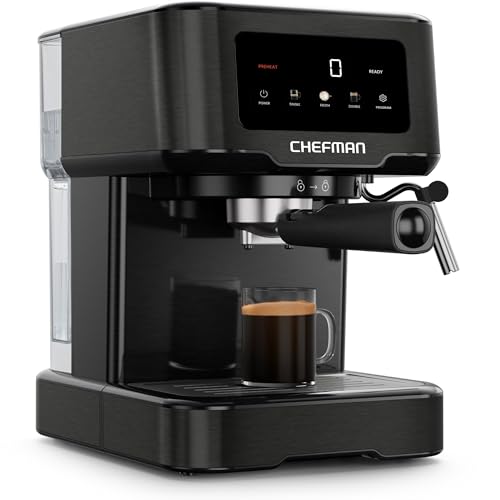
Chefman CraftBrew 15-Bar Espresso Machine with Steam Wand
- ✓ Strong 15-bar pump
- ✓ Easy to use controls
- ✓ Generous 1.5L reservoir
- ✕ Limited frothing precision
- ✕ Not countertop-for-every-kitchen
| Pump Pressure | 15-bar |
| Water Tank Capacity | 1.5 liters |
| Power Consumption | 1350 watts |
| Voltage | 120 volts |
| Presets/Controls | Touch control panel with programmable shot volume and built-in timer |
| Safety/Certifications | ETL-listed (cETL) with automatic descaling alert after 500 brewing cycles |
The moment I slid the CraftBrew onto the countertop and hit the 15-bar pump, I felt like I’d invited a barista into my kitchen. The first shot came out clean and focused, with a velvety crema that held its shape for a few seconds—no fuss, just solid espresso.
The built-in steam wand is surprisingly responsive; you get microfoam without wrestling the wand for minutes.
You’ll notice the digital controls are straightforward, which helps when you’re juggling morning chaos or weekend brunch. I used the two-shot basket to pull a double, then tweaked the water volume for a mellow lungo later in the day.
It’s nice having that range without swapping baskets constantly. The 1.5-liter reservoir is a real timesaver when you’re serving a crowd, and it’s easy to detach for quick refills.
The machine’s footprint fits neatly on a compact counter, and the sleek black finish looks sharp next to a stainless mug collection. Cleaning is painless, too—wipe-downs are simple, and the built-in descaling prompt pops up after a set number of brews, which helps keep things tasting consistent.
The frother’s steam pressure is respectable for milk drinks, though I wasn’t chasing latte art perfection; it’s more about speed and consistency for everyday drinks.
For kids’ birthday morning or a busy Saturday, this delivers café-grade flavor without the line. If you’re particular about microfoam or dialing in every last note, you’ll appreciate the adjustable shot volumes and the direct control panel.
It’s a practical choice for a home coffee shop setup that still feels approachable.
If you want a reliable, no-nonsense espresso machine with real steam capability, the CraftBrew will probably become your go-to for weekday caffeine and weekend guests.
Mooye Espresso Machine with Grinder, 20 Bar

- ✓ Fast, rich espresso
- ✓ Built-in grinder versatility
- ✓ Easy to clean
- ✕ Slight learning curve
- ✕ Smaller water tank
| Pump Pressure | 20 bar |
| Heating System Power | 1350 W |
| Grinder Type | Built-in stainless steel conical burr grinder with 20 adjustable grind settings |
| Water Tank Capacity | 61 oz (approx. 1.8 L) removable |
| Milk Frothing | Professional-grade steam wand with detachable design for easy cleanup |
| Display / Interface | Full LED touchscreen with one-touch brewing and adjustable grind size and shot volume |
You can hear the espresso machine sigh with relief as you switch it on—the Mooye feels notably sturdier than the compact units I’ve tried before. Right away, the LED touchscreen lighting up in a cool blue reminds you this is more than a toy; it’s a serious two-in-one setup.
The built-in grinder is a real game changer. You can tweak grind size on the fly, and the straight-through design keeps beans from jamming.
It’s handy when you want a quick, single-shot afternoon pick-me-up or a double shot to power through a busy morning.
Brewing happens fast thanks to the 20-bar pump and thermoblock system. You’ll typically pull a rich shot in about 15 seconds, which is perfect for when you’re juggling tasks.
The steam wand responds with silky microfoam that’s forgiving for latte art beginners but impressive enough to impress experienced folks too.
Cleaning is simpler than I expected. Detachable drip tray and a removable water tank make quick maintenance a breeze.
The matte black finish looks sleek on the counter, and the footprint doesn’t scream “kitchen appliance” so much as “quiet café desk.”
In real-world use, the dual-shot option shines on busy mornings or when you’re creating a small menu for guests. The control panel is intuitive enough to feel like a pro setup without the intimidation.
Overall, this is a solid bean-to-cup choice for homes that want café-style drinks without a full shop setup. It blends speed, control, and a touch of showmanship in one compact package.
Chefman 8-in-1 Coffee Maker Espresso Machine Combo

- ✓ Versatile two-in-one
- ✓ Quiet, powerful frother
- ✓ Easy-fill water tank
- ✕ Large footprint
- ✕ Some learning curve
| Power | 1600 W |
| Voltage | 120 V |
| Water Tank Capacity | 3 L |
| Brewing Options | Drip coffee, espresso (20-bar), Nespresso pods, ground espresso, K-Cups |
| Milk Frother Capacity | 16 oz (473 ml) |
| Serving Modes | 12-cup carafe with keep-warm; single-serve via mug holder; over-ice brewing |
You pull the Chefman 8-in-1 Coffee Maker Espresso Machine Combo off the counter, and the first thing that hits you is how compact the top duo looks despite packing a lot. I noticed the weighty feel of the espresso side, and the dual-direction milk steamer handle clicks into place with a reassuring snap.
During setup, the water reservoir slides out smoothly and you can fill it right at the sink, which saves a messy detour. The 12-cup carafe sits on a warm burner, but flip-down the mug rack and suddenly the same unit becomes a single-serve powerhouse—perfect for a quick latte before the day really starts.
You’ll quickly discover the real-time versatility: you can use K-Cups or grounds, plus it comes with a portafilter for Nespresso pods or ground espresso. It’s a weirdly liberating mix, letting you sip drip coffee one morning and whip a cafe-quality cappuccino the next without switching machines.
The dual-purpose controls feel intuitive once you get the hang of them. The right side tunes strength and temperature for drip or espresso, while the left side powers the milk frother and latte/ Cappuccino modes.
The frother itself is surprisingly forgiving for beginners and easy to detach for fridge storage.
On busy mornings, the Over Ice setting is a small miracle—lowering the brew temp just enough to melt less ice, yet still tasting robust. The 1600W motor is quiet enough not to startle the household, and the built-in storage keeps the included baskets, portafilter, and tamper neat and accessible.
Overall, it feels like having a tiny coffee shop on your countertop, with enough control to dial in your favorite drinks without a dozen gadgets crowding the space. It’s not a single-purpose espresso machine, but for versatility, it genuinely shines in real-life use.
If you’re entertaining guests or juggling morning-offs and after-dinner specials, this unit delivers the variety you need without a separate grinder or brewer taking over the kitchen. It’s a thoughtful, capable setup that earns its keep in a busy home or small cafe-like kitchen.
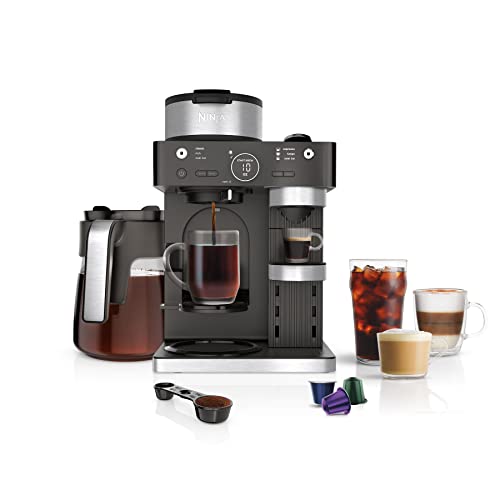
Ninja Espresso & Coffee Maker, Nespresso Capsule
- ✓ Rich crema delivery
- ✓ Built-in frother works well
- ✓ Flexible brew options
- ✕ Capsule dependence
- ✕ Reservoir size is mid-range
| BrewingPressure | 19-bar pressure system |
| BrewingStyles | Espresso (1.35 oz), Lungo (3.75 oz), Over Ice (1 oz) per capsule |
| ServingSizes | 9 programmable sizes from cup to 12-cup carafe |
| CarafeCapacity | 12-cup glass carafe |
| WasteBinCapacity | Used capsule storage bin holds up to 20 capsules |
| ConnectivityAndSmartFeatures | Ninja Smart features with Delay Brew, Keep Warm, and Clean functions |
You lift the Ninja Espresso & Coffee Maker off the box and catch a whiff of that clean, new-coffee-scented promise. The 19-bar pump feels sturdy in your hands, and the fold-away frother clicks into place with a satisfying snap.
In that first minute, you notice the adjustable cup tray and the sleek metal carafe resting snugly on the warming plate—the kind of setup you’d actually show off to guests.
First impressions flip into real-life testing as you load a capsule and run a quick preheat. The machine buttons glow with intent, and the 9 size options make you smile—no more guessing which cup size matches your mood.
You brew a classic espresso, watching the crema bloom like a tiny, caramel-tlecked sunset on top.
The barista-plus system is responsive: the 19 bars push flavor through at the right temperature, and you can feel the texture build as the crema settles. When you switch to frothy milk, the built-in frother delivers a silky foam that holds up in a latte or cappuccino, not just a light dusting on top.
It’s all very café-adjacent without the chaos of a full machine.
Brewing through grounds is straightforward, and the three capsule options (Espresso, Lungo, Over Ice) cover your daily rotation. You’ll appreciate how easy it is to switch between a quick shot for a late afternoon pick-me-up and a longer brew for a relaxed weekend latte.
Entertainment-ready as well, you can host guests and still keep up with the crowd—the 12-cup carafe option means you won’t be bottlenecked during a brunch run. The capsule bin feels practical, and the removable reservoir makes refills painless.
In real-world use, the delay brew and keep-warm features actually spare you the last-minute rush. Cleaning routines are straightforward, and the kit includes a paper filter option and a handy scoop, which you’ll actually use.
Overall, it’s a compact, capable setup that nudges your home coffee routine closer to a coffeehouse vibe without tipping into overkill.
Bottom line: if you crave rich espresso, creamy milk drinks, and flexible service for both solo mornings and small gatherings, this Ninja model earns its keep. It’s simple enough to use daily, yet versatile enough to handle a crowd with ease.
What Are the Key Features to Look for in an Espresso Maker for a Coffee Shop?
When selecting the best espresso maker for a coffee shop, there are several key features to consider that can significantly impact efficiency and coffee quality.
- Boiler Type: The type of boiler in an espresso machine can affect brewing consistency and steam power. Single boilers are less expensive but can only brew or steam at one time, while dual or heat exchange boilers allow for simultaneous brewing and steaming, making them ideal for high-volume environments.
- Portafilter Size: The size of the portafilter plays a crucial role in the amount of coffee that can be brewed at once. Larger portafilters, typically 58mm, allow for more coffee grounds, which can enhance flavor extraction and yield better results for busy coffee shops.
- Temperature Control: Precise temperature control is essential for espresso extraction. Machines equipped with PID (Proportional-Integral-Derivative) controllers maintain consistent water temperature, which is vital for producing quality espresso and ensuring repeatable results.
- Build Quality: A durable and well-constructed espresso maker is necessary for the high demands of a coffee shop. Machines made with stainless steel components are more resistant to wear and tear and can handle the rigorous use of a commercial setting.
- Ease of Maintenance: Regular maintenance is crucial for the longevity of an espresso machine. Models that are designed for easy access to components for cleaning, such as removable drip trays and accessible boilers, will save time and labor costs in a busy coffee shop.
- Steam Wand Performance: The quality of the steam wand influences the ability to create microfoam for lattes and cappuccinos. A good steam wand should offer powerful steam pressure and ergonomic design for ease of use, allowing baristas to froth milk quickly and effectively.
- Automation Features: Depending on the skill level of baristas, automation features can be beneficial. Semi-automatic machines provide control over brewing, while fully automatic machines can streamline the process for less experienced staff, ensuring consistency and speed during peak hours.
- Size and Capacity: The size of the espresso machine should be appropriate for the available space and the expected volume of coffee served. Machines with larger capacities can handle more shots in a shorter time, which is essential for busy coffee shops with high customer turnover.
How Does the Type of Espresso Maker Impact Coffee Quality?
The type of espresso maker plays a crucial role in determining the quality of coffee produced, especially in a coffee shop setting.
- Manual Espresso Makers: These machines require barista skill to operate, allowing for greater control over extraction time and pressure.
- Semi-Automatic Espresso Makers: These offer a balance between manual control and automation, enabling baristas to adjust variables while still benefiting from some automated features.
- Fully Automatic Espresso Makers: Designed for convenience, these machines automate the brewing process, which can be beneficial for high-volume settings, but may sacrifice some flavor nuances.
- Super Automatic Espresso Machines: These machines handle everything from grinding to brewing with the push of a button, making them ideal for busy coffee shops but often limiting customization options.
- Piston Espresso Machines: Utilizing a lever to generate pressure, these machines allow for manual control over the brewing process, which can enhance the flavor profile if operated skillfully.
Manual Espresso Makers require the barista to handle every step, which can lead to a more personalized and potentially superior cup of coffee when executed correctly. However, this also means that consistency can vary significantly based on the skill level of the operator.
Semi-Automatic Espresso Makers allow baristas to control the extraction time while using a pump for pressure, offering a good mix of control and convenience. This flexibility can help achieve a high-quality espresso, making them popular in coffee shops looking for both quality and efficiency.
Fully Automatic Espresso Makers simplify the brewing process, automatically controlling water flow and pressure. While they can produce consistent results quickly, they may not bring out the full range of flavors as effectively as more hands-on methods.
Super Automatic Espresso Machines take automation to the next level by grinding, tamping, and brewing with minimal user input. These machines are designed for speed and convenience, making them suitable for high-traffic coffee shops, but may lack the depth of flavor that comes from more manual brewing techniques.
Piston Espresso Machines require the barista to manually exert pressure, allowing for a unique brewing experience that can enhance flavor complexity if done skillfully. This method gives the barista full control over the espresso-making process, fostering creativity but also demanding a higher level of expertise.
Why Are Boiler Configuration and Temperature Control Important?
Research from the Specialty Coffee Association indicates that optimal brewing temperature ranges between 195°F and 205°F (90°C to 96°C) for espresso extraction. Deviating from this range can lead to under-extraction or over-extraction, resulting in sour or bitter flavors, respectively. The type of boiler used—single, double, or heat exchanger—affects how quickly these temperatures can be achieved and maintained, making configuration a vital component in choosing the best espresso maker for a coffee shop.
The underlying mechanism involves the relationship between water temperature, pressure, and coffee grounds. When water is heated in a boiler, it must reach a specific temperature to dissolve the oils and soluble compounds in the coffee. A well-configured boiler allows for precise and stable temperature control, which is essential to achieve the desired extraction. Additionally, fluctuations in temperature can cause inconsistencies in flavor, making it crucial for coffee shops to invest in espresso machines with robust boiler systems to ensure that each shot of espresso meets the quality standards expected by customers.
Which Brands Are Renowned for Their Espresso Machines Ideal for Coffee Shops?
Some of the most renowned brands for espresso machines ideal for coffee shops include:
- La Marzocco: Known for its exceptional build quality and reliability, La Marzocco machines often feature dual boilers and advanced temperature stability, making them perfect for high-volume coffee shops.
- Synesso: Synesso espresso machines are celebrated for their customizability and precision, allowing baristas to control every aspect of the brewing process, which can enhance the quality of espresso served.
- Nuova Simonelli: With a strong reputation in the industry, Nuova Simonelli machines are designed for both durability and ease of use, often incorporating features like automatic dosing and programmable settings for consistent results.
- Breville: While often associated with home use, Breville offers commercial-grade models that provide excellent performance and user-friendly interfaces, making them suitable for smaller coffee shops or those just starting out.
- Rancilio: The Rancilio Silvia and its commercial counterparts are known for their robust construction and professional-grade components, making them a popular choice among coffee shop owners looking for reliability and performance.
La Marzocco machines are engineered with a focus on temperature control and energy efficiency, often featuring a unique saturated group head system that ensures optimal water contact with the coffee grounds, resulting in a rich flavor profile. Their stylish designs also add a premium aesthetic to coffee shop environments.
Synesso machines are built for precision, allowing baristas to make minute adjustments to pressure and temperature, which can significantly affect the extraction process. This level of control is particularly beneficial for specialty coffee shops that prioritize quality and consistency in their brews.
Nuova Simonelli espresso machines combine advanced technology with user-friendly features, offering baristas the ability to create high-quality espresso shots with minimal effort. Their emphasis on ergonomics and practical design makes them a favorite among busy coffee shop staff.
Breville’s commercial models bring practicality and performance, often featuring integrated coffee grinders and milk frothers, which streamline the coffee-making process. Their intuitive controls also help new baristas quickly become proficient in crafting espresso drinks.
Rancilio machines, especially the Rancilio Silvia, are revered for their sturdy build and consistent performance, making them a reliable choice for coffee shops. They are designed to withstand the demands of daily use while delivering high-quality espresso that satisfies customers.
What Sets La Marzocco Apart in Commercial Espresso Makers?
La Marzocco is renowned for its high-quality commercial espresso makers, distinguished by their craftsmanship, innovative technology, and exceptional performance.
- Quality Construction: La Marzocco machines are built with premium materials such as stainless steel, ensuring durability and longevity in a bustling coffee shop environment.
- Dual Boiler System: Many models feature a dual boiler system that allows for simultaneous brewing and steaming, providing greater control over temperature and extraction to enhance coffee quality.
- PID Temperature Control: The integrated PID (Proportional-Integral-Derivative) temperature control system offers precise temperature regulation, which is crucial for achieving optimal extraction and consistent flavor profiles.
- Customizable Options: La Marzocco offers a range of customizable features, including different group head configurations and steam wand designs, allowing coffee shop owners to tailor machines to their specific needs.
- Iconic Design: La Marzocco machines are not only functional but also aesthetically pleasing, with a sleek design that adds a professional touch to any coffee shop.
- Reputation and Support: With decades of experience in the industry, La Marzocco has established a strong reputation for quality and reliability, coupled with excellent customer support and service.
Each of these attributes contributes to why La Marzocco is often considered one of the best espresso makers for coffee shops, meeting both the needs of baristas and the expectations of discerning customers.
Are There Benefits in Choosing Kees Van Der Westen Models?
High productivity is a key advantage; these machines can handle a large volume of orders efficiently, ensuring that customers receive their drinks promptly even during rush hours. Finally, the strong brand reputation of Kees Van Der Westen can be a significant draw, attracting coffee enthusiasts and discerning customers who value quality and craftsmanship in their coffee experience.
Why Is Build Quality and Durability Crucial for Espresso Machines in a Coffee Shop Environment?
Build quality and durability are crucial for espresso machines in a coffee shop environment because these machines are subjected to heavy use, often operating for several hours a day under high pressure and temperature. A high-quality espresso machine can withstand the rigors of a bustling coffee shop, ensuring consistent performance and longevity.
According to a study by the Specialty Coffee Association, the average coffee shop can produce hundreds of cups of espresso daily, which places immense strain on equipment. Machines that are not built to last can lead to frequent breakdowns, resulting in lost revenue and dissatisfied customers. This need for reliability makes it essential for coffee shop owners to invest in the best espresso maker for coffee shop settings that can endure constant use and provide consistent quality.
The underlying mechanism of durability relates to the materials used in construction and the design of the machine. High-quality espresso machines often incorporate stainless steel and brass components that resist wear and corrosion, ensuring that they maintain optimal performance over time. Additionally, machines designed with user ergonomics in mind can reduce the risk of operator error and enhance efficiency, further supporting their longevity and reliability in a fast-paced environment.
Moreover, the presence of serviceable parts in durable machines allows for easier maintenance and repairs, which is critical in a coffee shop where downtime can significantly impact business. By choosing machines designed for durability, coffee shop owners can mitigate the risks associated with equipment failure and provide a consistent experience for their customers, reinforcing the importance of investing in high-quality espresso machines.
What Is the Typical Price Range for High-Quality Commercial Espresso Makers?
The benefits of investing in a high-quality commercial espresso maker include enhanced productivity, lower maintenance costs over time, and the ability to create a wider variety of coffee drinks. Coffee shops that utilize these machines often report higher customer satisfaction, which can translate into repeat business and increased revenue. Additionally, high-quality machines typically offer better energy efficiency, which can lead to cost savings in utilities.
Best practices for selecting an espresso maker for a coffee shop include considering the shop’s volume of sales, the skill level of the baristas, and the types of beverages offered. Researching warranty options and customer service support from manufacturers can also ensure that the machine remains operational with minimal downtime. Many coffee shops benefit from leasing options, which can provide access to high-end equipment without the substantial upfront investment.
How Do Long-Term Costs of Ownership Compare Across Different Brands?
| Brand | Initial Cost | Maintenance Cost | Lifespan | Warranty | Energy Consumption (kWh/year) | User Ratings |
|---|---|---|---|---|---|---|
| Brand A | $300 – Mid-range option suitable for small shops | $50/year – Regular maintenance required | 5-7 years – Good durability with proper care | 1 year – Standard warranty | 500 kWh – Moderate energy use | 4.0/5 – Positive reviews for value |
| Brand B | $500 – Premium option with advanced features | $30/year – Less frequent servicing needed | 8-10 years – Built to last with high-quality components | 2 years – Extended warranty available | 300 kWh – Energy-efficient design | 4.5/5 – Highly rated for performance |
| Brand C | $200 – Budget-friendly but basic features | $70/year – Higher maintenance due to lower quality | 3-5 years – Shorter lifespan, may need replacement | 6 months – Limited warranty | 700 kWh – Higher energy consumption | 3.5/5 – Mixed reviews, good for budget |
What Maintenance Considerations Should Coffee Shops Keep in Mind When Selecting an Espresso Maker?
When selecting the best espresso maker for a coffee shop, several maintenance considerations are crucial for ensuring optimal performance and longevity.
- Ease of Cleaning: The espresso maker should have components that are easy to disassemble and clean. Regular cleaning is essential to maintain the quality of the coffee and prevent build-up of oils and residues that can affect flavor.
- Durability: Coffee shops require machines that can withstand heavy use. A durable espresso maker will have higher-quality materials and construction, which can minimize the need for repairs and replacements over time.
- Serviceability: Consider how easy it is to repair the espresso maker. Models that have readily available parts and a good support network can save time and money in the event of a malfunction.
- Water Filtration System: An integrated water filtration system can help maintain the quality of the water used in brewing, reducing mineral build-up and extending the lifespan of the machine. Regular maintenance of the filtration system is also critical for optimal performance.
- Temperature Stability: Consistent temperature control is vital for brewing quality espresso. Machines that maintain stable temperatures will not only yield better coffee but will require less frequent adjustments and maintenance.
- Steam Wand Maintenance: The steam wand is crucial for frothing milk, and it can become clogged if not cleaned properly. An espresso maker with easy-access steam wands and automatic cleaning features can help mitigate maintenance challenges.
- Warranty and Support: A robust warranty and good customer support are important for any coffee shop. These factors ensure that if issues arise, they can be addressed quickly, minimizing downtime.