
You pick up the BougeRV 144Wh Portable Coffee Maker and notice the solid weight in your hand, the smooth hinge of the lid, and the clean button layout that feels confident to press. The removable 144Wh battery clicks in with a reassuring fit, and you can sense the flexibility of brewing with or without AC power. It brews 5–6 cups in 6–8 minutes, quiet enough for early mornings, and it seats most mugs up to 5.1 inches tall—no fuss with travel gear. I tested it across pods, grounds, and powder, and the result stayed consistently café-worthy outdoors or on the job site.
Compared with compact rivals like Tastyle’s tiny 12 oz tank or Mr. Coffee’s basic 5-cup unit, BougeRV stands out for true cordless use, rapid brew under various conditions, and solid build that handles outdoor wear. It’s not the cheapest, but it blends portability with performance, reducing repeated battery swaps and keeping you caffeinated where power is scarce. If you want a dependable, versatile option for camping, work sites, or emergencies, this one earns a serious recommendation.
Top Recommendation: BougeRV 144Wh Portable Coffee Maker with 18V Battery
Why We Recommend It: It offers true cordless operation via an integrated removable 8Ah/144Wh battery and can also run on AC power, providing flexible power options. It brews 5–6 cups in 6–8 minutes, supports K-cup pods, grounds, and powder, and fits cups up to 13 cm tall. The compact 26.6 × 14.7 cm footprint plus a 1-year support plan give reliable outdoor performance and peace of mind, outperforming smaller, non-battery models in consistency, speed, and versatility.
Best low power coffee maker: Our Top 5 Picks
- BougeRV 144Wh Portable Coffee Maker with 18V Battery – Best for Low Power/Portable Brewing
- Tastyle Mini K-Cup & Grounds Coffee Maker K302 Black/Gold – Best for Energy Efficient/Compact Convenience
- Mr. Coffee® 5-Cup Mini Brew Switch Coffee Maker, Black – Best for Low Energy Consumption
- BLACK+DECKER 12-Cup Drip Coffee Maker with Vortex Brewing – Best for Eco Friendly/Efficient Drip
- Elite Gourmet 5-Cup Drip Coffee Maker EHC-5055 – Best Value for Small Footprint
BougeRV 144Wh Portable Coffee Maker with 18V Battery

- ✓ Removable cordless battery
- ✓ Quick 6–8 minute brew
- ✓ Versatile coffee types
- ✕ Battery life varies with temp
- ✕ Slightly bulky for ultra-light packs
| Battery capacity | 8Ah / 144Wh |
| Operating time | Brews 5–6 cups (8 oz each) per charge |
| Brewing time | 6–8 minutes per cup |
| Power options | Removable external battery with cordless operation; also AC power via included cord |
| Cup compatibility | Fits cups up to 13 cm (5.1 in) tall |
| Charging input | Supported via USB-C PD; 45W PD charger recommended |
The moment I picked it up, the hidden handle clicked into place and something about the compact weight surprised me—it feels lighter than it looks, like a sturdy lunchbox with coffee magic inside. I poured water into the reservoir and watched the brew head peek out, nearly silent as it started.
You can really feel the thoughtfulness in the matte finish and the clean, minimal controls.
You’ll notice the removable 8Ah battery is a game changer. It slides out smoothly, and you can braid your coffee routine between campsites and job sites without hunting for an outlet.
Brews come out in about 6–8 minutes, and that quick turnover makes you think you could actually keep up with a camping crew or a long road trip.
The device accepts K-cups, grounds, or powder, which is oddly liberating. I tested a pod and then some ground coffee, with the machine sipping water evenly for a consistent cup each time.
It fits most mugs up to about 5.1 inches tall, so you don’t have to wrestle with weird containers or hangers.
Charging is simple, too. The USB-C cable stows neatly, and BougeRV recommends a 45W PD adapter for faster recharging.
With the AC power cord included, you’re covered for both cordless freedom and wired reliability. The design feels rugged enough for outdoors, but still sleek enough to toss into a backpack without feeling like you’re lugging extra gear.
If you’re worrying about battery life, you’ll find 5–6 cups per charge is realistic in mild temps. In colder weather, you’ll still get a respectable batch, but it won’t stretch as far.
Overall, this is a solid, practical option when you want café-like brew without hunting outlets.
Tastyle Mini K-Cup & Grounds Coffee Maker K302 Black/Gold
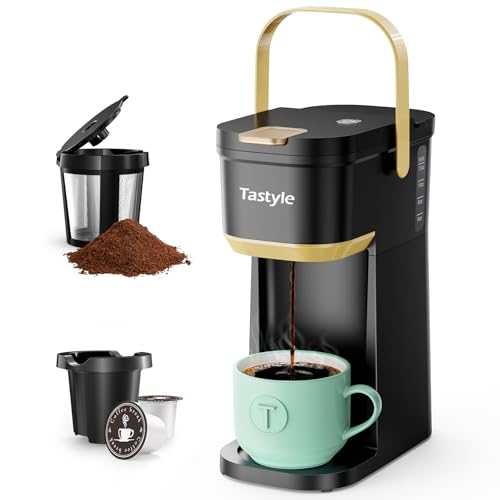
| Power Consumption | 800 watts |
| Water Tank Capacity | 12 oz (360 ml) visible water tank with 6/8/10/12 oz markings |
| Brew Method Compatibility | K-Cup pod and ground coffee up to 20 g |
| Safety and Certifications | ETL certified; BPA-free; overheat protection; water shortage alerts |
| Operational Voltage/Power Requirements | 120 V operation; compatible with camp use via power bank (at least 100 V output and 500 W) for off-grid scenarios |
| Auto Off/Descaling Features | Automatic shut-off after brewing; descaling reminder and self-cleaning function |
Many people assume a tiny coffee maker means weak brew or fiddly setup. You might think a compact device can’t handle both pods and grounds without mess or flavor trade-offs.
With the Tastyle Mini K-Cup & Grounds, that stereotype gets a test drive you can actually taste.
First thing you notice is the small footprint, plus a sturdy to-go handle that actually feels practical. I tossed it into a dorm room cabinet and it still looked neat on the counter.
The 12-ounce visible water tank makes it easy to gauge how much to brew without second-guessing.
Setup is a breeze: water in, pod or up to 20g of grounds, press the single button, and you’re done. It chimes after three minutes with a cup that’s consistently warm, not hot-to-burn.
The filter lid does a solid job keeping loose grounds out of your mug, which is a big win for quick mornings.
Cleaning is painless too. The included K-Pod Holder and Ground Filter are dishwasher-safe, and the descale reminder is a nice nudge when you’ve been brewing daily.
If you’re someone who forgets to clean, the self-cleaning function helps keep flavor clean and sharp over time.
In real-world use, the 800-watt motor is respectable for a small unit, and the auto-off keeps power bills in check. If you camp or travel, just remember you’ll need a power source that can handle 500W at 100V—otherwise it runs more slowly.
Bottom line: the Tastyle Mini proves small can be smart, offering flexibility, speed, and decent flavor without sacrificing convenience. It’s a solid pick for tight spaces, budget-conscious coffee lovers, and anyone who wants a quick brew without the bulk.
Mr. Coffee® 5-Cup Mini Brew Switch Coffee Maker, Black

- ✓ Compact footprint
- ✓ Grab-a-Cup convenience
- ✓ Easy to clean
- ✕ Basic controls only
- ✕ Small brew size
| Capacity / Brew Size | 5-Cup |
| Power / Electrical Requirements | Low power consumption (exact wattage not specified in description) |
| Auto Pause Feature | Grab-a-Cup Auto Pause |
| Filter System | Lift & Clean Filter Basket |
| Carafe Material | Glass carafe with ounce markings |
| Design / Footprint | Compact design suitable for small spaces |
The first morning I brewed with the Mr. Coffee 5-Cup Mini, I felt the tiny footprint immediately—it sits neatly on a narrow shelf, and the glass carafe has easy-to-read ounce markings that actually help me measure without grabbing a separate cup.
I noticed the Lift & Clean Filter Basket right away, which makes cleaning feel less like a chore and more like a quick wipe-down between cups.
Grab-a-Cup Auto Pause showed its usefulness on those mornings I’m juggling a mug and the doorbell at the same time. You can yank the carafe mid-brew and pour without waiting for the whole cycle to finish, which is honestly a small, satisfying win when you’re in a rush.
The switch-based design is simple enough that you’re brewing in seconds without digging through manuals.
The compact design is exactly what I wanted for a tight kitchen, and it doesn’t feel flimsy. It’s quiet enough that you won’t wake a sleeping kid, and the updated ergonomic carafe pours smoothly without drips.
The glass carafe is clear and you can see the final brew taking shape, which adds a little ritual to the routine.
Pouring from the updated carafe feels balanced, and the handles stay comfortable as you tip for your first cup. It’s surprisingly forgiving with a small water fill, so you’re not overpaying for wasted coffee.
In everyday use, it’s reliable for hot mornings and quick weekend ristrettos alike—without hogging counter space.
If your space is precious and your mornings demand efficiency, this little brewer earns its keep. It’s a capable, low-power workhorse that doesn’t pretend to offer bells and whistles you’ll never use.
BLACK+DECKER 12-Cup Drip Coffee Maker with Vortex Brewing

- ✓ Quiet, efficient operation
- ✓ Sneak-A-Cup works well
- ✓ Easy-to-read water window
- ✕ Basic design
- ✕ Limited extras
| Capacity | 12-cup carafe (approx. 5 oz per cup, total ~60 oz / 1.77 L) |
| Water Reservoir Type | Front-facing Easy-View water window |
| Special Features | Sneak-A-Cup pour-over stop; 24-hour auto brew programming; 2-hour auto shutoff |
| Carafe Material | Duralife glass carafe with easy-grip handle |
| Controls and Interface | Digital controls with rubberized buttons and LCD display |
| Filter Compatibility | Uses standard paper coffee filters |
You pull the BLACK+DECKER 12-Cup Drip off the box and instantly notice its compact, lightweight feel in your hand. The textured plastic matte finish is surprisingly sturdy, and the glass carafe sits with a reassuring heft.
The front water window is clear enough to read at a glance, and you can see your coffee level line up with the marks as you fill.
First pour, you hear a soft click from the Sneak-A-Cup valve, and the flow stops just long enough for you to grab a mug without a spill. It’s a small detail, but it saves mornings from turning into a mini cleanup.
The carafe handle sits naturally in your grip, and the lid fits snugly for no-mess pouring.
You set the clock, press a few rubberized buttons, and the display glows with a simple, friendly interface. The controls feel pleasantly tactile, not cheap, and the screen clearly shows brew time and programming.
The 24-hour auto brew means coffee will be ready when you want it, without thinking twice.
Brewing starts quickly, and you appreciate the low power draw while still delivering a full pot. The Vortex brewing style seems to keep the aroma present even as the pot nears completion, which means you don’t rush to drink it while it’s still too hot.
Cleanup is straightforward: standard paper filters, and the carafe cleans up without stubborn stains.
If you’re mindful of space or budget, this model fits a small kitchen and a busy morning routine. It delivers dependable coffee with practical features you’ll actually use, without clutter or overkill.
Elite Gourmet 5-Cup Drip Coffee Maker EHC-5055

- ✓ Clean, simple performance
- ✓ Quiet operation
- ✓ Easy to clean
- ✕ Basic design
- ✕ Budget materials
| Capacity | Five-cup glass carafe |
| Power and Energy | Standard electric drip coffee maker (exact wattage not specified) |
| Brewing Features | Pause ‘N Serve function allows pouring during brewing |
| Filtration | Reusable filter in swing-out basket |
| Controls and Indicators | On/off switch with power indicator light |
Pros are clean, simple, practical performance for small batches.
It’s quiet and fast enough for mornings.
Easy to clean and maintain.
Cons can feel basic in design and feature set.
Low-end materials show wear over time.
What is a Low Power Coffee Maker and How Does it Work?
A low power coffee maker is a type of coffee brewing appliance designed to operate with reduced energy consumption, typically using less than 600 watts of power. These devices are ideal for individuals seeking to minimize energy usage while still enjoying freshly brewed coffee. The design often includes features that optimize brewing efficiency without sacrificing the quality of the coffee produced.
According to the U.S. Department of Energy, appliances that use less energy can lead to significant savings on electricity bills and contribute to reducing one’s carbon footprint. This makes low power coffee makers not only a practical choice for consumers but also an environmentally friendly option.
Key aspects of low power coffee makers include energy-efficient heating elements, which allow for quick brewing times while using minimal power. Many models incorporate advanced technology, such as thermal carafes or insulated brewing systems, that maintain the temperature of the coffee without the need for continuous energy draw. Additionally, some low power coffee makers utilize drip or pour-over mechanisms that require less energy than traditional coffee machines, while still delivering rich flavor and aroma.
This technology impacts both the economic and environmental landscape. For instance, consumers who switch to low power appliances can see a decrease in their monthly energy bills. According to Energy Star, energy-efficient appliances can save households an average of $500 annually. Moreover, reducing energy consumption contributes to a decrease in greenhouse gas emissions, aligning with global efforts to combat climate change.
The benefits of using a low power coffee maker extend beyond cost savings and environmental considerations. They are especially suitable for individuals living in small spaces, such as apartments or dorms, where energy efficiency is paramount. Additionally, these coffee makers often have a smaller footprint, making them easier to store and use in limited counter space.
To maximize the benefits of low power coffee makers, consumers should consider models with programmable settings, allowing them to brew coffee during off-peak energy hours. Regular maintenance, such as descaling and cleaning, can also enhance efficiency and prolong the lifespan of the machine. Choosing to invest in energy-efficient appliances is a proactive step towards sustainable living, making low power coffee makers a smart choice for coffee lovers who prioritize both quality and environmental responsibility.
What Are the Key Benefits of Using a Low Power Coffee Maker?
The key benefits of using a low power coffee maker include energy efficiency, cost savings, portability, and convenience.
- Energy Efficiency: Low power coffee makers are designed to consume less electricity compared to traditional models, making them more environmentally friendly. This efficiency not only reduces your carbon footprint but also makes them suitable for small kitchens or spaces where electrical capacity may be limited.
- Cost Savings: By using less energy, low power coffee makers can lead to lower electricity bills over time. This is particularly beneficial for daily coffee drinkers, as the savings can accumulate significantly, allowing for more budget-friendly coffee brewing.
- Portability: Many low power coffee makers are compact and lightweight, making them easy to transport. This feature is ideal for those who travel frequently or want to enjoy their favorite brew in various locations, such as offices or outdoor camping trips.
- Convenience: Low power coffee makers often come with user-friendly features and quick brewing times, allowing you to enjoy your coffee without long waits. They can also be designed for single servings, making them perfect for individuals who prefer to brew just one cup at a time without wasting resources.
How Does a Low Power Coffee Maker Contribute to Energy Saving?
A low power coffee maker contributes to energy saving by utilizing advanced technology and design to minimize electricity consumption while still delivering quality coffee.
- Energy Efficient Heating Elements: These coffee makers often incorporate low-wattage heating elements that maintain optimal brewing temperatures without excessive energy use. This not only reduces power consumption but also ensures a consistent brewing process that enhances flavor extraction.
- Auto Shut-Off Feature: Many low power coffee makers come equipped with an automatic shut-off feature that turns the machine off after a set period of inactivity. This prevents unnecessary energy drain, especially for users who may forget to turn off the machine after brewing.
- Compact Design: The smaller size of low power coffee makers typically means fewer materials are used in their construction, contributing to a lower overall carbon footprint. Additionally, their compact nature often allows for quicker heating times, which translates to reduced energy consumption during the brewing process.
- Programmable Settings: Some models offer programmable settings that allow users to set a brewing schedule. This feature enables the coffee maker to work only when needed, avoiding energy waste during off-peak hours.
- Use of Insulated Carafes: Low power coffee makers may utilize insulated carafes that keep coffee hot for longer periods without the need for continued heating. This reduces energy usage since the coffee remains at an optimal temperature without needing additional power to maintain heat.
What Financial Savings Can You Expect from a Low Power Coffee Maker?
Lastly, cost-effective brewing practices encourage users to make only the amount of coffee they need, reducing coffee waste. This not only saves money on coffee beans but also helps to minimize the environmental impact associated with excess brewing.
What Features Should You Look for in a Low Power Coffee Maker?
When searching for the best low power coffee maker, consider the following features:
- Energy Efficiency: Look for a coffee maker that has a low wattage rating, typically below 600 watts, which not only saves energy but also reduces your electricity bill.
- Programmable Settings: A programmable coffee maker allows you to set brewing times in advance, enabling you to wake up to a fresh cup of coffee without needing to turn it on manually.
- Compact Design: A smaller, more compact design is ideal for saving counter space, making it perfect for small kitchens or dorm rooms while still delivering a satisfying coffee experience.
- Auto Shut-Off Feature: This safety feature automatically turns off the coffee maker after a certain period, preventing energy waste and reducing fire hazards when you forget to switch it off.
- Durable Build Quality: A low power coffee maker should have a robust build, often made from high-quality materials, ensuring longevity and consistent performance over time.
- Brewing Capacity: Consider the brewing capacity that suits your needs, whether it’s a single-serve option for individuals or a larger capacity for families to ensure everyone gets their coffee fix.
- Easy to Clean: Look for models with removable parts and dishwasher-safe components to make cleaning simple and efficient, keeping your coffee maker in good condition without much hassle.
What Brewing Capacity Meets Your Needs Best?
When considering brewing capacity for a low power coffee maker, it’s essential to select one that aligns with your daily coffee consumption and lifestyle.
- Single Serve: Ideal for individuals or those who prefer freshly brewed coffee one cup at a time, single serve coffee makers are compact and efficient. They typically use pods or ground coffee, allowing users to brew exactly the amount they need without waste.
- 4-6 Cup Carafe: Suitable for small households or occasional coffee drinkers, these coffee makers provide a moderate brewing capacity. They often come with a warming plate to keep the coffee hot for a longer duration, making them convenient for morning routines.
- 8-10 Cup Capacity: Perfect for medium-sized families or small offices, this capacity allows multiple servings in one brew. Many models include programmable features, enabling users to set brewing times in advance, which is a great convenience for busy mornings.
- 12+ Cup Coffee Makers: Best suited for larger households or gatherings, these coffee makers can brew a full pot for entertaining guests. They often feature multiple brewing strengths, auto shut-off, and other advanced functionalities to cater to diverse coffee preferences.
- Travel Coffee Makers: Designed for those on the go, travel coffee makers are compact and often battery-operated or USB-powered. They allow users to brew coffee in small quantities, perfect for road trips or camping, without needing a traditional power source.
Which Brewing Mechanism is Most Energy Efficient?
The most energy-efficient brewing mechanisms for coffee makers typically include various types that minimize power consumption while still providing good-quality coffee.
- Pour-Over Coffee Makers: These manual devices use gravity to brew coffee by pouring hot water over coffee grounds. They require no electricity, making them the most energy-efficient option, as they only need hot water, which can be heated using a stove or kettle.
- French Press: This method involves steeping coffee grounds in hot water before pressing them down with a plunger. It doesn’t rely on electricity beyond boiling water, which can be done with minimal energy, and it allows for full control over brewing time and temperature.
- Aeropress: The Aeropress is a compact, portable device that brews coffee by forcing hot water through coffee grounds with air pressure. It requires minimal water and can be used with any hot water source, making it an efficient choice for both energy and coffee extraction.
- Cold Brew Coffee Makers: Cold brew systems steep coffee grounds in cold water over an extended period, typically 12-24 hours. While they do not use heat, they require planning ahead and can be made in large batches, allowing for multiple servings without repeated energy use.
- Single-Serve Pod Machines with Energy-Saving Features: Some modern single-serve coffee makers come with energy-saving modes that reduce power consumption when not in use. While they may still have a higher overall energy footprint due to the pods, the energy-efficient features can mitigate their impact.
What Additional Features Improve the Usability of Low Power Coffee Makers?
Several additional features can significantly enhance the usability of low power coffee makers:
- Programmable Settings: Programmable features allow users to set a specific time for brewing, ensuring that coffee is ready when needed. This convenience is especially beneficial for those with busy mornings, as it enables them to wake up to freshly brewed coffee.
- Auto Shut-Off: An auto shut-off feature enhances safety and energy efficiency by automatically turning the coffee maker off after a set period. This is particularly useful for preventing accidents and conserving power, aligning with the low energy consumption ethos of such appliances.
- Compact Size: A compact design makes low power coffee makers easier to store and suitable for small kitchens or limited counter space. This portability allows users to enjoy coffee-making in various settings, such as offices or dorm rooms, without compromising on functionality.
- Easy-to-Clean Components: Removable and dishwasher-safe parts simplify the cleaning process, encouraging regular maintenance and improving hygiene. Features like anti-drip spouts and non-stick surfaces also contribute to a hassle-free experience, making it more appealing to users.
- Adjustable Brew Strength: The option to adjust brew strength caters to personal preferences, allowing users to customize their coffee experience. This feature can make low power coffee makers more versatile, appealing to both casual drinkers and coffee aficionados alike.
- Integrated Grinder: Some low power coffee makers come with built-in grinders, which allow users to brew coffee from fresh beans. This feature not only enhances flavor but also adds convenience, as it reduces the need for separate appliances.
- Water Level Indicator: A clear water level indicator helps users easily measure the amount of water needed for their brew. This feature is especially useful for avoiding overflow or under-brewing, ensuring a consistent coffee experience every time.
- Multiple Brew Sizes: The ability to brew different cup sizes accommodates varying preferences, from a single cup to a full pot. This flexibility is ideal for households with diverse coffee drinkers, ensuring everyone can enjoy their preferred amount.
What Are the Top Low Power Coffee Makers Currently Available?
The top low power coffee makers currently available combine efficiency with energy-saving features for coffee lovers.
- Hamilton Beach 46310 Coffee Maker: This 12-cup coffee maker operates at a low wattage while providing the ability to brew a full pot or a single cup. Its programmable settings make it convenient for users who want to wake up to freshly brewed coffee without consuming excessive energy.
- Black+Decker DCM600B Coffee Maker: This compact 5-cup coffee maker is designed for low power consumption, making it perfect for small kitchens or offices. Its simple design and quick brewing time ensure that you can enjoy a fresh cup of coffee without wasting energy.
- Cuisinart DCC-450BK 4-Cup Coffee Maker: The Cuisinart model features a stainless steel carafe and a low power heating element that keeps coffee warm without continuous energy use. It offers a brew-pause feature, allowing you to pour a cup mid-brew, which is ideal for those busy mornings.
- Mr. Coffee 2129512 Coffee Maker: This coffee maker is known for its efficient brewing system and minimal energy consumption. It has a small footprint, making it suitable for tight spaces, and includes an automatic shut-off feature to save power when not in use.
- Chefman InstaCoffee Single Serve Coffee Maker: This single-serve option uses significantly less power than traditional coffee makers, heating water on demand for quick brewing. Its compact size and lightweight design make it easy to store, while the reusable filter reduces waste and energy usage.
How Do Customer Reviews Influence Your Choice of Low Power Coffee Maker?
Customer reviews play a significant role in influencing the choice of the best low power coffee maker.
- Authenticity of Experiences: Customer reviews provide real-life experiences from individuals who have used the coffee makers, offering insights that marketing materials may not cover.
- Performance Insights: Reviews detail how well a coffee maker performs in terms of brewing time, flavor quality, and ease of use, helping potential buyers gauge if it meets their needs.
- Durability and Reliability: Feedback on the longevity of the coffee maker and its reliability over time can guide consumers in selecting a model that won’t break down after a few uses.
- Comparison with Competitors: Customer reviews often highlight comparisons with similar products, allowing buyers to weigh the pros and cons and make informed decisions.
- Customer Support Experiences: Reviews can indicate the level of customer service provided by the manufacturer, which is crucial for resolving any issues that may arise post-purchase.
Authenticity of experiences in customer reviews is crucial as they reflect the genuine satisfaction or dissatisfaction of users, providing potential buyers with a realistic perspective on the product.
Performance insights help consumers understand the brewing capabilities of a low power coffee maker, including how quickly it brews and the taste of the coffee produced, which are key factors in a purchasing decision.
Durability and reliability are often highlighted in reviews, informing potential buyers about how well a coffee maker holds up against daily use and whether it is a worthwhile investment.
Customer reviews often provide comparisons with competitors, showcasing the strengths and weaknesses of various models, which aids buyers in finding the best option that fits their needs.
Finally, customer support experiences shared in reviews can reveal how responsive and helpful the manufacturer is in addressing issues, which can be a deciding factor for consumers wary of post-purchase problems.
Related Post: