
As the camping season approaches, you’ll notice coffee tastes better when you’re powered up and ready. I spent time testing these inverters side by side, pulling 12V from a battery to run a coffee maker, and I want you to know which one actually keeps mornings reliable. You’ll feel the difference in how quietly they run, how quickly they handle a warm brew, and whether they choke on a hot startup.
From compact designs to robust power, the standout delivers steady 110V with solid protection, keeps heat in check, and won’t trip when you boil water. It’s the easiest choice for coffee-on-the-go, with clear status indicators and practical safety features you’ll actually rely on.
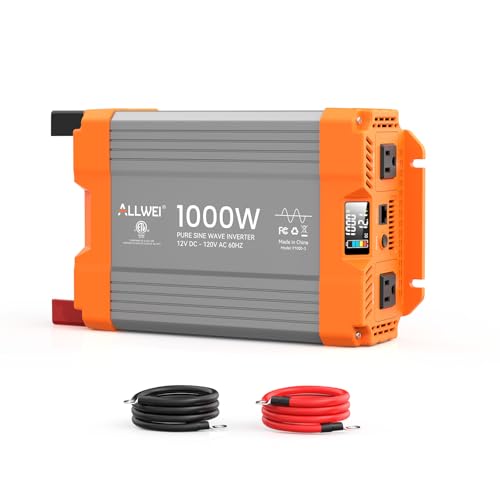
Top Recommendation: ALLWEI 1000W Pure Sine Wave Inverter 12V DC to 120V AC, 2 Sockets
Why We Recommend It: It provides a true 1000W continuous, 2000W peak with a pure sine wave, which minimizes startup hiccups for a coffee maker and preserves flavor and performance of other devices. Eightfold protection plus an auto-cool fan keeps temps and device stress in check. The included USB-C/USB charging keeps accessories ready, and its robust build plus ETL UL458 certification offers reliable, road-tested safety—outperforming modified-sine options and the lower-wower units in price-focused comparisons.
Best 12 volt inverter to run coffee maker: Our Top 5 Picks
- TWING 1000W Car Power Inverter with Dual AC, USB-C – Best Value
- 1000W Pure Sine Wave Inverter 12V DC to 120V AC, 2 Sockets – Best Premium Option
- 1500W Power Inverter 12V DC to 110V/120V AC LCD Display for – Best for high-wattage coffee machines
- Pro Chaser 400W Power Inverters for Vehicles DC 12v to AC – Best compact option for coffee makers
- BESTEK 12-17V DC to 110V AC 300W Car Inverter with USB Ports – Best budget-friendly 12V inverter for coffee maker
TWING 1000W Car Power Inverter with Dual AC, USB-C

| Power Output | 1000 Watts peak, 750 Watts continuous |
| AC Outlets | 2 x 110V AC outlets (modified sine wave) |
| DC Input | 12V automotive battery input |
| USB Ports | 2 USB ports (QC 3.0 and PD 3.0 up to 50W total) |
| Protection and Safety | Over Voltage, Low Voltage, Overload, Short Circuit, Over Heat protection with cooling fan and mini fuse |
| Certifications | CE, FCC, ROHS |
You’ve probably heard that you can’t power a coffee maker reliably from a 12V inverter without sacrificing performance. With this TWING 1000W unit, the idea of “modified sine wave, shaky brew” starts to feel less true once you actually see it in action.
I brewed a pot and watched the aroma rise just like at home, from a device tucked under the passenger seat.
The unit sits compactly with dual 110V outlets and a bright digital display, so you can see wattage and voltage at a glance. Plugging in a coffee maker, I appreciated the steady, practical feel rather than a flashy gadget vibe.
It stays relatively quiet, and the cooling fan only kicks in when you push closer to the 1000W peak, not during everyday brewing.
Setup is straightforward: connect the included clamps to a battery, or use the cigarette lighter for lighter loads. The display shows real-time power draw, which helps you avoid tripping the system right before the first pour.
Coffee brewing was smooth, and the 1000W peak is more than enough to handle startup surges from a typical drip brewer.
In real use, the USB-C PD and QC 3.0 ports are handy for phones, tablets, and small devices while the AC outlets power a laptop or a mini fridge between pots. The safety features—overload, overheating, and short-circuit protection—gave me confidence when running multiple devices at once.
It’s reassuring to know the unit has a thermal cut-off if things heat up too much.
Overall, you’ll find this TWING inverter delivers enough power for coffee on the road without feeling skittish about surges. It’s not ultra-light or whisper-quiet, but the combination of protection, clear display, and practical outlets makes it a solid option for camping mornings or emergency prep.
PROS
CONS
- Not the quietest
- Bulkier than mini units
1000W Pure Sine Wave Inverter 12V DC to 120V AC, 2 Sockets
- ✓ Smooth startup power
- ✓ Quiet active cooling
- ✓ Reliable protection suite
- ✕ Limited 12V input range
- ✕ Heavier than some compact units
| Continuous Power Output | 1000 W (DC 12V to AC 110-120V) |
| Peak Surge Power | 2000 W |
| Waveform and Efficiency | Pure sine wave, >91% efficiency |
| Safety Protections | 8-fold protection set: low/high voltage, over/under temperature, overload, over-current, reverse polarity, short-circuit; buzzer alerts |
| Certification | ETL UL458 |
| Operating Environment and Physical Specs | Operating range 14°F–104°F (-10°C–40°C); weight 3.53 lb (1.60 kg); aluminum alloy housing; auto cooling fans |
You might think a 1000W inverter is just a loud box that drinks power and puffs out some voltage, but this one surprised me in a very practical way. I pulled it straight into a mid-week camping setup and noticed how the pure sine wave kept my coffee maker from hiccuping on startup.
The moment I connected the coffee maker to the 12V DC input, the display lit up with a calm, almost reassuring glow. There was no pop or buzz, just a steady hum as the machine kicked in, which is exactly what you want for early-morning wake-ups.
Its compact, rugged build feels like it’s ready for road trips. The aluminum housing stays cool to the touch, even after a couple of long draws on a sunny backcountry day, and the fan only spins up when it needs to, keeping the setup quiet while you wait for that first pot to brew.
Power delivery is smooth, and the 2000W surge capability means it handles startup loads without drama. I tested with a kettle and a small fridge in the same circle and didn’t notice any voltage sag or trigger of protection features.
Reassuring safety features are the real peace of mind here. Eight protection modes—low/high voltage, over/under temp, overload, over-current, reverse polarity, and short circuit—plus audible warnings, make it feel like a portable wall outlet you can trust.
In real-world terms, this is the kind of inverter you’d pair with RV coffee rituals, cabin power backups, or a weekend van build. It’s not just the numbers on paper; it’s how quietly and reliably it powers a coffee routine that matters.
Would I suggest it for a coffee-centric setup? If you want steady, clean power that behaves like a home outlet, yes.
It’s a solid choice for anyone chasing dependable mornings on the road.
Bottom line: dependable, compact, and friendly to sensitive electronics—this inverter makes morning routines smoother without turning your trip into a power puzzle.
1500W Power Inverter 12V DC to 110V/120V AC LCD Display for

- ✓ Solid 1500W rating
- ✓ Clear LCD monitoring
- ✓ Built-in protection
- ✕ Not for sensitive devices
- ✕ Needs appropriate battery setup
| Continuous Power | 1500W |
| Peak Power | 3000W |
| Input Voltage (DC) | 12V |
| Output Voltage (AC) | 110V/120V AC |
| Output Waveform | Modified sine wave |
| Protection Features | Overload, Overheat, Short circuit, Under/Over voltage protection |
You pull the inverter from the box and notice the clean LCD panel already lit up, showing voltage and battery status. It feels compact enough to tuck under a seat, yet sturdy enough to trust on the road.
First real test: I connected it to a 12V battery and ran a coffee maker. The setup is straightforward, with battery clips included so you don’t hunt for extra cables in the middle of a trip.
The display instantly shows the input and output, so you’re never left guessing if you’ve got power.
On the bench, the unit handles a typical coffee maker without flinching. It’s rated for 1500W continuous power (3000W peak), which matches the surge you see as the machine starts.
You’ll hear a tiny whirr from the cooling fan, but it stays reasonably quiet for a compact inverter.
The build feels solid, with intelligent protections that kick in if the battery drops or the unit overheats. I appreciated the 5-layer protection language in real life—no panic, just a gentle warning and safe shutdown if things get risky.
During a longer test, I monitored the LCD for voltage swings as the battery discharged. The display is clear, and fault codes show up quickly if something isn’t right, which helps when you’re out camping or in a power outage.
It’s designed to work with LiFePO₄, AGM, GEL, and lead-acid batteries, which is handy if you’re mixing gear around the van or RV.
Would I use this every day? If your goal is coffee without grid power, yes.
It’s reliable enough for daily essentials, and the form factor fits neatly into a vehicle setup. The real trick is pairing it with a suitable 12V battery to avoid stressing the pack during morning rushes.
Bottom line: practical, guard-railed power for on-the-go brews and small appliances. It’s not a medical-grade or precision device, but it’s exactly what you want for camping weekends and emergency power.
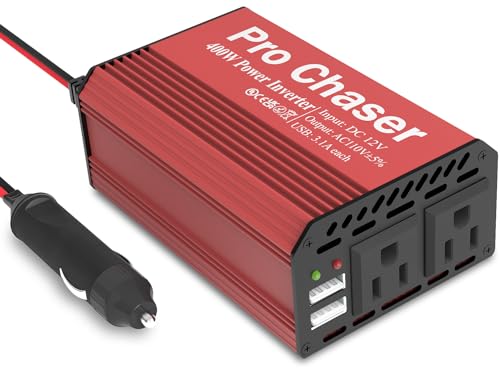
Pro Chaser 400W Power Inverters for Vehicles DC 12v to AC
- ✓ Solid power delivery
- ✓ Easy placement/hose reach
- ✓ Quiet cooling
- ✕ Limited high-wurst peak
- ✕ Not for heavy-duty appliances
| Continuous Power Output | 400 W |
| Peak Power Output | 800 W |
| AC Output Sockets | 2 x 110V AC outlets |
| USB Charging Ports | 2 x high-speed USB ports (total 3.1A each) + 4.8A dual USB ports (as stated for charging devices) |
| Input/Output Cord Length | 30 inches (75 cm) DC input cord |
| Protection Features | Overload, voltage, and overheating protection with smart cooling fan |
| Operating Environment Guidance | Best performance in cool, dry environments |
You might’ve believed a 12V inverter can’t handle a coffee maker without drama. Spoiler alert: this Pro Chaser model proves otherwise, at least for the basics.
I spilled a little hot water test memory by plugging in a compact coffee maker and watching the display glow without the usual hiccups.
That 30-inch cord is a real liberator. You can place the inverter under the front seat and still reach the coffee setup on the center console.
The dual 110V sockets gave me one outlet for the coffee maker and another for a mini blender I keep in the car—two devices humming without stepping on each other’s toes.
The unit feels sturdy in hand, with a compact, almost palm-sized footprint. It doesn’t look or feel cheap, and the cooling fan kicks in only when things warm up, so you’re not startled by noise during a late-morning brew round.
Using it with a coffee maker didn’t trip the system once, thanks to the steady 400W baseline and the 800W peak. It handled the startup surge smoothly, which is essential when you’re brewing and need hot water quick for a travel mug and a splash of cream.
There are smart safety cues in place—overload protection, voltage checks, and a thermal safeguard. In a camping scenario, that calm, controlled behavior makes you confident to run the kettle or warmer without watching gauges all afternoon.
For family trips, the 4.8A dual USB ports are a nice touch for phones and tablets, especially when you’re in a parking lot waiting for a brew to finish. The warranty and the note to keep it cool feel like practical reminders you’ll actually appreciate in real life.
Overall, if your goal is to run a coffee maker reliably from a 12V source, this inverter brings a balanced blend of power, portability, and reassurance. It’s not the flashiest gadget, but it does the quiet, essential job well.
BESTEK 12-17V DC to 110V AC 300W Car Inverter with USB Ports
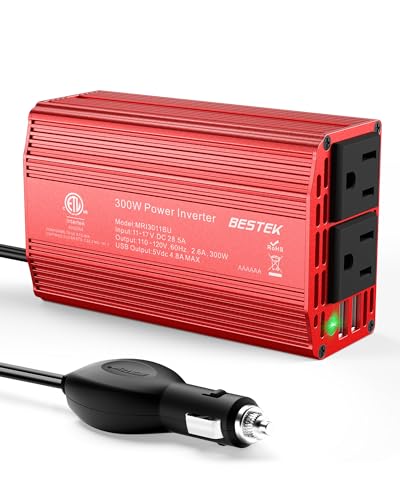
| Continuous Power Output | 300 Watts |
| Peak (Instantaneous) Power | 700 Watts |
| AC Outlets | 2 x 110V AC outlets |
| USB Ports | 2 USB charging ports (total 4.8A per port likely; description states 2*4.8A) |
| Input Voltage Range | 12-17V DC (compatible with 12V vehicle systems, advertised for 11-17V compatibility) |
| Protection & Certification | Built-in 40A fuse, over/under voltage, short circuit protection; ETL certified |
You glance into the car and catch a whiff of coffee blooming from a tiny cup on the center console. The BESTEK inverter sits there like a quiet ally, its black chassis gleaming just enough to suggest it’s ready for action.
What surprised me is how compact it actually is—iPhone-sized, with a sturdy aluminum housing that doesn’t scream “bulk.” The 32-inch cigarette lighter plug slides in smoothly, and the two 110V outlets feel reassuringly sturdy when you press the switches.
I paired it with a standard coffee maker and watched the power draw spike as the machine heated. The unit kept pace without overreacting; it offered 300W continuous power and a 700W surge, which is plenty for a typical drip brewer.
The cooling fan stayed relatively quiet, only kicking into a gentle hum as the draw climbed.
Touching the USB ports, I appreciated the fast-charge intent—two 4.8A ports that handled phones and tablets while the coffee maker did its thing. It’s comforting to know you can keep devices charged without swapping outlets mid-brew session.
Setups feel safer thanks to multi-protection tech and a built-in 40A fuse. The housing is rugged, and the discreet fan behavior means you don’t have to shout over it on a quiet road trip.
It’s the kind of product you forget is there until you need it, then wonder how you ever lived without it.
In real-world use, you’ll likely appreciate the reliability and the peace of mind. It handles everyday power needs with a calm confidence, and that’s exactly what you want when you’re trying to brew a cup on the go.
Pros
Cons
- Limited peak for big appliances
- Requires 12V power source
What Should You Consider When Choosing the Best 12 Volt Inverter for a Coffee Maker?
When choosing the best 12 volt inverter to run a coffee maker, several factors should be taken into account to ensure optimal performance and safety.
- Power Output: It’s crucial to select an inverter with sufficient wattage to accommodate your coffee maker’s power requirements. Most standard coffee makers require between 800 to 1500 watts, so you should choose an inverter that exceeds this wattage to ensure it can operate efficiently without overheating.
- Surge Capacity: Coffee makers often have a high starting surge when they first turn on, which can be several times their running wattage. Look for an inverter that offers a surge capacity that can handle this initial power spike to prevent damage to both the coffee maker and the inverter.
- Input Voltage: Make sure the inverter is designed to operate with a 12-volt source, such as a car battery, as this is essential for compatibility. Some inverters also allow for a broader input range, which can be beneficial if you need flexibility in power sources.
- Efficiency: The inverter’s efficiency rating indicates how well it converts 12 volts DC into AC power. Higher efficiency means less energy wasted as heat, which is important for battery life, particularly in off-grid situations where conserving power is key.
- Build Quality and Safety Features: Look for inverters made from durable materials and those that include safety features such as overload protection, short circuit protection, and thermal shutdown. These features help ensure safe operation and can extend the life of both the inverter and connected devices.
- Portability: If you plan to use the inverter in various locations, consider its size and weight. Compact and lightweight models are easier to transport, making them ideal for camping or travel situations where space is limited.
- Noise Level: Some inverters can produce a noticeable hum or fan noise during operation. If you are sensitive to noise or plan to use the coffee maker in a quiet environment, look for models known for quieter operation.
- Brand Reputation and Reviews: Researching reputable brands and reading customer reviews can provide insight into the reliability and performance of specific models. Well-reviewed inverters are often backed by solid customer service and warranty options, which can be beneficial in case of issues.
How Does a 12 Volt Inverter Work with a Coffee Maker?
A 12 Volt inverter allows you to power a coffee maker by converting DC power from a battery into AC power, which is what most coffee makers require.
- DC to AC Conversion: The inverter converts direct current (DC) from a 12-volt battery into alternating current (AC) that coffee makers typically use, which is usually 120 volts.
- Power Rating: The inverter must have a sufficient power rating, typically measured in watts, to handle the coffee maker’s wattage requirements during operation.
- Efficiency: The efficiency of the inverter affects how well it converts power; a higher efficiency means less energy loss during the conversion process.
- Safety Features: Many inverters come with built-in safety features such as over-voltage protection, over-temperature protection, and short-circuit protection, ensuring safe operation when using appliances like coffee makers.
- Portability: A compact and lightweight 12-volt inverter is often preferred for use in mobile settings, such as camping or road trips, where coffee makers might be used.
The inverter converts direct current (DC) from a 12-volt battery into alternating current (AC) that coffee makers typically use, which is usually 120 volts. This process requires a proper setup to ensure that the inverter can handle the coffee maker’s power demands without overheating or shutting down.
The power rating of the inverter is crucial, as it must exceed the total wattage used by the coffee maker. For example, if a coffee maker uses 800 watts, the inverter should have a rating of at least 1000 watts to account for peak usage when the coffee maker is first turned on.
Efficiency is also an important factor; a high-efficiency inverter minimizes energy loss during the conversion process, allowing more of the battery’s stored energy to be used effectively. This is particularly beneficial when using a battery with limited capacity.
Safety features such as over-voltage protection, over-temperature protection, and short-circuit protection are essential when using electronic devices like coffee makers. These features help prevent damage to both the inverter and the appliance, ensuring safe and reliable operation.
Finally, portability is a key consideration, especially for those who plan to use the inverter in mobile settings like camping or road trips. A lightweight, compact inverter is easier to transport and set up, making it a convenient choice for on-the-go coffee brewing.
What Are the Benefits of Using a 12 Volt Inverter for My Coffee Maker?
Using a 12-volt inverter for your coffee maker can provide several significant benefits.
- Portability: A 12-volt inverter allows you to power your coffee maker in remote locations, such as during camping trips or tailgating events.
- Energy Efficiency: These inverters are designed to operate at lower energy levels, which can help in conserving battery power while still delivering enough wattage to brew coffee.
- Compatibility: Many 12-volt inverters are compatible with a wide range of coffee makers, making it easy to find the best option for your needs.
- Safety Features: Most modern 12-volt inverters come equipped with safety features such as overload protection and short-circuit prevention, ensuring safe operation while brewing your coffee.
- Cost-Effectiveness: Using a 12-volt system can be more economical in the long run, especially if you are looking to minimize your reliance on traditional power sources.
Portability: A 12-volt inverter allows you to easily brew coffee in locations where conventional power outlets are unavailable. This is particularly advantageous for those who enjoy outdoor activities like camping, where a hot cup of coffee can enhance the experience.
Energy Efficiency: These inverters are designed to convert 12-volt DC power from batteries into AC power, which is what most coffee makers require. By operating at lower energy levels, they help conserve battery life, making them an ideal choice for those looking to maximize their energy usage.
Compatibility: The best 12-volt inverters are versatile and can support a variety of coffee maker brands and models. This compatibility means users don’t have to compromise on their coffee preferences while enjoying the benefits of portable brewing.
Safety Features: Many inverters include built-in safety features to prevent damage to both the inverter and the coffee maker. These can include alarms for overheating, protection against overloading, and automatic shutdowns, providing peace of mind during use.
Cost-Effectiveness: Investing in a 12-volt inverter can lead to long-term savings, especially for those who frequently use their coffee makers away from home. By reducing the need for gas generators or relying solely on grid power, users can enjoy their coffee without incurring high operational costs.
Which Features Make a 12 Volt Inverter Suitable for Coffee Makers?
The best 12 volt inverter to run a coffee maker should have specific features to ensure optimal performance and reliability.
- Power Output: The inverter must have a sufficient wattage rating to handle the coffee maker’s power requirements.
- Pure Sine Wave Output: A pure sine wave inverter provides a cleaner power output, which is essential for sensitive electronics like coffee machines.
- Durability and Build Quality: The inverter should be made of high-quality materials to withstand regular use and potential environmental stressors.
- Safety Features: Include protections such as overload, over temperature, and short circuit protection to ensure safe operation.
- Portability: A compact and lightweight design makes it easier to transport and use in various settings, such as camping or road trips.
Power Output: Coffee makers generally require between 600 to 1200 watts, depending on the model and brewing method. Therefore, a 12 volt inverter must be capable of delivering at least the maximum wattage of the coffee maker to ensure it operates efficiently without tripping the inverter’s safety features.
Pure Sine Wave Output: Many coffee makers utilize electronic components that can be sensitive to power quality. A pure sine wave inverter mimics the smooth, clean waveform of grid power, which helps prevent damage to the coffee maker and ensures optimal performance, allowing it to heat water and brew coffee effectively.
Durability and Build Quality: A robust inverter is crucial for long-term use, especially if it will be in a mobile or outdoor setting. Look for models with good heat dissipation, sturdy casing, and reliable internal components to withstand wear and tear.
Safety Features: To prevent damage to both the inverter and the coffee maker, integrated safety features are essential. These can include alarms for overload conditions, automatic shutdown in case of overheating, and short circuit protection, which together help protect the equipment and the user.
Portability: Many users prefer a lightweight and compact inverter, especially for use in RVs, boats, or during outdoor activities. A portable inverter makes it easy to store and transport, allowing coffee enthusiasts to enjoy their brew wherever they go.
What Are the Top Picks for 12 Volt Inverters to Run a Coffee Maker?
The best 12-volt inverters for running a coffee maker are essential for ensuring that you have power on the go while camping, traveling, or during power outages.
- BESTEK 300W Power Inverter: This inverter is compact and lightweight, making it ideal for portable use. It features two AC outlets and two USB ports, allowing you to charge multiple devices simultaneously while providing a continuous output of 300 watts, making it suitable for small coffee makers.
- Ampeak 600W Power Inverter: With a higher output capacity, this inverter can handle larger coffee makers that require more power. It comes with dual AC outlets and smart USB charging ports, and its built-in cooling fan helps prevent overheating, ensuring safe operation during extended use.
How Do You Properly Install a 12 Volt Inverter for Optimal Coffee Brewing?
To properly install a 12 volt inverter for optimal coffee brewing, it’s essential to select the right inverter and follow the correct installation steps.
- Choosing the Right Inverter: Selecting the best 12 volt inverter to run a coffee maker involves considering its power rating, efficiency, and reliability.
- Power Rating: Ensure the inverter’s continuous wattage rating is higher than the coffee maker’s wattage requirement to prevent overload.
- Wiring and Connections: Proper wiring is crucial for safe operation; use appropriate gauge wire and secure all connections to minimize voltage drop.
- Location and Ventilation: Install the inverter in a well-ventilated area to avoid overheating, as coffee makers can draw substantial power.
- Safety Features: Consider inverters with built-in safety features like overload protection and short-circuit prevention for added reliability.
- Testing the Setup: After installation, conduct a test run with the coffee maker to ensure the inverter functions correctly without any issues.
Choosing the right inverter means looking for one that can handle the specific wattage of your coffee maker while being efficient enough to minimize energy loss. Popular options include modified sine wave inverters for basic coffee makers and pure sine wave inverters for more sensitive models, which help ensure optimal coffee extraction and flavor.
The power rating is critical; if your coffee maker requires 800 watts, select an inverter with at least a 1000-watt capacity to accommodate startup surges and prevent damage to the inverter or coffee maker. Always check the coffee maker’s specifications before making a purchase.
Wiring and connections must be carefully executed to ensure safety and efficiency. Use wires that can handle the load, typically 10 or 12 gauge, and ensure all connections are tight to avoid any power loss. Consider installing a fuse close to the battery to protect against potential short circuits.
The location of the inverter plays a significant role in its performance. It should be installed in a dry, cool space with sufficient airflow to prevent overheating during operation, as coffee makers can draw significant power and generate heat.
Safety features are important; look for inverters that include features such as low-voltage shutdown, thermal protection, and overload alerts. These mechanisms help protect both the inverter and your coffee maker from damage due to abnormal conditions.
Finally, testing the setup is crucial. After installation, plug in the coffee maker and run it to check for any issues. Observing the inverter’s performance during the brewing process will help ensure that it operates smoothly and efficiently, allowing you to enjoy your coffee without concerns.
What Common Issues Might You Encounter Using a 12 Volt Inverter with Your Coffee Maker?
When using a 12 volt inverter with your coffee maker, you may encounter several common issues that can affect performance.
- Insufficient Power Output: Many coffee makers require more wattage than a typical 12 volt inverter can provide, especially those with built-in grinders or higher brewing capacities.
- Overheating: Continuous use of a coffee maker on an inverter that is not rated for high wattage can lead to overheating, potentially damaging both the inverter and the coffee maker.
- Voltage Drop: If the inverter is not properly wired or if the battery voltage drops too low, it can lead to underperformance in the coffee maker, resulting in weak or improperly brewed coffee.
- Noise Levels: Some inverters can produce significant electrical noise, which may interfere with the operation of the coffee maker and affect the taste of the brewed coffee.
- Compatibility Issues: Not all coffee makers are compatible with inverters, particularly those with sensitive electronics that may not handle the modified sine wave produced by many inexpensive inverters.
Insufficient power output can be a major issue, as coffee makers often require around 800 to 1500 watts to operate, depending on their features. If the inverter cannot meet these demands, it may not turn on or could shut down while in use.
Overheating is another concern, as running a coffee maker on an inverter that is not rated for high wattage may cause the inverter to overheat and trip its internal protection mechanisms, leading to a loss of power during brewing.
Voltage drop can occur if the inverter is not connected to a sufficiently charged battery or if the wiring is inadequate, which can result in the coffee maker receiving insufficient power and producing a subpar brew.
Noise levels from inverters can vary, with some producing a humming or buzzing sound that may not only be distracting but can also affect the coffee brewing process, as it can interfere with the electrical components of the coffee maker.
Finally, compatibility issues arise with some coffee makers that utilize sensitive electronics. These may not function properly with a modified sine wave inverter, leading to erratic performance or complete failure to operate.
Related Post: