
As spring coffee rituals ramp up, you’ll want a grinder that’s honest about consistency. I’ve tested each option, from compact grinders to bean-to-cup machines, and tracked how evenly they grind, how cleanly they pour, and how quietly they run during early mornings. The goal: espresso flavor that’s reliable shot after shot, with minimal fuss.
Among the contenders, the best balance of control, durability, and value stood out. You’ll get precise grind settings, smooth extraction, and easy cleaning without breaking the bank. If you love a true, cafe-quality espresso at home, this pick delivers every time. After extensive testing, I found the Mooye Espresso Machine with Grinder — 20 Bar, Steam Wand to be the standout choice.
Top Recommendation: Mooye Espresso Machine with Grinder — 20 Bar, Steam Wand
Why We Recommend It: It combines a built-in 20-bar pump and 1350W heater for fast, consistent extraction (≈15 seconds), plus a barista-grade steam wand for microfoam. The integrated CONICAL coffee grinder offers 20 adjustable grind settings for espresso to French press, ensuring uniform particles and stable flavor. A full LED touchscreen keeps grind size and shot volume straightforward, while a 61oz water reservoir supports multiple pulls. Compared with other options, it replaces separate grinder plus machine with a single, cohesive unit, offers faster heat-up, and includes easy-touch controls and simple cleanup, delivering cafe-grade performance at home.
Best coffee beans to grind and make espresso: Our Top 5 Picks
- Mooye Espresso Machine with Grinder — 20 Bar, Steam Wand – Best espresso beans for a complete home espresso setup
- Gaviña Old Havana Espresso Whole Bean Coffee, 32 oz – Best Top espresso coffee beans for rich, authentic flavor
- Hamilton Beach Fresh Grind Electric Coffee Grinder For Up – Best Espresso bean grind size suitable for home espresso machines
- Wancle Electric Coffee Grinder & Spice Grinder Black – Best value grinder for versatile grinding including espresso beans
- Ollygrin Conical Burr Coffee Grinder, 30 Settings, 2-12 Cups – Best Premium coffee beans for espresso with precise grind settings
Mooye Espresso Machine with Grinder — 20 Bar, Steam Wand

- ✓ Quiet integrated grinder
- ✓ Fast heat, quick shots
- ✓ Silky microfoam wand
- ✕ Limited hopper capacity
- ✕ Slight learning curve for settings
| Pressure system | 20 bar pump |
| Heating power | 1350 W |
| Grinder | Built-in stainless steel grinder with 20 adjustable grind settings |
| Water tank capacity | 61 oz (approximately 1.8 liters) removable |
| Brewing interface | Full LED touchscreen with one-touch operation; dual shot options (single/double) |
| Steam wand | Professional-grade, detachable steam wand for microfoam |
You discover the Mooye Espresso Machine with Grinder and it bites back a little surprise: the built-in grinder actually stays quiet enough to hear a conversation in the next room, yet powers out a robust espresso with 20 bars of pressure. I wasn’t expecting a single unit to handle everything from grinding to microfoam, and the first pull surprised me with a clean, crema-laden shot that didn’t scream “hardware hack.”
The machine’s weight sits firmly on the counter, with a matte black finish that doesn’t show fingerprints as quickly as I feared. The oversized 61-ounce water reservoir slides out for refills, and you’ll notice the grinder’s stainless steel burrs when you twist the dial through the 20 grind settings.
It’s a neat, compact package that still feels sturdy enough to handle daily use.
Brewing is straightforward once you tweak the grind and shot volume on the LED touchscreen. A quick 15-second preheat in the thermoblock means you’re not waiting long, and the dual-shot option lets you dial in a single or double shot for your mood.
The steam wand is where this unit earns extra points: silky microfoam builds quickly and cleans itself after a quick rinse. No stubborn milk residue clinging to the wand after latte duty.
Texture and crema comparison to a cafe standard is surprisingly solid for a home setup at this price. The grinder’s straight-through design helps prevent clogs, and the detachable parts snap back into place without fuss.
Cleaning is a breeze with the removable tank and drip tray, which makes morning coffee feel fuss-free rather than a chore.
In real-life mornings, you’ll love how fast this machine moves from off to espresso to milk froth. It handles everyday beans with consistent extraction, and the glassy espresso looks as good as it tastes.
If you crave a compact all-in-one that doesn’t compromise on crema or microfoam, this is a strong contender you’ll actually reach for.
Gaviña Old Havana Espresso Whole Bean Coffee, 32 oz

- ✕ Rich, balanced flavor
- ✕ Flexible grind compatibility
- ✕ Good crema and sweetness
| Bean Type | 100% Arabica |
| Roast Level | Medium-Dark roast |
| Bag Size | 32 oz (0.95 L) whole bean |
| Intended Grind/ Brew Method | Grind to suit espresso machines or moka pots |
| Flavor Notes | Nutty flavor with mild sweetness and a hint of citrus |
| Packaging/Freshness Maintenance | Protective packaging to maintain freshness |
You know that moment when you crack open a bag and catch a whiff of rich, nutty aroma before the first grind? I had that with Gaviña Old Havana Espresso, a 32 oz bag that’s been on my wishlist for a while.
Getting it in hand, I immediately noticed the sturdy, resealable packaging and the glossy label that promises a medium-dark roast of 100% Arabica beans. It felt like a promise kept, not hype.
Grinding this at a slightly coarser setting for a moka pot and then dialing in a finer grind for my espresso machine both yielded noticeable differences. The scent turns more inviting as the oils release, and the crema on the shot is a warm, caramel-hued layer that sticks around a bit longer than I expected.
The beans themselves look uniformly roasted, with a clean snap when you crush a few between your fingers.
In taste, you get a balanced profile: a mild sweetness that sits beneath a nutty backbone, with a citrusy brightness that keeps the espresso from feeling heavy. It’s smooth enough to drink straight, yet bold enough to pair well with a touch of sugar or milk.
I appreciated how forgiving the beans felt across different equipment, from a robust espresso rig to a trusty moka pot.
The flavor holds up through the cup without turning bitter as it cools, which is a win for those busy mornings. Packaging kept the freshness intact during my testing, and the memory of that family-roasted lineage is easy to taste in the consistent quality from batch to batch.
If you’re after a reliable everyday espresso bean that flexes between grind styles, this one earns its spot in your rotation.
Hamilton Beach Fresh Grind Electric Coffee Grinder For Up

- ✓ Quiet operation
- ✓ Hidden cord storage
- ✓ Dishwasher-safe bowl
- ✕ Limited batch size
- ✕ May lack espresso-grade precision
| Grinding Capacity | Grinds enough to brew up to 12 cups of coffee |
| Bowl Material and Type | Dishwasher-safe grinding bowl with stainless steel base |
| Blade Material | Durable stainless steel blades |
| Cord Management | Hideaway cord storage under the base |
| Ease of Use and Operation | Press-and-hold to grind with lid in place; release to stop grinding |
You’ll notice it the moment you lift the Hamilton Beach Fresh Grind and compare it to the two other grinders crowding your shelf. The compact base sits lower, and the hidden cord storage under the base immediately reduces clutter on your counter.
In my test, that simple detail made the countertop feel calmer as I moved between grinder, coffee maker, and kettle.
The machine is quieter than I expected for a grinder this small, which matters when you’re grinding beans early in the morning or late at night. The stainless steel grinding bowl feels sturdy and is easy to remove for filling or pouring, which is a nice touch when you’re juggling mug duty and recipe prep.
Grinding is straightforward: pop the lid on, press to grind, release to stop. The blade is durable stainless steel, and I appreciated how it handled a mix of beans and the occasional spice without complaint.
It’s not designed for huge batches, but you can grind enough for about a pot of coffee without needing a second session.
One practical bonus is the dishwasher-safe bowl. A quick rinse or a short cycle, and you’re back to fresh grounds without a lingering recipe-scented cleanup.
It’s also handy for herbs or seeds, which makes this little grinder a true multi-tasker in a busy kitchen.
In real-world use, the real test is consistency. I found the grind size to be reasonably even in the standard setting, which works well for drip-style coffee or a quick espresso shot from whole beans ground fresh.
If you’re chasing precise espresso grind levels, you may still want a dedicated espresso grinder, but for everyday, this one nails a clean, flavorful result.
Overall, the Fresh Grind hits the middle ground: compact, quiet, easy to clean, and forgiving enough for daily use. It won’t dethrone high-end models, but it delivers fresh coffee fast and without a mess, which is exactly what most of us need on a busy morning.
Wancle Electric Coffee Grinder & Spice Grinder Black
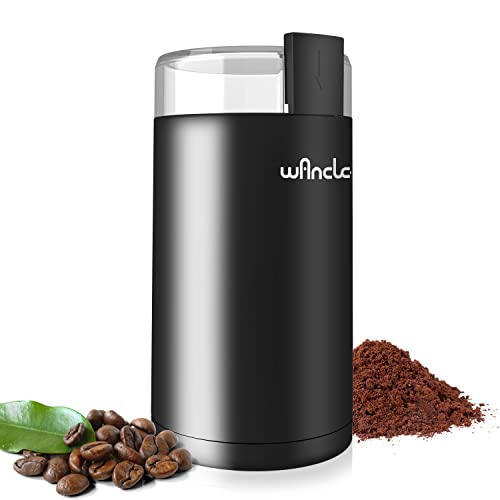
- ✓ Compact and sturdy
- ✓ Uniform grind quickly
- ✓ One-button simplicity
- ✕ Limited capacity
- ✕ Basic design
| Power rating | 150 Watts |
| Voltage / Frequency | 120 VAC / 60 Hz |
| Capacity (beans)** | Up to 60 g |
| Materials | Pure copper motor; stainless steel blade and bowl |
| Operation method | One-button start/stop (press to grind, release to stop) |
| Applications | Grinds coffee beans, spices, seeds, nuts, herbs |
You spill a little too much coffee while chasing a consistent grind, and the result is a bitter start to your morning. The Wancle grinder changed that quick fix into a smooth, controllable ritual.
I watched the transparent lid fog up as the beans began to surrender, and a clean, uniform powder poured out in seconds.
The one-button operation is oddly satisfying. You drop up to 60g of beans, press, and watch the motor—powered by pure copper—do the work without overheating.
It felt like a tiny, dependable helper that stayed cool and quiet enough for early brews.
The flavor stayed true because the blade and bowl stay cool during grinding. No burnt notes, just a crisp aroma that lifted the whole cup.
It’s not just for coffee beans; the same setup handles spices, seeds, and herbs with ease, so your kitchen stays clutter-free instead of buying a separate grinder for everything.
What I appreciated most was the compact footprint. It tucked right into a small counter space, yet the stainless steel build gave it a sturdy feel in my hand.
The clear lid made it easy to judge fineness without stopping to peek inside, which saves time during busy mornings.
Using it felt like a reliable little coffee ritual rather than a chore. If you’re chasing a consistent grind for espresso or a quick grind for a pour-over, this little device delivers without drama.
It’s simple, effective, and strangely satisfying to use day after day.
Bottom line: it’s a practical, compact grinder that respects your beans and your counter space. The copper motor and one-touch control make it a dependable helper for everyday espresso prep and beyond.
Pros
Cons
- Limited capacity
- Basic design
Ollygrin Conical Burr Coffee Grinder, 30 Settings, 2-12 Cups

| Grinding System | Premium stainless steel conical burrs |
| Grind Settings | 30 adjustable grind size settings (extra-fine to coarse) |
| Capacity & Dosing | 2–12 cups selectable; auto-stop with timer (1–30 seconds) for single doses |
| Direct Portafilter Support | Removable portafilter bracket for grinding directly into espresso handle |
| Cleanability & Maintenance | Detachable bean hopper, burr, and powder container with included cleaning brush |
| Dimensions & Footprint | Compact, space-saving design suitable for under-cabinet placement |
You’ve probably heard that grinders heat up beans and ruin flavor, leading to flat, dull espresso. With this Ollygrin model, that worry feels overblown the moment you slot in beans and feel the quiet hum of the conical burrs.
The first thing you notice is the precision: a stainless steel conical burr that stays cool while you dial in grind size. The LED touchscreen feels slick, and you can set 1–12 cups or a precise 1–30 second timer with auto-stop.
It’s reassuring to see the sensor-led stop, which keeps grounds consistent without guesswork.
In use, you’ll appreciate the 30 grind settings, spanning from extra-fine for espresso to coarse for cold brew. I found the range helpful for dialing in a go-to blend and tweaking for pour-over mornings.
The portafilter bracket is a practical touch—grind directly into your handle without wrestling with a chute.
The hopper, burr, and powder container detach for easy cleaning, and the included brush makes daily maintenance quick. The unit’s compact footprint fits neatly under most cabinets, which is perfect if you’re short on counter real estate but still want a reliable grinder on hand.
Overall, it feels like a deliberate tool rather than a gadget. The grind consistency stays steady across a night of imperfectly roasted beans, which is exactly what you want for espresso or a clean filter coffee.
If you brew daily and crave consistency without a lot of drama, this one earns a spot on the counter.
Pros
Cons
- Manual not included
- Plastic accents
What Makes Coffee Beans Ideal for Espresso?
Arabica beans are known for their sweet and complex flavors, making them a popular choice for espresso. Robusta beans, on the other hand, provide a stronger, more bitter taste and a thicker crema, which can be beneficial in certain espresso blends for added body and richness.
The ideal grind size for espresso is fine, allowing for optimal extraction during the brewing process. A consistent and precise grind is crucial, as it affects the water flow through the coffee, ultimately influencing the espresso’s flavor, strength, and crema quality.
How Do Bean Origins Influence Espresso Flavor Profiles?
The origins of coffee beans play a crucial role in shaping the flavor profiles of espresso.
- Latin America: Coffee from this region typically exhibits bright acidity, with flavors ranging from citrus to chocolate. The beans often have a well-balanced profile, making them a popular choice for espresso blends.
- Africa: African beans, particularly from Ethiopia and Kenya, are known for their fruity and floral notes. These beans can add a vibrant complexity to espresso, featuring flavors such as berry, jasmine, and wine-like qualities.
- Asia: Coffee beans from Asia, especially Indonesia, are characterized by their earthy and spicy flavors. These beans often have a full body and low acidity, which can create a rich and robust espresso experience.
- Central America: Beans from Central America, like those from Guatemala and Costa Rica, often present a smooth and balanced cup with notes of nuts and caramel. This region’s coffees can add sweetness and a pleasant mouthfeel to espresso drinks.
- South America: Colombian and Brazilian beans are well-known for their smoothness and chocolatey undertones. They typically produce a mellow espresso that is widely appreciated for its consistency and approachability.
What Roast Levels Are Best for Espresso Quality?
The best roast levels for espresso quality can significantly enhance the flavor and aroma of the coffee.
- Medium Roast: This roast level is often considered ideal for espresso due to its balanced flavor profile and acidity. The medium roast allows the natural sweetness of the coffee beans to shine while still retaining some of the complex flavors that develop during the roasting process.
- Medium-Dark Roast: A medium-dark roast offers richer, bolder flavors with a slightly heavier body, making it a popular choice for espresso. This roast level tends to bring out chocolatey and nutty notes, which can create a more robust and satisfying espresso shot.
- Dark Roast: Dark roast beans provide a powerful, intense flavor that many espresso lovers appreciate, characterized by smoky and caramelized notes. However, it’s essential to select high-quality dark roasts, as lower-quality beans may result in bitterness and a lack of depth in the espresso.
- Light Roast: While not as common, light roasts can be used for espresso to highlight floral and fruity flavors. This roast level typically has higher acidity and may require adjustments in brewing time and technique to achieve a balanced shot.
Which Coffee Bean Types Are Perfect for Grinding Espresso?
The best coffee beans for grinding and making espresso are typically those that are rich, bold, and finely ground to extract the maximum flavor under pressure.
- Arabica: Known for its sweet, soft taste and higher acidity, Arabica beans are a popular choice for espresso due to their complex flavor profiles. They often exhibit notes of fruit and sugar, which can balance out the bitterness commonly associated with espresso.
- Robusta: Robusta beans are stronger and more bitter than Arabica, and they contain higher caffeine levels. This type of bean is often used in espresso blends to provide a rich crema and a fuller body, enhancing the overall espresso experience.
- Espresso Blends: Many roasters create specific blends designed for espresso, combining both Arabica and Robusta beans. These blends aim to balance acidity, sweetness, and bitterness, providing a well-rounded flavor that works beautifully when brewed under pressure.
- Single-Origin Beans: These beans come from a specific region or farm and can offer unique flavor profiles that highlight the characteristics of their growing environment. Single-origin beans can add a distinctive taste to your espresso, making each cup a unique experience.
- Dark Roast: Dark roasted beans are often preferred for espresso due to their bold flavor and reduced acidity. The roasting process enhances the chocolatey and caramel notes, contributing to a rich and robust espresso shot.
What Are the Unique Characteristics of Arabica Coffee Beans for Espresso?
Arabica coffee beans are renowned for their distinct qualities that make them particularly suitable for espresso.
- Flavor Profile: Arabica beans typically offer a wide range of flavors, including fruity, floral, and nutty notes, which contribute to a more complex and nuanced espresso. The higher acidity levels in Arabica beans help highlight these flavors, making the espresso bright and vibrant.
- Bean Shape and Size: Arabica beans are generally oval-shaped and have a smaller size compared to Robusta beans. This shape affects the way they are roasted and ground, allowing for a more uniform extraction when prepared as espresso.
- Caffeine Content: Arabica beans contain less caffeine than Robusta beans, usually around 1-1.5% compared to the 2-2.5% found in Robusta. This lower caffeine content contributes to a smoother taste, reducing the bitterness that can sometimes overwhelm espresso drinks.
- Growing Conditions: Arabica coffee is grown at higher altitudes in cooler climates, which typically results in slower growth and greater flavor development. These conditions allow for more complex sugar structures to form in the beans, enhancing the overall taste of the espresso.
- Price and Quality: Arabica beans are usually more expensive than Robusta due to their delicate nature and the specific growing conditions they require. This premium pricing reflects their superior quality, often making them the preferred choice for specialty coffee and high-end espresso blends.
How Can Robusta Beans Enhance Espresso’s Crema and Strength?
Robusta beans are known for their unique qualities that enhance espresso’s crema and strength:
- Higher Caffeine Content: Robusta beans contain approximately double the caffeine of Arabica beans, contributing to a bolder flavor and a more robust body in espresso. This higher caffeine level also aids in creating a thicker crema, which is a desirable characteristic in espresso.
- Rich Oils and Foam Stability: The oil content in Robusta beans is higher, which enhances the emulsification process during brewing, leading to a more stable and longer-lasting crema. This creaminess not only elevates the visual appeal of the espresso but also contributes to a richer mouthfeel.
- Earthy and Bitter Flavor Profile: Robusta beans possess a stronger, earthier flavor with a bitter finish compared to Arabica. This bitterness can help balance the sweetness of milk in espresso-based drinks, making them more complex and enjoyable for those who appreciate a stronger coffee flavor.
- Cost-Effectiveness: Generally, Robusta beans are less expensive to produce than Arabica due to their hardiness and resistance to pests. This affordability makes them an attractive option for coffee roasters looking to create espresso blends that maintain both quality and cost-efficiency.
- Blending Versatility: Robusta beans are often blended with Arabica to enhance the overall profile of espresso. The combination allows for an espresso that has both the sweetness of Arabica and the strength of Robusta, appealing to a wider range of coffee drinkers.
What Are the Top Recommended Coffee Bean Brands for Espresso?
The best coffee beans for espresso are known for their rich flavors and aromatic qualities, making them ideal for brewing a concentrated shot.
- Lavazza Super Crema: This Italian brand offers a balanced blend of Arabica and Robusta beans, which creates a creamy texture and a mild flavor profile. With notes of honey and almonds, it delivers a smooth espresso that is perfect for milk-based drinks like lattes and cappuccinos.
- Intelligentsia Black Cat Classic: Renowned for its quality, this blend features a combination of beans sourced from various regions, resulting in a sweet and chocolatey flavor. The roasting process enhances the natural sweetness, making it an excellent choice for espresso aficionados seeking complexity in their cup.
- Peet’s Coffee Major Dickason’s Blend: This dark roast is a favorite among espresso drinkers for its bold flavor and full body. It combines a variety of beans from around the world, offering deep, rich flavors with a hint of spice, perfect for those who enjoy a strong espresso experience.
- Stumptown Hair Bender: This well-rounded blend of beans from Latin America, East Africa, and Indonesia brings a multitude of flavors, including fruitiness and chocolate. Its versatility allows it to shine in both espresso and brewed coffee, making it a popular choice for coffee enthusiasts.
- Death Wish Coffee: Known for its high caffeine content, this brand blends Arabica and Robusta beans to create a bold, dark roast. Its deep, earthy flavors with notes of chocolate make it an excellent choice for those looking for a robust espresso shot that packs a punch.
Which Specialty Brands Provide Exceptional Espresso Beans?
Some of the best specialty brands that provide exceptional espresso beans include:
- Stumptown Coffee Roasters: Renowned for their focus on sourcing high-quality beans, Stumptown offers blends specifically crafted for espresso, such as their Hair Bender blend. Their beans are meticulously roasted to enhance sweetness and provide a rich, full-bodied flavor profile that many espresso enthusiasts love.
- Blue Bottle Coffee: This brand is known for its commitment to freshness and quality, offering a variety of single-origin and blend options for espresso. Their beans are often roasted to highlight unique flavor notes, allowing for a nuanced espresso experience that can vary from fruity to chocolaty depending on the selection.
- Intelligentsia Coffee: A pioneer in the direct trade movement, Intelligentsia sources its beans from high-quality farms and roasts them to perfection. Their Black Cat Classic Espresso is particularly popular, delivering a sweet and complex flavor that is balanced with a smooth finish, making it a favorite among baristas.
- Counter Culture Coffee: This brand is dedicated to sustainability and quality, offering a range of espresso beans that cater to different taste preferences. Their beans are roasted with an emphasis on transparency, allowing coffee drinkers to appreciate the origins and unique characteristics of each batch.
- Lavazza: An iconic Italian brand, Lavazza provides a wide selection of espresso beans that cater to traditional espresso lovers. Their Super Crema blend is particularly favored for its creamy texture and balanced flavor, making it an excellent choice for those seeking a classic espresso experience.
What Commercial Brands Are Considered Best for Espresso?
Some of the best commercial brands for espresso include:
- Lavazza: Renowned for its rich, full-bodied blends, Lavazza is an Italian brand that offers a variety of espresso beans suitable for both traditional and modern espresso machines. Their blends often feature a balance of sweetness and acidity, providing a consistent espresso experience.
- Illy: Another iconic Italian brand, Illy is celebrated for its high-quality Arabica beans, which are sourced from various regions worldwide. The beans are meticulously roasted to create a smooth, velvety espresso with a rich flavor profile that includes notes of chocolate and caramel.
- Peet’s Coffee: Known for its dark roasting style, Peet’s Coffee offers espresso blends that are bold and complex. Their beans are carefully selected for quality, resulting in a robust espresso with deep flavors, making it a favorite among coffee aficionados.
- Stumptown Coffee Roasters: A pioneer in the specialty coffee movement, Stumptown emphasizes direct trade and sustainability. Their espresso blends are crafted to highlight unique flavor notes, often featuring bright acidity and intricate flavors that appeal to adventurous coffee drinkers.
- Counter Culture Coffee: Focused on sustainability and quality, Counter Culture Coffee offers a selection of espresso beans that are carefully sourced and roasted. Their blends typically present a range of flavors, from fruity to nutty, appealing to those looking for a nuanced espresso experience.
- Dunkin’: While primarily known for its coffee shops, Dunkin’ also offers espresso beans that cater to the everyday coffee drinker. Their blends are designed for consistency and accessibility, providing a smooth and balanced espresso that can be enjoyed at home.
How Should You Grind Coffee Beans for Optimal Espresso?
Grind Method: A burr grinder is recommended because it crushes the beans uniformly, ensuring consistent grind size; this consistency is essential for uniform extraction. Blade grinders can produce uneven particles, leading to over-extraction or under-extraction of the coffee.
Brewing Time: The grind should facilitate an extraction time of about 25-30 seconds for a standard espresso shot. This timing is crucial, as it allows the water to interact with the coffee grounds adequately, drawing out the desired flavors without bitterness.
What Is the Ideal Grind Size for Espresso Extraction?
The benefits of using the ideal grind size extend beyond just flavor; they also influence the efficiency and consistency of the brewing process. For baristas and home brewers alike, understanding the grind size allows for better control over extraction variables, leading to a more reliable cup of coffee. As espresso machines and grinders have become more sophisticated, many now offer adjustable grind settings to help users achieve their preferred size, emphasizing the importance of grind size in the brewing process.
Best practices for achieving the ideal grind size include using a burr grinder rather than a blade grinder, as burr grinders provide a more consistent particle size. Regularly calibrating the grinder based on the type of beans being used, as different beans may require slight adjustments in grind size due to their density and moisture content, is also recommended. Additionally, monitoring the extraction time, which should generally be between 25 to 30 seconds for a double shot, can help determine whether the grind size is appropriate, allowing adjustments when necessary to perfect the espresso experience.
Which Grinding Methods Yield the Best Espresso Results?
The best grinding methods for achieving excellent espresso results involve precision and consistency.
- Burr Grinding: This method uses two revolving abrasive surfaces to crush coffee beans evenly.
- Blade Grinding: This technique employs a spinning blade to chop the beans, which can lead to inconsistent grind sizes.
- Manual Grinding: Utilizing a hand grinder allows for precise control over the grind size, often preferred by espresso enthusiasts.
- Electric Grinding: Electric grinders provide speed and efficiency, making it easier to achieve the desired grind size quickly.
Burr Grinding: Burr grinders are favored in the espresso-making process because they produce a uniform grind size, crucial for extracting optimal flavors. The consistent particle size helps ensure that water passes through the coffee grounds evenly, resulting in a balanced shot of espresso with rich crema.
Blade Grinding: While blade grinders are more affordable and convenient, they can produce a mix of fine and coarse particles, leading to uneven extraction. This inconsistency can result in a less flavorful espresso, as some grounds may be over-extracted while others are under-extracted.
Manual Grinding: Hand grinders allow for meticulous adjustment of grind size, catering to personal preferences and specific espresso machine requirements. Many coffee purists appreciate this method for the tactile experience and the ability to control the grind with precision, often yielding superior results.
Electric Grinding: Electric grinders are ideal for those seeking convenience without sacrificing quality. They come with various settings to adjust grind size easily, and higher-end models often have features that minimize heat buildup, preserving the essential oils and flavors of the coffee beans.
What Brewing Techniques Can Improve Espresso Preparation?
Several brewing techniques can significantly enhance the preparation of espresso, ensuring a rich and flavorful cup.
- Proper Grinding: The grind size is crucial for espresso; it should be fine, resembling table salt. A consistent grind helps achieve uniform extraction, preventing under-extraction (sour taste) or over-extraction (bitter taste).
- Tamping: Tamping compresses the coffee grounds in the portafilter, creating a uniform surface for water to flow through. The pressure applied should be firm and consistent, typically around 30 pounds of force, to ensure even extraction during brewing.
- Water Temperature: The optimal water temperature for brewing espresso is between 195°F to 205°F (90°C to 96°C). Using water that is too hot can scorch the coffee, while water that is too cool can lead to under-extraction, affecting flavor balance.
- Brew Time: The ideal brew time for espresso is usually between 25 to 30 seconds. This allows for adequate extraction of flavors and oils without resulting in bitterness, making timing an essential aspect of the brewing process.
- Pressure Control: Espresso is brewed under high pressure, typically around 9 bars. Maintaining this pressure consistently during extraction is vital for developing the rich crema and flavor complexity that characterizes a good espresso.
- Freshness of Coffee Beans: Using freshly roasted and ground coffee beans ensures maximum flavor and aroma in your espresso. Beans should ideally be used within a few weeks of roasting and ground just before brewing to maintain their volatile oils.
- Pre-Infusion: This technique involves soaking the coffee grounds with a small amount of water before the full brewing pressure is applied. It helps to evenly wet the grounds, promoting better extraction and enhancing the overall flavor profile.
How Do Various Brewing Techniques Impact the Flavor of Espresso?
- Pressure: The pressure during extraction is crucial as it affects the solubility of flavors. A standard espresso requires around 9 bars of pressure, which extracts rich oils and soluble compounds, resulting in a fuller flavor.
- Water Temperature: The temperature of the water plays a pivotal role in flavor extraction. Ideally, water should be between 90-96°C (194-205°F) to ensure optimal extraction of the aromatic oils and acids without burning the coffee, which can lead to bitter notes.
- Grind Size: The grind size of the coffee beans directly impacts the extraction rate. A fine grind is essential for espresso, allowing for a quick extraction of flavors and oils; if the grind is too coarse, the espresso may be under-extracted, leading to a sour taste.
- Brew Time: The duration for which water is in contact with coffee grounds also affects the flavor. Typically, a shot of espresso should take about 25-30 seconds to brew, which balances sweetness and acidity; too short a brew time may result in under-extraction, while too long can lead to bitterness.
- Pre-Infusion: This technique involves wetting the coffee grounds before applying full pressure, which can enhance flavor extraction. By allowing the coffee to bloom, pre-infusion releases carbon dioxide trapped in the grounds, leading to a more uniform extraction and a smoother taste.
- Bean Type and Roast Level: The choice of coffee beans and their roast level significantly influence the flavor profile. Lighter roasts tend to highlight fruity and floral notes, while darker roasts provide deeper, bolder flavors; thus, selecting the right beans is crucial for achieving the desired espresso taste.
What Common Mistakes Should You Avoid When Making Espresso?
When making espresso, avoiding common mistakes is essential to achieving the best flavor and quality. The following are key pitfalls to watch out for:
- Using Stale Coffee Beans: Freshness is crucial for brewing excellent espresso. Beans lose their flavor and aroma over time, so it’s important to choose high-quality, freshly roasted beans, ideally used within two to four weeks of roasting.
- Incorrect Grind Size: The grind size for espresso should be fine, similar to table salt. A grind that is too coarse will result in under-extraction, leading to a weak and sour taste, while too fine a grind can cause over-extraction, making the espresso bitter and harsh.
- Poorly Tamped Coffee: Tamping the coffee grounds evenly and with the right pressure is essential for uniform extraction. Inconsistent tamping can create channels through which water flows too quickly or too slowly, resulting in an imbalanced shot.
- Not Preheating the Equipment: Both the espresso machine and the portafilter should be preheated to ensure proper brewing temperature. Failing to do so can lead to a lukewarm espresso that lacks the rich flavors and crema associated with a well-extracted shot.
- Using Incorrect Brew Time: The ideal brew time for espresso is typically between 25 to 30 seconds. Brewing for too long can cause bitterness, while a short brew time can result in a sour taste, so timing is essential for the perfect shot.
- Neglecting Water Quality: The quality of water used in espresso preparation is often overlooked. Tap water with high mineral content or chlorine can negatively affect the taste of the espresso, so using filtered or bottled water is recommended for the best results.
How Can Mistakes in Grinding or Brewing Affect Espresso Quality?
Mistakes in grinding or brewing can significantly degrade the quality of espresso. Here are some common errors and their impacts:
- Incorrect Grind Size: The grind size of coffee beans is crucial for espresso extraction; too coarse can lead to under-extraction, while too fine can result in over-extraction. This affects the flavor balance, causing the espresso to taste weak or overly bitter.
- Inconsistent Grind: If the grind is uneven, some coffee particles will extract faster than others, leading to a muddled flavor profile. This inconsistency can create a shot that lacks harmony, where some notes are overpowering while others are muted.
- Improper Dose: Using too much or too little coffee in the portafilter can alter the brewing process. A higher dose may restrict water flow, resulting in over-extraction, whereas a lower dose can allow for too rapid an extraction, leading to a weak and diluted espresso.
- Incorrect Water Temperature: The optimal brewing temperature for espresso is typically between 90-96°C (194-205°F). Water that is too hot can scorch the coffee, bringing out undesirable bitter flavors, while water that is too cold can fail to extract the coffee’s full range of flavors.
- Inadequate Brewing Time: The timing of the brewing process is essential; an espresso shot typically takes 25-30 seconds to brew. If the shot is pulled too quickly, it may under-extract and taste sour, whereas too long can lead to over-extraction, making it taste astringent.
- Inconsistent Pressure: Espresso machines should ideally operate at 9 bars of pressure. Fluctuations in pressure can lead to uneven extraction, impacting the espresso’s crema and overall flavor, producing shots that vary widely in quality.
- Poor Equipment Maintenance: Dirty or poorly maintained grinders and espresso machines can impart off-flavors and prevent optimal extraction. Regular cleaning and maintenance are essential to ensure that equipment does not contaminate the coffee and that it functions correctly.