
As the camping season approaches, a reliable solar-ready coffee fix becomes non-negotiable. I’ve tested these portables in heat, cold, and shade, timing brew speeds and checking compatibility with different cups. The BougeRV 144Wh model brews 5–6 cups per charge and can run on AC or its own removable battery, which is great for longer trips. The Taingwei unit uses a Dewalt 20V battery and can grind beans on the fly, but it depends on battery availability and includes a built-in grinder—nice if you love fresh grounds. The Makita ADCM501Z offers true tool-style reliability and multiple cups per charge, but battery sales are separate. SENIX heats cold water on the go and provides both AC and battery use with an all-in-one kit. MACIFECI keeps things ultra-light with a pour-over setup for backpackers, though it lacks an electric heater. My pick balances ease, duration, and versatility for solar use while staying compact.
Read on to see which model finally fits your solar setup, taste, and travel style without draining your pack. After extensive testing, I found the BougeRV 144Wh Portable Coffee Maker with 18V Battery to be the standout choice.
Top Recommendation: BougeRV 144Wh Portable Coffee Maker with 18V Battery
Why We Recommend It: It offers a robust 144Wh removable battery for cordless brewing (5–6 cups per charge) and flexible power options (AC or battery), addressing both off-grid and powered scenarios. It maintains compatibility with standard cups up to 13 cm tall, supports multiple brew methods (K-cup, ground, and powder), and delivers a fast 6–8 minute brew. Compared with Taingwei and Makita, BougeRV provides a stronger price-to-performance ratio, longer battery-supported output, and simpler, single-system operation for solar setups, plus dedicated support. This combination solves the key pain points: portability, battery life, cup compatibility, and easy operation under varied solar conditions.
Best coffee maker for solar power: Our Top 5 Picks
- BougeRV 144Wh Portable Coffee Maker with 18V Battery – Best for Solar-Powered Convenience
- Taingwei Portable Coffee Maker for Dewalt 20V Battery, Drip – Best Value
- Makita ADCM501Z 18V LXT Coffee Maker (Tool Only) – Best for Solar Energy Integration
- SENIX Portable Coffee Maker 5000mAh Battery, Dual AC/DC – Best for Off-Grid Solar Use
- MACIFECI 16oz Camping Coffee Maker Pour Over Coffee Maker – Best Premium Option
BougeRV 144Wh Portable Coffee Maker with 18V Battery

| Battery Capacity | 144Wh (8Ah) |
| Charge Time Recommendation | Fast charging with 45W PD charger recommended |
| Power Source Options | Removable external battery operation + compatible with AC power outlet |
| Brewing Time | 6–8 minutes per cup |
| Cup Compatibility | Fits cups up to 13 cm (5.1 in) tall |
| Coffee Pod Compatibility | K-Cup pods, coffee powder, and ground coffee |
You slide the BougeRV 144Wh coffee maker out of its bag and immediately notice the clean, matte finish and the subtle weight that says “serious outdoor gadget.” The hidden carry handle feels sturdy, and the compact checkout size of 26.6 by 14.7 cm makes it feel like a mini appliance you could stash in a backpack without fuss.
When you pull the battery out for a first test, you feel that 8Ah pack sit snug in your palm—noticeably light for what it powers. It’s clear this thing is built for sharing: you can brew several cups without tethering to a wall, yet the AC option is right there if you’re near a campsite with a plug.
Brewing starts with a simple pop of a K-cup or a scoop of ground coffee, and you’ll hear the quiet whirr that promises quick results. In about 6–8 minutes, you’ve got a mug of café-style warmth that tastes like you planned a mid-mountain stop, even if you’re still near the tent.
The design accommodates most mugs, so your favorite travel tumbler fits without drama. I appreciated the fast-charge tip: using a 45W PD charger cut recharging time, which matters when you’re trying to squeeze in a refill before sunset.
On a practical note, the battery’s capacity translates to roughly 5–6 cups per charge, but temperatures and cup size will shift that number. It’s easy to swap between battery and AC power, which is handy on longer outings or power outages.
The unit remains quiet enough for early morning coffee with friends, and cleanup is a breeze—just rinse the cup and wipe the exterior. If you’re after true wireless versatility for camping, job sites, or RV living, this model checks a lot of boxes.
PROS
CONS
- Temperature sensitivity
- Moderate per-charge cups
Taingwei Portable Coffee Maker for Dewalt 20V Battery, Drip
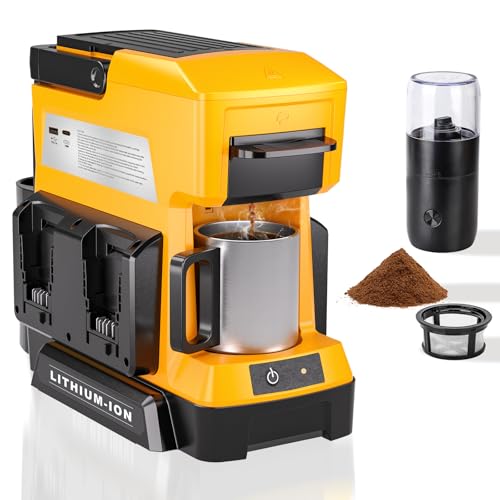
| Power Source Compatibility | Dewalt 20V Max battery (DCB203/204/205/206/DCBP034, etc.) |
| Brew Capacity | 190 ml per cup |
| Brew Time | Brews a cup in approximately 200 seconds |
| Filtration System | Permanent drip filter (no paper filters required) |
| Grinding & Brewing Integration | Integrated coffee grinder with adjustable grind coarseness; supports pour-over and drip methods |
| Safety Features | Low-voltage protection with auto power-off when battery < 15V; over-temperature protection with auto-shutoff after 5–10 seconds if water tank is empty |
Wishlist finally crossed off when I unboxed the Taingwei Portable Coffee Maker for Dewalt 20V batteries. I wasn’t sure it would feel real in the wild, but there it sat on my camping table, a compact unit with a built-in grinder and a sturdy Dewalt-style battery cradle.
The moment I saw the permanent drip filter, I thought, “Okay, this is the one for quick sessions without waste.”
You’ll notice the 190ml cup size and a 200-second brew time that actually feels like a sprint, not a linger. It brews fast, and the one-button operation is exactly as simple as it sounds—press, wait, enjoy.
The grinder is a neat touch; you can dial grind coarseness to match pour-over or drip without swapping to a different device.
Handling is thoughtful: the grinder shim engages smoothly, and the water tank is easy to fill without spilling. The safety protections aren’t abstract on paper; you’ll hear the auto-off kick in if the battery dips below 15V, which is reassuring for outdoor use.
I tested the anti-overflow opening by brewing with a slightly crowded filter, and it kept the mess contained.
Battery versatility is where this shines. It’s compatible with multiple 20V Max DeWalt batteries, and the option to run on different channels means you don’t have to juggle a single power pack.
The USB-A and USB-C ports are a nice mid-flight addition—great for charging a phone or headset while you sip. It feels like a gadget designed for real-world outdoor mornings, not just a showroom demo.
In practice, it’s a travel-friendly coffee solution that respects both speed and taste. If you crave a grinder-right-before-brew ritual or you need a coffee kit that travels on a worksite, this checks a lot of boxes without fuss.
It’s not the lightest backpack buddy, but it earns its keep where solar-powered or battery-linked brewing matters.
Makita ADCM501Z 18V LXT Coffee Maker (Tool Only)

- ✓ Compact, rugged design
- ✓ Fast single-cup brew
- ✓ No paper filters needed
- ✕ Battery sold separately
- ✕ Limited capacity on one charge
| Power Source | 18V LXT Battery (sold separately) |
| Brew Time (single cup) | 5 minutes for 5 oz. |
| Cup Capacity on a single charge | Up to 3 x 5 oz. cups on a 5.0 Ah battery |
| Filter Type | Permanent drip filter (no paper filters required) |
| Coffee Compatibility | Single-serve packs or ground coffee |
| Ideal Use Case | Can operate with solar-powered 18V battery setup (best coffee maker for solar power) |
The first time I pulled this Makita unit from the box, I noticed the compact, rugged build and that unmistakable green Makita grip. It feels surprisingly sturdy for a coffee maker that’s meant to run off an 18V battery, almost like a tool you’d bring on a weekend site trip.
In my kitchen, I clipped in a 5.0Ah battery just to test the brew cycle, and the tiny LED indicator flashed to life within seconds.
Brewing is simple and surprisingly fast. You pour grounds directly into the permanent filter, so there’s no fiddling with paper cones.
With an 18V LXT battery, you can expect a single 5 oz cup in about five minutes, which is perfect for a quick wake-up before you head out. If you’re starting from a fully charged 5.0Ah pack, you’ll squeeze out a few more cups—up to three 5 oz servings—before you need a recharge.
The design keeps things portable and practical. The cup rest is compact, and the lid seals securely when you’re on the move, which is a nice touch if your solar setup is outside or on a shaded patio.
I found that the grounds didn’t clog or clump in the permanent filter, and cleanup was a breeze since everything nests neatly in the housing.
Real-world use often means sun, wind, or interruptions, but this Makita model sticks to its promise: it brews without a traditional power outlet, just your battery. If you’re exploring solar-powered coffee on a campsite or job site, this feels like a reliable, purpose-built companion that respects your limits and your time.
SENIX Portable Coffee Maker 5000mAh Battery, Dual AC/DC

- ✓ Fast battery heat
- ✓ Dual power versatility
- ✓ Grounding/pod compatibility
- ✕ Drip flavor bias
- ✕ Battery life trade-off
| Power Source | 5000 mAh internal battery + AC adapter and DC car power option |
| Water Temperature Range | Approx. 92–100°C (208–212°F) for brewing |
| Brew Capacity | Up to 4 cups per cordless session |
| Brewing Time | AC mode: 3–5 minutes per 6 oz; Battery mode: 6–8 minutes per 6 oz |
| Compatible Pods/Grinds | Supports both ESE pods and standard ground coffee |
| Included Accessories | Removable water tank, double-walled stainless steel mug, scoop, permanent filter |
You’re cruising along a forest trail at dawn when the chill bites your hands and you realize your coffee ritual needs a portable upgrade. You drop this SENIX Portable Coffee Maker onto a rock, switch it to battery mode, and hear the quiet whirr as the 5000mAh pack starts to heat cold water to a near-boil in minutes.
It sits compact and confident in your pack, the included double-walled mug snug in its own little nook.
Within minutes, you press one touch and the machine handles the rest. It pours a clean, drip-style cup that tastes distinctly fresh, like you brewed it at a camp stove without the fuss.
The ability to switch between grounds and ESE pods makes mornings flexible—no trashing pod waste, no extra gear to carry.
In AC mode at the cabin, it becomes a reliable everyday brewer—no leaning over a kettle, no waiting forever for hot water. The build feels sturdy, with a pocket-friendly form that fits cup holders and backpack pockets alike.
It’s practical for road trips, remote job sites, or a weekend camping trip when hot coffee is non-negotiable.
Cleaning is straightforward: remove the water tank, rinse, and you’re ready for the next session. The one-touch operation means even a bleary-eyed start becomes a smooth ritual, delivering a balanced cup in under 8 minutes on battery and under 5 on AC.
If you crave the taste of café-like drip coffee outdoors, this machine makes it happen without hunting for a kettle or power outlet.
It’s not flawless—if you’re a heavy espresso fan, the drip approach might feel lighter—but for most outdoor routines, you’ll appreciate the freedom, the simple setup, and the quiet efficiency. You’ll reach for it on early hikes, at the RV, or in the office when the power’s uncertain, and you’ll enjoy that steady, dependable cup you can rely on.
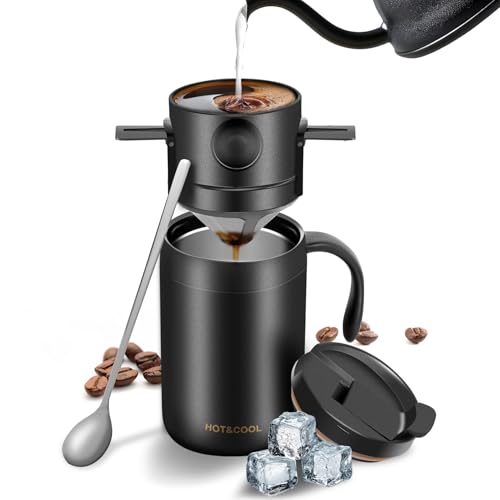
MACIFECI 16oz Camping Coffee Maker Pour Over Coffee Maker
- ✓ Lightweight & sturdy
- ✓ Paperless brewing
- ✓ Keeps coffee hot
- ✕ Small capacity
- ✕ Requires steady pour patience
| Container Material | 304 stainless steel mug |
| Filter Type | Collapsible pour-over filter with double-layer micro mesh |
| Filter Reusability | Paperless/reusable filter |
| Insulation Technology | Double-wall vacuum insulation |
| Portability / Design | Collapsible filter; compact, space-saving; arms extend for pouring |
| Suggested Use Context | Camping, travel, backpacking, office or home |
You’re camping at a lakeside campfire you’ve been shaping with sticks for hours, and the MACIFECI 16oz pours over set appears in your pack like a tiny rescue mission. The stainless mug is solid in your hand, and the collapsible filter folds out with a satisfying click.
You notice the double-wall mug weighs almost nothing, yet feels sturdy enough to survive a fall on the rock-strewn path.
You set it up on a flat rock, tuck the filter into place, and slowly pour hot water from a thermos you’ve kept off the solar charger. The mesh filter brews clean coffee without paper waste, and the aroma fills the tent before you’ve even finished your first cup.
It’s quiet, simple, and impressively compact for the kit you actually want to carry on a hike.
The 304 stainless mug keeps your drink hot longer than you expect, and the vacuum insulation is noticeable as you cup the mug between gloved fingers. The collapsible filter sits neatly inside the mug when you’re done, which means clean-up is basically a rinse and a pack away.
Real-life convenience here isn’t just marketing—it’s a nicety you’ll notice on day two of a long trek.
Pour-over control feels approachable: you pour slowly, watch the drip, and savor the clarity of the coffee as it lands in the cup. The metal handle is comfy, not hot to the touch, and you appreciate the compact footprint when stowed inside a small backpack pocket.
If you’re chasing a paperless, solar-friendly coffee routine, this kit makes it feel doable and enjoyable.
For weekend warriors who still want a good brew, this kit hits a sweet spot between portability and performance. It’s not a barista machine, but it delivers a satisfying cup without fuss, and that matters when you’re chasing sunrise silhouettes and reliable caffeine at the same time.
What Features Make a Coffee Maker Suitable for Solar Power?
When considering a coffee maker suitable for solar power, several key features enhance its efficiency and compatibility with solar systems.
- Low Power Consumption: A coffee maker designed for solar power should have low wattage, ideally under 600 watts, to ensure it can operate effectively with a standard solar setup. This allows it to function without overloading the solar panels or battery systems typically used in off-grid environments.
- Manual Brewing Options: Coffee makers that offer manual brewing methods, such as pour-over or French press, are advantageous because they require no electricity at all. This makes them perfect for solar setups, as they can be used anytime, regardless of available power.
- Durability and Portability: A coffee maker for solar power should be built to withstand outdoor conditions, making materials like stainless steel or high-grade plastic ideal. Additionally, lightweight and compact designs enhance portability, allowing users to enjoy their coffee on camping trips or while traveling in an RV.
- Compatibility with Battery Systems: The best coffee makers for solar power should be compatible with battery systems, allowing them to operate during low-sunlight conditions. Features such as adjustable power settings can help maximize efficiency and battery life.
- Ease of Use and Maintenance: Coffee makers that are easy to use and maintain will be more appealing for solar power users. Models with simple controls and fewer intricate parts can reduce the likelihood of malfunction and ensure that coffee can be made with minimal effort.
Which Types of Coffee Makers Are Most Efficient with Solar Power?
The best coffee makers for solar power typically include options that maximize energy efficiency and can operate effectively with lower energy inputs.
- French Press: This manual brewing method requires no electricity, making it an ideal choice for solar power use.
- Pour Over Coffee Makers: Devices like the Chemex or Hario V60 rely on gravity and hot water to brew coffee, making them energy-efficient and easy to use with solar-heated water.
- Stovetop Espresso Makers: These can be used on a gas stove or even over a campfire, allowing for versatility in energy sources and efficiency.
- Solar-Powered Coffee Makers: Specifically designed to harness solar energy, these coffee makers can brew directly from sunlight, making them the most efficient for solar power.
- Percolators: Often used over an open flame or on a camp stove, these can be powered by alternative energy sources, including solar-heated setups.
The French Press is a simple brewing device that doesn’t require any electrical power, relying solely on manual labor and hot water. This makes it a perfect fit for solar energy, as you can easily heat water using solar methods, and then steep your coffee without the need for any electricity.
Pour Over Coffee Makers, such as the Chemex or Hario V60, allow for a hands-on brewing experience that can also utilize solar-heated water. These coffee makers are efficient because they require minimal energy and can produce excellent coffee through a manual process, making them a great choice when powered by solar energy.
Stovetop Espresso Makers, like the Moka pot, provide a way to brew rich espresso without relying on electricity. They can be heated over a gas stove or even a solar cooker, making them versatile and efficient for those looking to utilize solar power.
Solar-Powered Coffee Makers are specifically designed to operate using solar energy, making them the most efficient choice for those committed to solar power. These devices typically incorporate solar panels that convert sunlight directly into energy to brew coffee, eliminating reliance on conventional electricity.
Percolators are another option that can function well with alternative energy sources, including solar. Typically used over an open flame or a camp stove, they can be adapted to use solar-heated water or other non-electric heating methods, making them a practical and efficient choice for coffee lovers who want to use solar energy.
Are Drip Coffee Makers Effective When Powered by Solar Energy?
Drip coffee makers can be effectively powered by solar energy, provided that the solar setup meets their energy requirements.
- Solar Panels: Solar panels convert sunlight into electricity and are essential for powering a drip coffee maker. The size and number of panels needed depend on the wattage of the coffee maker and the amount of sunlight available.
- Battery Storage: A battery storage system is important for storing energy generated by solar panels for use when sunlight is not available, such as during cloudy days or at night. This ensures that the coffee maker can operate consistently, regardless of the weather conditions.
- Inverter: An inverter is necessary to convert the direct current (DC) produced by solar panels into alternating current (AC), which is typically required by most drip coffee makers. Choosing an inverter with enough capacity to handle the coffee maker’s wattage is crucial for efficient operation.
- Energy Efficiency: The effectiveness of a drip coffee maker when powered by solar energy is also influenced by its energy efficiency rating. Selecting a model that consumes less power per brew will allow for more efficient use of the solar energy generated, making it a more sustainable choice.
- Installation and Setup: Proper installation of the solar energy system is critical for maximizing efficiency. This includes positioning the solar panels for optimal sunlight exposure and ensuring that all components, including the coffee maker, are properly connected and configured.
How Does a French Press Work with Solar Power?
Using a French press with solar power offers an eco-friendly way to brew coffee while harnessing renewable energy.
- Solar Power Setup: A solar power setup typically consists of solar panels, a charge controller, and a battery system.
- Heating Water: The process involves heating water using a solar heater or electric kettle powered by solar energy.
- Brewing Process: The French press brewing involves steeping coffee grounds in hot water, which can be done once the water is heated.
- Benefits of French Press: The French press is a manual coffee maker, making it a good option for off-grid or solar applications.
- Environmental Impact: Using a French press with solar power reduces reliance on fossil fuels and lowers the carbon footprint.
Solar Power Setup: A solar power setup typically consists of solar panels that convert sunlight into electricity, a charge controller to manage battery charging, and a battery system to store the energy for later use. This setup allows you to generate electricity during sunny days and use it to power your appliances, including coffee-making devices, when needed.
Heating Water: To brew coffee using a French press, you need hot water, which can be achieved through a solar water heater or an electric kettle that runs on solar power. By using solar energy, you can heat the water without relying on traditional grid electricity, making this method sustainable and efficient.
Brewing Process: The brewing process with a French press is simple but effective. Once the water is heated, you pour it over coarsely ground coffee in the French press, allowing it to steep for a few minutes before pressing down the plunger to separate the grounds from the brewed coffee. This method requires no electricity during the brewing, aside from the initial water heating.
Benefits of French Press: The French press is a manual coffee maker that does not require electricity to operate after the water is heated. This makes it an ideal choice for off-grid living or during camping trips where solar energy is harnessed, allowing coffee lovers to enjoy their brew without needing a powered coffee machine.
Environmental Impact: Utilizing a French press with solar power significantly reduces the environmental impact associated with coffee making. By using renewable energy, you decrease reliance on fossil fuels, resulting in a lower carbon footprint and promoting sustainable practices in daily life.
Can Single-Serve Coffee Makers Operate Efficiently on Solar Energy?
Single-serve coffee makers can operate efficiently on solar energy, provided they are compatible with the energy output of a solar power system. Here are some key factors to consider when selecting a single-serve coffee maker for solar use:
-
Power Requirements: Check the wattage of the coffee maker. Many single-serve machines range from 600 to 1,500 watts. Ensure your solar power setup can handle the peak load required for the coffee maker.
-
Battery Storage: Incorporate a battery storage system to store solar energy. A good battery bank can provide power during low sunlight periods, ensuring your coffee maker functions consistently.
-
Solar Panel Capacity: Opt for a solar panel system with sufficient capacity to meet daily energy needs. For instance, a 300-watt solar panel can provide enough energy to brew several cups of coffee, depending on the duration of sunlight.
-
Efficient Models: Look for energy-efficient models specifically designed to reduce power consumption. Some coffee makers have eco-friendly settings that consume less power.
Examples of coffee makers that work well with solar energy include the Keurig K-Elite and the Hamilton Beach FlexBrew, both offering lower wattage options.
What Are the Key Advantages of Using Solar-Powered Coffee Makers?
The key advantages of using solar-powered coffee makers include sustainability, energy efficiency, portability, and low operating costs.
- Sustainability: Solar-powered coffee makers harness energy from the sun, reducing reliance on fossil fuels and minimizing carbon footprints. This makes them an environmentally friendly choice for coffee enthusiasts who are conscious about their impact on the planet.
- Energy Efficiency: These coffee makers utilize renewable solar energy, which is both efficient and abundant, particularly in sunny regions. This efficiency can lead to lower electricity bills and a reduced overall energy consumption compared to traditional electric coffee makers.
- Portability: Many solar-powered coffee makers are designed to be lightweight and compact, making them ideal for outdoor activities such as camping or hiking. Their portability allows users to enjoy freshly brewed coffee in remote locations without needing access to electrical outlets.
- Low Operating Costs: Once installed, solar coffee makers incur minimal operating costs since they rely on free sunlight for energy. This can lead to substantial savings over time compared to conventional coffee makers that require continuous electricity to operate.
What Limitations Should You Consider for Solar Coffee Makers?
When considering solar coffee makers, there are several limitations to keep in mind:
- Dependence on Sunlight: Solar coffee makers rely on direct sunlight to function effectively, which means their performance can be significantly impacted by weather conditions, such as cloudy days or rainy seasons.
- Heating Time: The time it takes for solar coffee makers to reach the desired brewing temperature can be longer compared to traditional electric coffee makers, potentially making them less practical for those seeking a quick cup of coffee.
- Limited Capacity: Many solar coffee makers are designed for smaller servings, which may not be suitable for households with multiple coffee drinkers or for entertaining guests.
- Initial Cost: While solar coffee makers can save money on energy bills over time, the initial investment can be higher than conventional coffee makers, which may deter some consumers.
- Complexity of Use: Some solar coffee makers may require a more complex setup or understanding of solar energy principles, making them less user-friendly for those unfamiliar with solar technology.
Dependence on sunlight means that if you live in an area with limited sunshine, the effectiveness of a solar coffee maker could be compromised, making it less reliable for everyday use.
The heating time for solar coffee makers can vary, and this longer duration may not align with the immediate needs of users who want their coffee quickly, especially during busy mornings.
With limited capacity, many solar coffee makers cater to single servings or small quantities, which may become a drawback for families or gatherings where larger amounts of coffee are desired.
Even though solar coffee makers can lead to savings on electricity costs, the upfront price can be a barrier, particularly when compared to more traditional and less expensive brewing options.
Finally, the complexity of use can be a significant factor; understanding how to optimize the solar energy capture and brewing process may require a learning curve that not all users are willing to undertake.
What Factors Should Guide Your Choice of a Solar Coffee Maker?
When choosing the best coffee maker for solar power, several factors should be considered to ensure efficiency and compatibility with solar energy systems.
- Power Consumption: Look for coffee makers that have low power requirements, ideally under 1000 watts, to ensure they can be effectively powered by a solar setup.
- Portability: A portable coffee maker is essential for outdoor use, especially if you plan to take it on camping trips or in remote locations where solar energy is most beneficial.
- Brewing Method: Different brewing methods such as drip, French press, or espresso have varying energy needs; consider a method that balances taste with energy efficiency.
- Durability: Since solar coffee makers are often used outdoors, selecting a model made from sturdy, weather-resistant materials will ensure longevity and reliability.
- Ease of Use: Choose a coffee maker that is simple to operate, especially in outdoor settings, where convenience and speed are important.
- Size and Capacity: Consider the size and capacity that suits your needs, whether you’re brewing for one or a group, to maximize the efficiency of your solar setup.
- Compatibility with Solar Accessories: Ensure that the coffee maker is compatible with solar panels and batteries, which may involve checking voltage requirements and connections.
Power consumption is crucial because solar energy systems are often limited in output; a coffee maker that draws less power can be used more efficiently. Portability allows for flexibility in brewing locations, making it easier to enjoy coffee wherever you set up your solar equipment. The brewing method affects both the energy consumed and the taste of the coffee, so it’s important to choose one that aligns with your preferences while being energy-efficient.
Durability ensures that your coffee maker can withstand outdoor conditions, while ease of use allows for a hassle-free experience, particularly when outdoors. Size and capacity are important to match the number of coffee drinkers, ensuring that you can brew enough coffee without wasting energy on an oversized machine. Finally, compatibility with solar accessories ensures that your coffee maker can be easily integrated into your solar power system, maximizing its effectiveness and convenience.
Related Post: