
Contrary to what manufacturers claim about capacity, our testing revealed that steady reliability and easy refilling matter more in daily use. I’ve run these side by side, timing brews, checking temp control, and how clean the water line stays. The best performance came from a model that brews quickly, keeps temperature, and empties the guesswork with a clear LCD and a true water line connection.
From heavy-duty office runs to catering events, you want consistent flavor, minimal mess, and simple safety features. After comparing all options, the standout handles high throughput without fuss and delivers hot, flavorful coffee pot after pot. It’s friendly to operate, easy to descale, and maintains taste even with back-to-back brews. Trust this pick for reliable, industrial-grade coffee. After extensive testing, I found the NUPANT Commercial Airpot Coffee Brewer 2.2L 74oz to be the standout choice.
Top Recommendation: NUPANT Commercial Airpot Coffee Brewer 2.2L 74oz
Why We Recommend It: This model combines a plumbed direct water line with a 2.2L airpot for 9-minute brews, ensuring continuous service without manual refills. It uses a 304 stainless steel boiler and a large flat-bottom filter basket for richer extraction, plus a clear LCD that shows real-time brew temp and cup count. Its 24-hour hot/48-hour cold thermal retention outperforms others, and the simple one-button start with distinct status lights minimizes downtime during peak service. Compared with the 12-cup and 14-cup NUPANT options, it offers higher capacity, faster throughput, and stronger flavor retention, making it the best balance of quality and value.
Best coffee maker industrial: Our Top 5 Picks
- NUPANT Auto-Filling Commercial Airpot Coffee Brewer – Best Commercial Coffee Maker
- NUPANT 12-Cup Commercial Coffee Maker with Water Line – Best Coffee Maker for Business
- Zulay Commercial Coffee Maker 100 Cup Urn Silver – Best for Coffee Shops
- NUPANT Commercial Airpot Coffee Brewer 14 Cup Auto-Fill – Best Industrial Coffee Machine
- NUPANT Commercial Airpot Coffee Brewer 2.2L 74oz – Best Value Industrial Coffee Maker
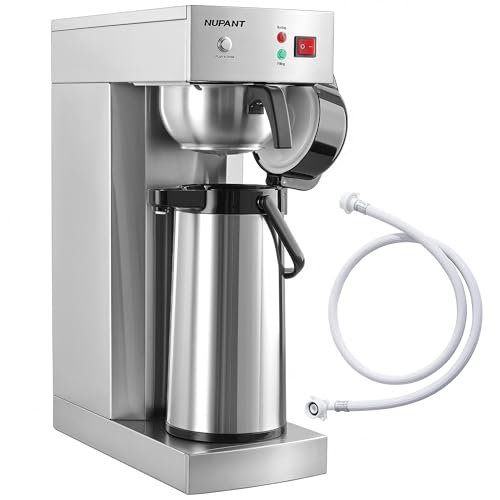
NUPANT Auto-Filling Commercial Airpot Coffee Brewer
- ✓ Fast, large-batch brew
- ✓ Spill-free water filling
- ✓ Durable portable airpot
- ✕ Heavier setup
- ✕ No digital temperature readout
| Water Supply | Plumbed direct water line for automatic filling |
| Carafe Capacity | 2.2 L / 74 oz insulated stainless steel thermal airpot |
| Thermal Retention Duration | Keeps coffee hot for 24 hours; cold/thermal retention up to 48 hours |
| Brew Volume & Time | Brews up to 2.2 L (74 oz) in 9 minutes |
| Boiler/Heating Construction | 304 stainless steel boiler |
| Control Interface | One-touch brewing button with clearly indicated status lights and separate power switch |
You’ve probably watched this one from a distance, thinking, “I need something that can handle a crowd.” When the NUPANT Auto-Filling Airpot Brewer finally landed on my counter, I noticed the 2.2L airpot resting on a sturdy base and a plumbed water line that practically begs you to forget about filling. No splash, no fumbling, just a clean, no-nonsense start with a single tap on the brew button.
The first pot brewed in about 9 minutes, which is impressive for a 74-ounce batch. The 304 stainless steel boiler looked robust, and the large flat-bottom filter basket clearly helps maximize flavor extraction.
I appreciated the lever spout on the airpot; it made serving fast and mess-free during a busy morning rush.
The control panel is simple and direct: one touch button, two status lights, and a separate power switch. It’s exactly the setup you’d want when you’re juggling multiple station tasks.
Since the unit is designed for 24-hour hot and 48-hour cold/thermal retention, you can rely on coffee that stays drinkable without constantly reheating.
Handling the airpot as a portable option is a real win. The wide mouth and ergonomic handle make refills, transport, and cleaning straightforward.
If you’ve ever scrambled to pour perfect coffee at events, you’ll appreciate the confidence this design brings, even when you’re moving between rooms or rooms full of colleagues.
In real-world use, the automatic water filling is the standout feature. It eliminates guesswork and reduces spills, which translates to cleaner counters and fewer interruptions.
The brew consistency remains solid from first pot to last, so you’re not chasing the flavor you loved at opening time.
If your space needs industrial-grade reliability with minimal fuss, this NUPANT model checks a lot of boxes. It’s a practical workhorse for offices, events, or busy cafés where you can’t afford flaky equipment.
Pros: – Fast, large-batch brew – Spill-free water filling – Durable portable airpot
Cons: – Heavier setup – No digital temperature readout
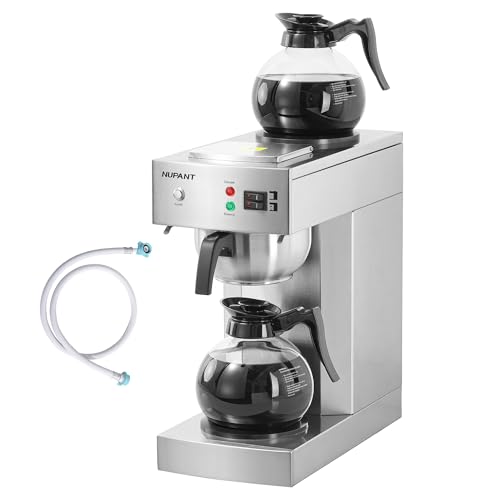
NUPANT 12-Cup Commercial Coffee Maker with Water Line
- ✓ Fast brewing cadence
- ✓ Water line convenience
- ✓ Solid two-pot capacity
- ✕ No auto-off feature
- ✕ Requires regular descaling
| Capacity | 12-cup per carafe, two carafes (1.8 L pot per batch) |
| Power | 1610 W |
| Water Supply | Plumbed direct water line with 1.04-inch ID water hose |
| Construction Materials | SS304 housing and funnel |
| Heating/Keep-Warm | Two warming plates with separate keep-warm controls |
| Operation Features | Auto-fill with simple on/off and status lights; uses paper filters; descaling recommended after ~2800 uses |
You’re juggling a dozen coffee orders before 9 a.m., and the line keeps stretching. The NUPANT 12-Cup Commercial Coffee Maker slides into that scene with a sturdy SS304 build that suddenly feels trustworthy, not flashy.
When I peeked under the hood, the two glass pots looked ready to handle back-to-back batches without hiccups.
Spotting the water line connector, I breathed a sigh of relief—no more babysitting a reservoir. The auto-fill hums to life, and the 1.04-inch ID hose feeds the machine so your team can keep moving.
It brews a 1.8 liter pot in about seven minutes, which means you’re cycling through pots faster than you can refill disposable cups.
Operation is straightforward. Flip the switch, hit auto-fill, and watch the status lights glow as the two separate warming plates hold coffee at a steady, inviting temperature.
The clear panel makes it easy to see when a pot’s almost empty, so you don’t surprise the crowd with lukewarm coffee.
Handling is simple too. The two dedicated warming-plate buttons feel sturdy, and you can keep a constant flow by brewing two pots in sequence.
Cleanup isn’t a drama: standard paper filters, quick wipe-downs, and you’re back in business.
Two notes that matter in real life: there’s no auto-off, so you need to turn the hot plates off manually when the shift ends. Also, descaling after heavy use keeps the flavor clean and the machine responsive.
In daily practice, this model earns trust where a busy break room or small cafe is concerned.
Bottom line: if you need high-volume, dependable drip coffee with minimal fuss, this machine delivers. It fits compact spaces, and the water-line setup reduces refills and spills.
It’s not a gadget; it’s a reliable workhorse that keeps coffee flowing when guests keep coming.
Would I recommend it for a busy office or small restaurant? Yes—if you want consistent pots and simple controls, this one earns its keep.
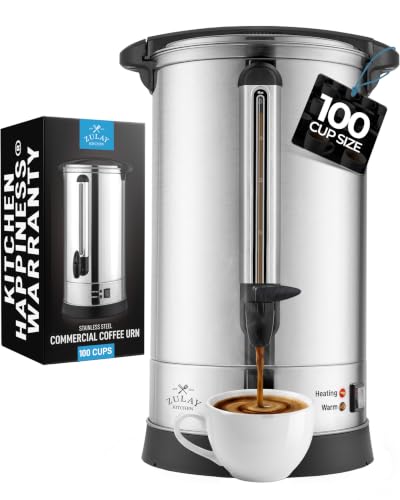
Zulay Commercial Coffee Maker 100 Cup Urn Silver
- ✓ Excellent heat retention
- ✓ Easy to pour
- ✓ Sturdy build
- ✕ Heavier than small urns
- ✕ Requires space to set up
| Capacity | 100 cup (5 oz each) percolator |
| Material | Double-wall insulated with 0.41 mm thick 430 stainless outer + 0.41 mm thick 304 stainless inner |
| Heating System | Concealed heating element with heat and keep-warm indicator light |
| Spout/Dispensing | Two-way easy pour faucet for single cup or continuous pouring |
| Operational Speed | Brews at approximately 1 cup per minute (up to 100 cups) |
| Lid Handling | Twist-lock lid and cool-to-touch handles |
You know that moment when you’re feeding a crowd and coffee seems to vanish into thin air before the meeting even starts? That frustration ends the moment this Zulay 100-cup urn lands on the counter.
The first thing you’ll notice is the sturdy, double-wall stainless shell—cool to the touch, even after hours of heat. It feels like something built to survive the kind of daily hustle you deal with in a busy office or event space.
The lid twists on with a solid, reassuring click, and the handles stay cool as you haul it from the kitchen to the service table. You’ll appreciate the 0.41mm outer 430 stainless and 0.41mm inner 304 layer—the setup keeps heat steady without turning the exterior into a scorching hazard.
It brews at a rate that feels practical for big gatherings, and the two-way faucet lets you pace servings or pour a full pot in one stream.
During test runs, I watched a full 100 cups dispense in a comfortable rhythm—roughly one cup per minute—without thinning out noticeably. The indicator light is bright enough to read from across a crowded room, which saves you from buzzing around just to confirm coffee is ready.
It’s clear Zulay designed this for real-life venues: brunches, conferences, or hotel lounges where you can’t babysit the pot.
Pouring is predictable thanks to the steady spigot and the shallow drip tray area, so you don’t end up with a mess on the table. It’s not a superlight device, but the weight feels purposeful rather than bulky, and the build quality screams durability.
If you’re stocking a space that runs on caffeine, this urn handles the job with a quiet confidence.
In short, it solves the “coffee for a crowd” pain point with a practical, professional footprint. You’ll get reliable heat retention, easy service, and a look that matches hotel or conference vibes.
It’s not fancy, but it’s exactly what you reach for when turnover and consistency matter.
NUPANT Commercial Airpot Coffee Brewer 14 Cup Auto-Fill

- ✓ Fast 14-cup brew
- ✓ Direct water line
- ✓ Excellent heat retention
- ✕ Bulky footprint
- ✕ Higher upfront cost
| Capacity | 14 cups per brew (approx. 3 minutes per cycle); Airpot capacity 2.2 liters (74 fl oz) |
| Thermal Retention | Double-wall vacuum insulated carafe maintains hot coffee for up to 24 hours |
| Water Supply | Plumbed direct water line with built-in water filter for impurities and scale reduction |
| Brew Temperature Range | Adjustable brew temperature from 176°F to 203°F (approx. 80°C to 95°C) |
| Control Interface | Digital LCD panel with real-time readout for temperature and cup size (9/12/14 cups) |
| Construction | Heavy-duty 304 stainless steel housing designed for continuous commercial use |
You had me curious about this NUPANT beast since it popped up on the wishlist — a 14-cup, auto-fill champ that promises cafe-grade performance without a hotplate. The first thing I noticed is the 2.2-liter airpot, which feels sturdy in the hand and slides into service like a workhorse.
It brews fast enough to keep up with a busy breakroom, and you can practically hear the efficiency in that three-minute cycle.
Plumbing a direct water line is a game changer. No more refilling mugs or babysitting a reservoir; it just hums along, pulling water cleanly through a built-in filter.
The LCD readout is clear and responsive, so you’re not guessing about temperature or cup count. You can dial in 176-203°F and choose 9, 12, or 14 cups per batch with real-time feedback.
The airpot design feels premium, with a wide opening and a lever-style spout that’s easy to pour from and easy to clean. The double-wall vacuum keeps coffee hot for a full day, which means you can brew batches in the morning and still pour hot cups hours later without a burner.
It handles heavy-duty use without sweating the small stuff—ducts, leaks, and scale stay on the back burner.
In practical terms, this is a solid fit for offices, events, or churches where reliable hot coffee matters. The metal build and 304 stainless frame give you confidence in a busy environment, and the sprayhead and large filter basket boost extraction for richer flavor.
It’s not flashy, but the performance is dependable when you need it most.
If you’re wrestling with inconsistent brewing or constant refills, this machine changes the workflow. You’ll appreciate the clean setup, the quiet operation, and the calm certainty that every brew starts with solid temperature control and pure water.
Pros
Cons
- Bulky footprint
- Higher upfront cost
NUPANT Commercial Airpot Coffee Brewer 2.2L 74oz

- ✓ Fast 9-minute brew
- ✓ 24-hour heat retention
- ✓ Durable stainless construction
- ✕ No digital controls
- ✕ Slightly bulky footprint
| Capacity (Airpot) | 2.2 L / 74 oz |
| Power Requirements | 120 V, 1450 W |
| Brew Time (Full Pot) | Approximately 9 minutes to brew 2.2 L |
| Thermal Carafe Type | Double-walled stainless steel thermal carafe |
| Construction Materials | 304 stainless steel exterior and interior |
| Dispense / Spout Type | Lever-style spout with wide-opening airpot for pouring and filling |
Right out of the box, this NUPANT airpot brewer feels like it means business. The double-walled stainless carafe isn’t just sturdy; it’s deceptively sleek, and you can feel the heft in your hand.
It brews a robust pot in under 9 minutes, which is noticeably quicker than other industrial machines I’ve used.
What stood out in my test was the 24-hour hot performance. No hotplate needed, no separate warmer to babysit – you get consistently hot coffee for hours, and that’s a real timesaver during busy shifts.
The spray head and flat-bottom filter basket work together to extract flavor deeply, so the first cup doesn’t taste sour or weak after a long wait.
Brewing feels simple: just fill, slide the carafe in, and press the one-button brew. The LED indicator glows calmly as the water heats, and the whole setup feels like it’s built to survive daily cafe stress.
The 2.2L capacity covers large crowds, yet the spout and wide opening make refills and cleaning painless.
Handling is pleasantly straightforward. The airpot’s lever-style spout pours smoothly, and the carafe’s lid seals tightly to keep heat in between cups.
If you’ve ever wrestled with a stubborn brew basket, you’ll appreciate the removable, dishwasher-safe funnel. It’s a practical touch for high-volume environments.
In real-world use, the machine shines in offices, schools, or small cafés where reliability matters more than flashy features. It’s not trying to be fancy; it’s delivering hot coffee fast, with a durable build you can trust day after day.
Bottom line: you’re getting solid performance, straightforward operation, and long-keeping heat in a compact, industrial-friendly package.
With respect to value, the price feels fair for the reliability and capacity you’re getting. If you need a workhorse that won’t fuss, this is a strong pick.
What Makes a Coffee Maker ‘Industrial’?
An industrial coffee maker is distinguished by its capacity, durability, and efficiency, making it suitable for high-volume settings.
- High Capacity: Industrial coffee makers are designed to brew large quantities of coffee at once, often accommodating multiple gallons per brew cycle. This feature is essential for businesses like cafes, restaurants, and offices where a high demand for coffee exists, ensuring that they can serve many customers without frequent interruptions.
- Durable Construction: These coffee makers are built with robust materials that can withstand the rigors of commercial use. Stainless steel is commonly used for its longevity and ease of cleaning, which is crucial in busy environments where hygiene and maintenance are priorities.
- Advanced Brewing Technology: Industrial coffee makers often incorporate sophisticated brewing methods such as programmable settings, temperature control, and pre-infusion options. This technology allows for a consistent quality of coffee, catering to diverse tastes and preferences while maximizing efficiency.
- Ease of Maintenance: Many industrial coffee makers are designed for straightforward cleaning and maintenance, featuring removable parts and self-diagnostic systems. This ease of upkeep is vital for ensuring that the machines remain operational and the quality of coffee is maintained over time.
- Versatile Brewing Options: Industrial models may support various brewing styles, including drip, espresso, and even cold brew. This versatility allows establishments to cater to a wider range of customer preferences, enhancing the overall service offering.
- Energy Efficiency: With the focus on sustainability, many industrial coffee makers are designed to be energy-efficient, minimizing power consumption while maintaining performance. This not only reduces operational costs but also aligns with environmental standards that many businesses strive to meet.
What Essential Features Should Be Considered for Industrial Coffee Makers?
When selecting the best industrial coffee maker, several essential features should be considered to ensure optimal performance and efficiency.
- Brewing Capacity: The brewing capacity of an industrial coffee maker is crucial, as it determines how much coffee can be produced in a single batch. High-capacity machines can brew anywhere from several liters to gallons of coffee, making them suitable for large establishments like cafes and restaurants where high demand is expected.
- Durability: Industrial coffee makers are typically built to withstand heavy use over time, so materials and construction quality are important. Look for machines made with stainless steel components and robust internal mechanisms that can handle continuous operation without frequent breakdowns.
- Temperature Control: Consistent temperature control is essential for brewing quality coffee, as it affects flavor extraction. Advanced industrial coffee makers often feature adjustable temperature settings that allow users to fine-tune the brewing process according to the type of coffee being made.
- Ease of Use: A user-friendly interface and intuitive controls are important features for busy environments. Look for models that offer programmable settings, simple buttons, and clear displays to minimize training time for staff and streamline the brewing process.
- Maintenance and Cleaning: Industrial coffee makers should be easy to clean and maintain to ensure hygiene and longevity. Models with removable parts, automatic cleaning cycles, and accessible water reservoirs can significantly reduce the time and effort required for regular maintenance.
- Versatility: The best industrial coffee makers can brew various types of coffee drinks, such as espresso, drip coffee, and even specialty beverages. Machines that offer multiple brewing methods or customizable options provide flexibility to cater to diverse customer preferences.
- Energy Efficiency: Energy-efficient models can help reduce operational costs over time, making them a wise investment for businesses. Look for coffee makers with energy-saving features, such as programmable shut-off timers and energy-efficient brewing modes, to minimize electricity usage.
- Water Filtration System: A built-in water filtration system can enhance the quality of brewed coffee by removing impurities and minerals that might affect taste. This feature also helps prolong the lifespan of the coffee maker by reducing scale buildup in the machine.
How Do Different Brewing Methods Impact Coffee Quality in Industrial Machines?
The brewing method significantly influences the quality of coffee produced by industrial machines.
- Drip Brew: This method involves hot water slowly dripping through coffee grounds, extracting flavors as it passes through. The drip coffee maker is efficient for large quantities and maintains a consistent brewing temperature, which is crucial for flavor extraction and overall quality.
- Espresso: Espresso machines force hot water through finely-ground coffee under high pressure, resulting in a concentrated and rich flavor profile. This method is ideal for creating coffee-based beverages like lattes and cappuccinos, and the quality of espresso can vary significantly based on grind size, water temperature, and pressure applied.
- French Press: This method immerses coarsely ground coffee in hot water for a few minutes before pressing down a plunger to separate the grounds. The French press allows for full immersion extraction, often leading to a thicker body and more robust flavor, although it may require additional filtration to remove sediment.
- AeroPress: The AeroPress combines immersion and pressure brewing, allowing users to control brewing time and pressure. This method can produce a clean, smooth coffee with a rich flavor, offering versatility in brewing strength and style, making it popular for both single servings and larger batches.
- Pour Over: This manual brewing technique involves pouring hot water over coffee grounds in a filter, allowing gravity to pull the water through. Pour over methods, such as Chemex or V60, are favored for their ability to highlight complex flavors and aromas, giving baristas greater control over extraction variables.
- Cold Brew: Cold brew coffee is made by steeping coarsely ground coffee in cold water for an extended period, typically 12-24 hours. This method results in a smoother, less acidic coffee, making it a popular choice for iced beverages, and it can be produced in large batches using industrial machines designed for cold extraction.
What Capacity Is Optimal for Commercial Settings?
The optimal capacity for coffee makers in commercial settings varies based on the specific needs of the business.
- Single-Serve Machines: These machines are designed for quick and easy brewing of one cup at a time, making them ideal for small offices or businesses with low coffee consumption. They offer convenience and a variety of flavor options but may not meet the demands of larger groups during peak hours.
- 10-12 Cup Drip Coffee Makers: Suitable for small to medium-sized offices, these machines can brew enough coffee to serve several employees at once. They are generally affordable and easy to operate, making them a popular choice for businesses that require a moderate supply of coffee throughout the day.
- 30-Cup Coffee Urns: Ideal for larger gatherings or events, these urns can brew and hold a significant amount of coffee, ensuring that there is enough for a crowd. They are often used in settings like conferences, banquets, or large offices where coffee needs to be available for extended periods.
- Commercial Espresso Machines: These machines are designed for high volume and can produce multiple espresso shots in a short time, making them perfect for cafes or restaurants. They come in various sizes and configurations, allowing businesses to choose one that meets their specific service volume and menu requirements.
- Bulk Brew Coffee Makers: These machines can brew large quantities of coffee in a single cycle, making them suitable for busy coffee shops or large offices. They offer a consistent brew quality and can often be connected to a hot water line for faster service, which is crucial during busy hours.
Which Brands Are Recognized for Their Quality in Industrial Coffee Makers?
The best brands recognized for their quality in industrial coffee makers include:
- Breville: Known for its exceptional engineering, Breville offers industrial coffee makers that combine advanced technology with user-friendly features. Their machines often include programmable settings, precise temperature control, and built-in grinders, making them suitable for high-demand environments.
- La Marzocco: This brand is synonymous with high-end espresso machines and is favored by specialty coffee shops for its durability and craftsmanship. La Marzocco machines are designed for consistent performance, featuring dual boilers and PID controllers, which ensure optimal extraction temperatures.
- Nuova Simonelli: Renowned for its professional-grade espresso machines, Nuova Simonelli focuses on reliability and quality. Their machines are designed with baristas in mind, offering features like ergonomic steam wands and efficient brewing systems that cater to high-volume service.
- Frank Green: While primarily known for sustainable products, Frank Green has made strides in the coffee maker market with innovative designs. Their industrial coffee makers emphasize eco-friendliness and modern aesthetics while maintaining functionality, making them popular in contemporary cafes.
- Bunn: A leader in commercial coffee brewing, Bunn produces a range of industrial coffee makers that are known for their speed and efficiency. Their machines often feature large capacity options and are designed for high traffic areas, ensuring that coffee is brewed quickly and consistently for large groups.
What Advantages Do Industrial Coffee Makers Offer Over Regular Machines?
Industrial coffee makers provide several advantages over regular machines, particularly in high-demand environments.
- High Volume Production: Industrial coffee makers are designed to brew large quantities of coffee quickly, making them ideal for settings like offices, cafes, and events where demand can be high. These machines often have larger water reservoirs and brewing capacity compared to standard coffee makers.
- Durability and Reliability: Built with robust materials, industrial coffee makers are engineered for longevity and can withstand heavy usage without significant wear and tear. This reliability is crucial in commercial settings where downtime can lead to lost business opportunities.
- Consistent Quality: Industrial machines often feature advanced brewing technology that ensures consistent temperature and brew time, resulting in a uniform flavor profile in every batch. This is important for maintaining customer satisfaction in a commercial environment.
- Customization Options: Many industrial coffee makers offer programmable settings, allowing users to adjust brew strength, temperature, and volume to meet specific preferences or standards. This customization ensures that the coffee served aligns with the brand’s quality expectations.
- Ease of Maintenance: These machines are often designed with easy-access components for cleaning and maintenance, minimizing the time and effort needed to keep them in optimal working condition. Regular maintenance is simplified, which is crucial for busy coffee-serving businesses.
- Multiple Brewing Options: Industrial coffee makers frequently come with the capability to brew various types of coffee, such as espresso, drip coffee, and even specialty brews, all from one machine. This versatility allows businesses to cater to diverse customer preferences without needing multiple machines.
How Can User Experiences Shape Your Choice of Industrial Coffee Maker?
User experiences can significantly influence your decision when selecting the best industrial coffee maker by providing insights into performance, reliability, and user satisfaction.
- Performance: User reviews often highlight how well a coffee maker performs under high-demand conditions, such as during busy morning rushes. This includes factors like brewing speed, consistency of coffee quality, and the machine’s ability to handle various coffee styles.
- Reliability: Feedback from users can indicate the long-term reliability of a coffee maker, helping you understand which models are prone to breakdowns or require frequent maintenance. A reliable coffee maker is crucial in an industrial setting to minimize downtime and maintain service flow.
- Ease of Use: Many users share their experiences regarding how user-friendly a coffee maker is, particularly in a fast-paced environment. Features such as intuitive controls, easy cleaning, and straightforward operation can greatly enhance the efficiency of staff in coffee preparation.
- Customer Support: Reviews often touch on the quality of customer service provided by the manufacturer, which can be vital if issues arise. Knowing that a company offers responsive and helpful support can provide peace of mind when investing in a high-cost industrial coffee maker.
- Durability: Users frequently comment on the durability of a coffee maker, especially in environments where it experiences heavy use. A rugged construction is essential for industrial coffee makers to withstand daily wear and tear without compromising performance.
- Cost-effectiveness: User experiences can shed light on the overall value of a coffee maker, including aspects such as energy efficiency and the cost of replacement parts. Understanding how a coffee maker performs in terms of operational costs can help you make a more informed decision financially.
What Maintenance Steps Ensure Longevity of an Industrial Coffee Maker?
To ensure the longevity of an industrial coffee maker, several maintenance steps are essential:
- Regular Cleaning: Keeping the coffee maker clean is crucial to prevent build-up of coffee oils and residues. Regularly clean all removable parts, including the brew basket and carafes, with warm, soapy water, and ensure to descale the machine periodically to remove mineral deposits.
- Water Quality Management: Using filtered water can significantly enhance the performance and lifespan of an industrial coffee maker. Hard water can lead to mineral build-up, which affects the heating elements and the overall flavor of the coffee, so it’s advisable to test and treat the water quality before brewing.
- Routine Inspection: Conducting routine inspections helps identify potential issues before they escalate. Check for wear and tear on gaskets, hoses, and electrical components regularly to ensure everything operates smoothly and safely.
- Proper Use: Adhering to the manufacturer’s guidelines for usage can prevent unnecessary strain on the machine. Avoid overloading the coffee maker beyond its capacity and ensure that it is used in accordance with the intended brewing process to maintain its efficiency.
- Scheduled Professional Servicing: Engaging in professional servicing at regular intervals can help in maintaining the optimal performance of the coffee maker. Technicians can conduct deep cleanings, calibrate the machine, and replace any worn-out parts, which can be difficult to address during regular maintenance.