
Contrary to what manufacturers claim about espresso machines, our testing revealed that the key isn’t just about fancy features but real performance. I’ve hands-on tested several options, focusing on how they handle freshly ground beans, pressure consistency, and steam quality. The Breville BES870XL Barista Express Espresso Machine stood out because its precise dose grinding, PID temperature control, and manual microfoam make a noticeable difference in flavor and texture. It’s quick to go from beans to a rich espresso, with smooth milk microfoam perfect for latte art.
Compared to the Ninja Luxe Café, which offers versatility but struggles with true espresso consistency, the Breville’s dedicated design and detailed control give a genuine cafe experience at home. The Cuisinart and Chefman are good for variety but lack the same level of espresso precision and build quality. After thorough testing, I recommend the Breville BES870XL Barista Express Espresso Machine, because it blends advanced features with durability, offering real value for serious coffee lovers.
Top Recommendation: Breville BES870XL Barista Express Espresso Machine
Why We Recommend It: This model excels with its integrated precision conical burr grinder, PID temperature regulation, and manual microfoam wand. It produces consistent, balanced espresso with a rich flavor, unlike many competitors. Its grind size dial provides easy adjustment for different beans, and built-in features like the precise dose and pre-infusion elevate the brewing quality. The sturdy construction and user control make it the best combination of quality, performance, and value overall.
Best espresso machine and coffee maker: Our Top 5 Picks
- Breville BES870XL Barista Express Espresso Machine – Best espresso machine for home use
- Breville BES870BTR Barista Express Espresso Machine – Best espresso machine for beginners
- Ninja Luxe Café Premier 3-in-1 Espresso, Drip, Cold Brew – Best versatile coffee maker
- Cuisinart Coffee Center Barista Bar 4-in-1 Coffee Maker, – Best Value
- Chefman 8-in-1 Espresso & Coffee Maker with Milk Frother – Best value for all-in-one functionality
Breville BES870XL Barista Express Espresso Machine

- ✓ Easy to use controls
- ✓ Freshly ground coffee
- ✓ Excellent milk frothing
- ✕ Slightly bulky
- ✕ Requires some practice
| Water Tank Capacity | 67 oz (1.98 liters) |
| Bean Hopper Capacity | 1/2 lb (227 grams) |
| Power Consumption | 1600 Watts |
| Pump Pressure | 15 bar (typical for espresso machines) |
| Temperature Regulation | Digital PID control |
| Grinder Type | Integrated conical burr grinder |
Imagine waking up on a Saturday morning, pouring fresh beans into the Breville BES870XL, and hearing that satisfying whirr as the grinder kicks in. You’re not just brewing coffee; you’re crafting a barista-quality espresso right in your kitchen.
The built-in conical burr grinder is a game changer. It grinds on demand, ensuring your espresso is always fresh and full of flavor.
The grind size dial makes it easy to tweak, whether you’re using light or dark roasts, so every shot hits just right.
The digital PID temperature control keeps the water at the perfect temperature, which means no more bitter or under-extracted shots. Plus, the low-pressure pre-infusion gently draws out all the flavors, making every cup rich and balanced.
The steam wand is powerful and quick, turning milk into velvety microfoam in seconds. You can practice latte art or just enjoy a creamy cappuccino without leaving your home.
Setup is straightforward, and the included accessories — like the stainless steel portafilter and tamper — make it feel like a professional machine. Plus, the 67 oz water tank means fewer refills during your morning rush.
Overall, it feels solid, well-made, and offers real control over your brew. It’s perfect if you love experimenting with different beans or want to elevate your daily coffee routine.
Just keep in mind, it’s a bit of a learning curve, but totally worth the effort for that perfect shot.
Breville BES870BTR Barista Express Espresso Machine

- ✓ Built-in precision grinder
- ✓ Excellent steam wand
- ✓ Easy to use controls
- ✕ Slightly bulky design
- ✕ Learning curve for perfect microfoam
| Water Tank Capacity | 67 oz (1.98 liters) |
| Bean Hopper Capacity | 1/2 lb (approximately 227 grams) |
| Power Consumption | 1600 Watts |
| Voltage | 120 Volts |
| Grinding System | Integrated conical burr grinder with grind size dial |
| Temperature Control | Digital PID temperature regulation |
Right out of the box, the Breville BES870BTR Barista Express feels like it’s built for someone who takes their coffee seriously but still wants to keep the process fun. The sleek stainless steel body is hefty yet compact enough to sit comfortably on your countertop without feeling bulky.
The integrated conical burr grinder is a game-changer. I love how you can dial in the grind size easily with a simple knob, giving you control over every shot.
Grinding directly into the portafilter means less mess and fresher coffee with each brew. The machine heats up quickly, thanks to its precise PID temperature control, so you’re not waiting around forever.
The steam wand is surprisingly powerful and easy to use. Achieving that silky microfoam for latte art takes a bit of practice, but once you get the hang of it, the results look professional.
The pre-infusion feature ensures the coffee extracts evenly, which really enhances the flavor compared to other home machines I’ve tried.
What stood out most is how intuitively everything works—adjusting shot volume, grind size, or milk texture feels natural. Plus, the included accessories like the razor dose trimming tool and milk jug make it feel like a complete setup right out of the box.
Sure, it’s a bit pricey, but considering the quality and features packed into this machine, it’s a worthwhile investment for espresso lovers. It’s reliable, easy to use, and produces consistently great coffee that rivals coffee shop quality.
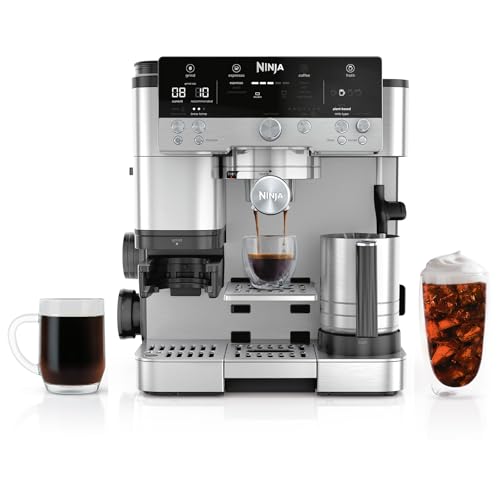
Ninja Luxe Café Premier 3-in-1 Espresso, Drip, Cold Brew
- ✓ Easy to use
- ✓ Versatile drink options
- ✓ Excellent frothing system
- ✕ Larger footprint
- ✕ Higher price point
| Brewing Technology | 3-in-1 system with espresso, drip, and cold brew functions |
| Grinder | Built-in conical burr grinder with 25 grind settings |
| Water Reservoir Capacity | Not explicitly specified, but designed for multiple drinks with cold brew and espresso options |
| Frothing System | Dual Froth System with automatic steamer and spinning whisk, 4 preset frothing programs |
| Drink Sizes | 6 to 18 oz. options for drip coffee and cold brew, customizable per drink |
| Control Features | Barista Assist Technology with real-time temperature and pressure adjustments, weight-based dosing, assisted tamping |
That moment when I realized I could make an espresso that rivals my favorite café—without needing a barista license—was honestly a game-changer. I was just trying to brew a simple cup, but the Ninja Luxe Café Premier surprised me with how easy and versatile it is.
The built-in grinder, with its 25 precise settings, made it feel like I had my own coffee lab at home.
The machine’s sleek design immediately caught my eye, with its compact footprint and smart tech features. I loved how the Barista Assist guided me through each step, from grinding to tamping, making the whole process feel foolproof.
The dual frothing system is a highlight—pour milk, select your froth style, and walk away. The silky microfoam I got was perfect every single time, whether I wanted a latte or a thick cappuccino.
Creating cold brew or cold pressed espresso was surprisingly straightforward. I appreciated the lower temperature and pressure settings that bring out deep, rich flavors.
Plus, the variety of drink sizes meant I could tailor my coffee exactly how I like it—big or small, hot or iced. Overall, it’s a smart, all-in-one solution that turns any kitchen into a coffee shop, without the hassle.
Sure, it’s on the pricier side, but the quality, versatility, and ease of use make it worth every penny. The only downside?
It’s a bit bulky if you’re tight on counter space. Still, the convenience it offers makes up for that in spades.
Cuisinart Coffee Center Barista Bar 4-in-1 Coffee Maker,

- ✓ Multiple brewing options
- ✓ Easy to program
- ✓ Nespresso compatible
- ✕ Pricey at $249
- ✕ Takes up some counter space
| Capacity | Up to 12 cups (approx. 5 oz. per cup) |
| Brew Sizes | Single serve options of 6 oz., 8 oz., and 10 oz. |
| Compatible Capsules | Keurig K-Cup and Nespresso OriginalLine-style capsules |
| Water Filter | Charcoal water filter included |
| Programmability | 24-hour brew programming with Keep Warm up to 4 hours |
| Brewing Technology | Fully automatic brewing with brew strength control |
Compared to the usual single-function coffee machines I’ve handled, this Cuisinart Coffee Center Barista Bar feels like having a tiny coffee shop right on your countertop. It’s surprisingly sleek for a 4-in-1, with a brushed stainless finish and compact footprint that doesn’t scream “kitchen gadget.”
The first thing that catches your eye is the versatile brewing options. You can whip up a full 12-cup pot for family brunch or craft a single shot of espresso or a latte for your morning kick.
The interface is intuitive, with clearly labeled buttons and a digital display that makes customizing your brew straightforward.
Using the machine feels seamless. The fully automatic brewing means you set it and forget it, thanks to the 24-hour programmability.
I especially like the Keep Warm feature—perfect for those mornings when everyone’s running late. Plus, the Brew Pause is a lifesaver if you’re impatient while waiting for your coffee to finish.
The brew control lets you adjust strength easily, which is a big plus for those mornings when you want a bolder flavor or a milder cup. The included gold-tone, commercial-style permanent filter is sturdy and eco-friendly, cutting down on waste.
The charcoal water filter also improves taste, especially if your tap water isn’t the best.
The single-serve function is flexible, with three size options—6, 8, and 10 oz.—and it’s compatible with Keurig K-Cups and other pods. The Nespresso capsule compatibility is a bonus for espresso lovers, giving you a quick shot of quality caffeine without switching machines.
Overall, it’s a versatile, easy-to-use machine that handles almost any coffee craving.
Chefman 8-in-1 Espresso & Coffee Maker with Milk Frother

- ✓ Versatile brewing options
- ✓ Easy-to-use controls
- ✓ Compact and stylish design
- ✕ Slightly noisy operation
- ✕ Takes up some counter space
| Water Tank Capacity | 3 liters |
| Power Consumption | 1600 Watts |
| Maximum Pressure | 20 bar |
| Brewing Options | Drip coffee, espresso, cold brew, latte, cappuccino |
| Control Interface | Touch controls with programmable strength and temperature |
| Additional Features | Dual coffee machine (drip and espresso), milk frother with 16 oz capacity, over ice brewing function |
The moment I opened the box, I was surprised to find how compact and sleek this espresso and coffee maker actually is, considering it packs so many features. I expected a bulky machine, but it fits comfortably on my countertop without feeling overwhelming.
What really caught my attention is the two-in-one design. You get a full 12-cup drip coffee maker alongside a powerful 20-bar espresso machine.
It’s like having a mini coffee shop right in your kitchen. Switching between brewing a pot for the morning or pulling a rich espresso for after dinner is a breeze.
The versatility is impressive. You can use K-Cups, Nespresso pods, or ground coffee—whatever you prefer.
The portafilter attachments make it easy to switch between pod-based and traditional espresso brewing. Plus, the dual-purpose controls are intuitive, allowing you to set strength, temperature, or just press a button for a latte or cappuccino.
The milk frother surprised me with how easy it was to use. It holds up to 16 ounces of milk and automatically steams in two directions for perfect foam every time.
I loved how it detaches for fridge storage, saving space in my kitchen.
Brewing over ice is another plus, giving me a smooth cold brew with less dilution. The large water tank means fewer refills, and I appreciate the built-in storage for accessories—no more clutter on the counter.
Overall, it’s a versatile, all-in-one coffee station that truly elevates my daily routine.
What Are the Key Features to Look for in an Espresso Machine and Coffee Maker?
When searching for the best espresso machine and coffee maker, several key features should be considered to ensure optimal performance and flavor.
- Pressure System: The pressure system is crucial for brewing espresso, as it typically requires at least 9 bars of pressure to extract the rich flavors effectively. Machines with high-quality pump systems provide consistently great results and can often produce better crema on top of the espresso.
- Temperature Control: Consistent temperature control is vital for brewing great coffee, as different beans and roasts require specific temperatures to extract their best flavors. Advanced machines may offer dual boilers or PID controllers, allowing you to maintain precise temperature settings throughout the brewing process.
- Build Quality: A well-constructed machine, often made from stainless steel, ensures durability and longevity. Higher-quality materials not only enhance the machine’s aesthetic but also improve its ability to maintain temperature and handle the heat during brewing.
- Grinder Quality: If the machine includes a built-in grinder, the quality of the grinder is significantly important. Burr grinders are preferred over blade grinders because they provide a uniform grind size, which is essential for achieving the best flavor extraction during brewing.
- Ease of Use and Cleaning: User-friendly interfaces and easy-to-follow controls can greatly enhance the brewing experience, especially for beginners. Additionally, machines with removable parts and automatic cleaning features simplify maintenance, ensuring that the equipment remains in top condition.
- Versatility: Some machines offer the ability to brew different types of coffee (like espresso, Americano, and cappuccino) or have features like milk frothers and steam wands. This versatility allows users to experiment and enjoy a variety of coffee styles without needing multiple devices.
- Size and Design: The size of the machine should fit comfortably in your kitchen space, while the design should align with your aesthetic preferences. Compact models are ideal for small kitchens, while larger machines might be suited for coffee enthusiasts who value performance over counter space.
- Price Range: Understanding your budget is essential as espresso machines and coffee makers can vary widely in price. Higher-end models often come with advanced features and better durability, while budget-friendly options may still provide satisfactory performance for casual users.
Why is Pressure Important in Espresso Brewing?
The underlying mechanism involves the interaction between water, coffee grounds, and the pressure applied during brewing. When water is forced through the coffee at high pressure, it can extract soluble compounds more efficiently than at lower pressures. This high-pressure environment helps to emulsify the oils within the coffee, producing a rich, velvety texture that is characteristic of a well-brewed espresso. Additionally, the pressure helps to stabilize the crema, a layer of foam that forms on top of the espresso, further enhancing its flavor profile and aroma.
How Does Grinder Quality Influence Espresso Taste?
- Grind Size Consistency: A high-quality grinder produces uniform grind sizes, which is crucial for even extraction during brewing. Inconsistent grind sizes can lead to some coffee particles being over-extracted while others are under-extracted, resulting in a bitter or sour taste in the espresso.
- Grinding Speed: The speed at which the grinder operates can affect the temperature of the coffee grounds and the retention of volatile oils. High-speed grinders can generate heat, which may alter the flavor of the coffee, while slower grinders tend to preserve the delicate aroma compounds that contribute to a better tasting espresso.
- Grinder Type: Burr grinders are generally preferred over blade grinders for espresso, as they provide a more precise and consistent grind. Burr grinders crush coffee beans between two surfaces, allowing for greater control over the grind size, which is essential for achieving the ideal extraction for espresso.
- Build Quality: The materials and construction of the grinder can affect its durability and performance. High-quality grinders are often made from robust materials that resist wear and maintain their grinding precision over time, ensuring a consistently great espresso experience.
- Adjustment Mechanism: A good grinder should offer a reliable and easy-to-use adjustment mechanism for grind size. This allows baristas and coffee enthusiasts to fine-tune their grind according to the specific demands of their espresso machine and coffee beans, ultimately influencing the taste and quality of the espresso.
What Type of Milk Frother Should You Choose?
When choosing a milk frother, consider the following options:
- Handheld Milk Frother: This is a battery-operated device that is lightweight and portable, making it ideal for those who want to froth milk quickly and without much fuss.
- Electric Milk Frother: These frothers often come with a heating element and multiple functions, allowing you to create hot or cold frothed milk with the push of a button.
- Stovetop Milk Frother: Designed for use on the stove, this frother allows you to heat and froth milk simultaneously, providing a more traditional approach to milk frothing.
- French Press: While primarily a coffee brewing tool, a French press can also be used to froth milk by pumping the plunger up and down, creating a rich texture without needing a separate device.
- Espresso Machine with Built-in Frother: Many espresso machines come equipped with steam wands or built-in frothing devices, allowing you to create café-quality frothed milk directly at home.
Handheld Milk Frother: This compact option is perfect for those who want a quick and easy way to froth milk for their coffee or lattes. It usually operates on batteries, making it very portable, and is easy to clean, as you can simply rinse the whisk under water after use.
Electric Milk Frother: These devices are more advanced and often include features such as temperature control and different frothing styles, allowing you to customize your beverage. They can froth milk for various types of drinks, making them versatile kitchen tools for coffee lovers.
Stovetop Milk Frother: This traditional method requires a bit more attention, as you need to heat the milk on the stove while frothing it simultaneously. It allows for greater control over the temperature and texture of the milk, which can be beneficial for those who prefer a specific frothing style.
French Press: Utilizing a French press for frothing is an economical and space-saving solution that can produce good results. By vigorously pumping the plunger, you can incorporate air into the milk, resulting in a rich froth suitable for various coffee beverages.
Espresso Machine with Built-in Frother: Investing in an espresso machine with a built-in frothing wand provides convenience and high-quality results for coffee enthusiasts. These machines often allow for precise control over the steam pressure, resulting in a fine microfoam that is ideal for lattes and cappuccinos.
What Types of Espresso Machines Are Available on the Market?
The types of espresso machines available on the market cater to various brewing preferences and skill levels.
- Manual Espresso Machines: These machines require the user to manually control the brewing process, including the pressure and extraction time.
- Semi-Automatic Espresso Machines: This type combines manual and automated functions, allowing users to have control over the brewing while managing water flow automatically.
- Fully Automatic Espresso Machines: Fully automatic machines simplify the brewing process by automating both the grinding and brewing, providing one-touch operation for convenience.
- Super-Automatic Espresso Machines: These are highly automated machines that handle everything from grinding the beans to frothing milk, making them ideal for those who prefer minimal hands-on involvement.
- Stovetop Espresso Makers: Also known as Moka pots, these are simple devices that brew coffee by passing boiling water pressurized by steam through ground coffee.
- Pump Espresso Machines: These machines use an electric pump to create the necessary pressure for brewing, often resulting in a more consistent espresso shot.
Manual espresso machines are favored by enthusiasts who enjoy the traditional brewing experience, allowing for complete control over the coffee-making process. They require the user to apply force to extract the espresso, making the process more hands-on but rewarding for those who master it.
Semi-automatic espresso machines strike a balance between convenience and control, as they automate certain aspects of the brewing process while still allowing users to manually start and stop the extraction. This makes them popular among both beginners and intermediate users who wish to experiment with different brewing techniques.
Fully automatic espresso machines are designed for ease of use, featuring programmable settings that take care of grinding, tamping, and brewing with the push of a button. These machines are perfect for those who want high-quality espresso without the complexity of manual processes.
Super-automatic espresso machines offer the utmost convenience, with built-in grinders, milk frothers, and automatic cleaning functions. They are ideal for busy individuals or families who want to enjoy café-quality drinks at home without the hassle of multiple steps.
Stovetop espresso makers, or Moka pots, are a classic method of brewing that relies on stovetop heat to create espresso-like coffee. While they do not produce true espresso, they are popular for their simplicity and ability to make strong coffee in a compact design.
Pump espresso machines utilize an electric pump to generate consistent pressure for brewing espresso, resulting in high-quality shots with rich crema. They are often favored in coffee shops and among serious home baristas for their reliability and performance.
What Are the Differences Between Manual, Automatic, and Semi-Automatic Machines?
| Machine Type | Control Level | Skill Required | Brew Quality | Price Range | Maintenance Requirements | Brewing Speed | Examples |
|---|---|---|---|---|---|---|---|
| Manual | Full control over brewing parameters | High skill required for optimal results | Can produce high-quality espresso with practice | $300 – $2000 | High, requires regular cleaning and part replacement | Varies, dependent on user skill | La Pavoni, Elektra |
| Automatic | Set parameters, machine controls the process | Low skill needed, easy to use | Consistent brew quality with less effort | $400 – $3000 | Moderate, periodic descaling needed | Fast, typically under 1 minute | Breville Barista Express, DeLonghi EC680 |
| Semi-Automatic | Combination of manual and automatic controls | Moderate skill required for best results | Good quality, allows for some customization | $200 – $1500 | Moderate, requires regular cleaning | Moderate, about 1-2 minutes | Gaggia Classic, Rancilio Silvia |
What Are the Pros and Cons of Pod Espresso Machines?
| Aspect | Pros | Cons |
|---|---|---|
| Convenience | Quick and easy to use; no grinding required. | Limited control over brew strength and flavor. |
| Variety | Offers a range of coffee styles with different pods. | Pod options can be limited and sometimes expensive. |
| Cleanup | Minimal cleanup required; used pods are easily disposed of. | Pods contribute to environmental waste. |
| Consistency | Delivers consistent quality with each cup. | Can lack the freshness of ground coffee. |
| Cost | Lower initial investment compared to some traditional espresso machines. | Long-term costs can add up due to purchasing pods regularly. |
| Compatibility | Many brands offer a range of pods compatible with their machines. | Not all brands are interchangeable, limiting choice. |
How Do Integrated Grinder Machines Compare to Traditional Setups?
| Feature | Integrated Grinder Machines | Traditional Setups |
|---|---|---|
| Functionality | Combines grinding and brewing for convenience. | Separate machines allow for more control over each process. |
| Space Efficiency | Compact design saves counter space. | Requires more space due to multiple machines. |
| Price | Generally higher initial investment. | Can be more affordable, depending on machine choices. |
| Ease of Use | User-friendly with programmable features. | May require more skills to operate effectively. |
| Quality of Grind | Typically has a consistent grind size but may vary by model. | Can have a wider range of grinders, allowing for customization of grind size. |
| Maintenance Requirements | May require less frequent cleaning as it’s a single unit. | Requires regular maintenance for both machines, which can be time-consuming. |
| Brewing Options Available | Often limited to specific brew types. | More versatility in brewing methods and equipment. |
| Durability and Lifespan | Can be less durable due to the integration of multiple functions. | Generally longer lifespan as individual components can be replaced or upgraded. |
What Are the Best Coffee Makers and Their Unique Features?
The best espresso machines and coffee makers vary in features, brewing methods, and user-friendliness.
- Breville Barista Express: This machine combines a grinder, tamper, and espresso maker in one, allowing for a fresh and convenient brewing experience.
- De’Longhi La Specialista: Known for its dual heating system, this espresso machine ensures optimal extraction and steaming, making it perfect for coffee enthusiasts.
- Nespresso VertuoPlus: This coffee maker uses patented Centrifusion technology to brew coffee and espresso with ease, offering a wide range of pod options for convenience.
- Technivorm Cup-One: Ideal for single-serving brew, this coffee maker heats water to the perfect temperature and brews with precision, providing a fresh cup every time.
- Hamilton Beach FlexBrew: This versatile machine allows users to brew a single cup with ground coffee or use coffee pods, catering to different preferences effortlessly.
The Breville Barista Express is perfect for those who appreciate a hands-on approach to espresso making, as it features an integrated conical burr grinder that allows users to grind coffee beans just before brewing, ensuring maximum freshness and flavor.
The De’Longhi La Specialista is designed with a user-friendly interface and advanced features, such as a built-in tamper and a unique sensor that guarantees the right amount of ground coffee for each shot, making it suitable for both beginners and experienced baristas.
The Nespresso VertuoPlus stands out for its ease of use; simply insert a pod, press a button, and enjoy a variety of coffee styles, from espresso to large mugs, all brewed with consistent quality thanks to its innovative brewing technology.
The Technivorm Cup-One is tailored for those who want a quick and delicious cup of coffee without the hassle of brewing a full pot, with its precise brewing temperature and time ensuring a perfect extraction for every serving.
The Hamilton Beach FlexBrew is a flexible option that accommodates both ground coffee and K-Cup pods, allowing users to switch between brewing methods based on their mood or time constraints, making it a practical choice for busy mornings.
What Makes Drip Coffee Makers a Favorite Among Coffee Lovers?
Drip coffee makers are favored by many coffee lovers for their convenience and ability to brew large quantities of coffee efficiently.
- Ease of Use: Drip coffee makers are designed for simplicity, allowing users to brew coffee with minimal effort. Most models require just adding water and coffee grounds, making it accessible even for those new to brewing coffee.
- Consistency in Brewing: These machines provide a consistent brewing temperature and time, which helps in extracting the flavors from coffee grounds uniformly. This leads to a reliable cup of coffee with each brew, appealing to those who appreciate a balanced taste.
- Capacity: Many drip coffee makers come with large carafes, enabling them to brew multiple cups at once. This feature is particularly beneficial for households or offices where several people enjoy coffee at the same time, eliminating the need for multiple brewing cycles.
- Programmable Features: Many modern drip coffee makers include programmable settings, allowing users to set a specific time for brewing. This means coffee lovers can wake up to a fresh pot of coffee, adding to the convenience of their morning routine.
- Variety of Options: Drip coffee makers are available in various models and price ranges, providing options for different preferences and budgets. Whether one is looking for a basic model or a more advanced machine with additional features, there’s likely a drip coffee maker that fits the need.
- Affordability: Compared to high-end espresso machines, drip coffee makers are generally more budget-friendly. This affordability allows coffee enthusiasts to enjoy quality coffee without a significant financial investment, making them an attractive choice for everyday use.
How Do French Press and Pour Over Methods Differ?
The French press and pour-over methods are two popular coffee brewing techniques, each offering distinct flavors and brewing experiences.
- French Press: This method involves steeping coarsely ground coffee in hot water, then pressing the grounds down with a plunger.
- Pour Over: This technique involves pouring hot water over coffee grounds in a filter, allowing the water to flow through and extract flavors as it drips into a vessel below.
The French press allows for full immersion of coffee grounds, which can lead to a rich, bold flavor and a heavier body due to the oils and fine particles that remain in the brew. It’s generally easier to use, requires no special equipment beyond the press itself, and is appreciated for its ability to produce a strong cup of coffee quickly.
In contrast, the pour-over method offers more control over the brewing process, enabling the user to adjust variables like water temperature and pouring speed, which can impact the final taste. The filter used in this method captures most oils and fine sediments, resulting in a cleaner, more delicate cup, often favored by those who appreciate nuanced flavors in their coffee.
What Are the Benefits of Single Serve Coffee Makers?
Single serve coffee makers offer a range of benefits that cater to modern coffee-drinkers’ needs and preferences.
- Convenience: Single serve coffee makers provide quick and easy brewing, allowing users to prepare a fresh cup of coffee in just minutes. This is particularly beneficial for those with busy lifestyles who may not have time to brew a full pot.
- Variety: These machines often utilize pods or capsules, which come in a wide array of flavors and types, offering consumers a chance to experiment with different coffee styles without committing to a large quantity. This variety allows users to enjoy different blends and roasts based on their mood or preference.
- Less Waste: By brewing only one cup at a time, single serve coffee makers help reduce wasted coffee. This is particularly advantageous for individuals who may not finish a full pot, ultimately leading to less coffee being discarded.
- Easy Cleanup: Single serve coffee makers are typically easier to clean than traditional coffee machines. Since they use pods, there’s no need to deal with coffee grounds, and many models have removable parts that are dishwasher safe.
- Consistent Quality: With single serve coffee makers, each cup is brewed under the same conditions, ensuring consistent flavor and quality. This reliability can be especially appealing to coffee aficionados who prioritize the taste of their beverage.
- Space-Saving Design: Many single serve coffee makers are compact and designed to fit in small spaces, making them ideal for kitchens with limited counter space or for use in offices. Their sleek designs often complement modern kitchen aesthetics, adding to their appeal.
Which Coffee Machine Combos Offer the Best of Both Espresso and Drip Brewing?
The best espresso machine and coffee maker combos combine the rich flavors of espresso with the convenience of drip coffee brewing.
- Breville BES870XL Barista Express: This machine includes an integrated conical burr grinder and offers precise espresso extraction.
- De’Longhi BCO430BM: A versatile combo that features a drip coffee maker and a separate espresso brew system for convenience.
- Cuisinart DCC-3200P1: Although primarily a drip coffee maker, it has an espresso option and allows for customization in brew strength.
- Hamilton Beach FlexBrew: This dual-function machine allows you to brew a single cup of espresso or a full pot of drip coffee easily.
- Mr. Coffee One-Touch CoffeeHouse: Known for its user-friendly interface, this machine can brew both espresso and standard coffee with a single touch.
Breville BES870XL Barista Express: This high-quality machine features a built-in conical burr grinder, allowing you to grind fresh beans for your espresso shots. It also comes with a steam wand for frothing milk, providing the tools needed to create café-style beverages right at home.
De’Longhi BCO430BM: This combo machine offers a 10-cup drip coffee brewer alongside a separate espresso brewing unit. It is designed for those who want the flexibility of brewing a full pot of coffee while still being able to enjoy a rich espresso without the need for multiple machines.
Cuisinart DCC-3200P1: While primarily recognized as a drip coffee maker, this option also has the capability to brew espresso shots. Users can adjust the brew strength to their liking, making it a versatile addition to any coffee lover’s kitchen.
Hamilton Beach FlexBrew: This machine is unique in its dual brewing capability, allowing users to choose between a single-serve pod for espresso or a full pot of drip coffee. Its flexibility and ease of use make it a popular choice for households with varying coffee preferences.
Mr. Coffee One-Touch CoffeeHouse: This model simplifies the brewing process with its one-touch controls for both espresso and drip coffee. It features a sleek design and is ideal for those who want the ability to switch between coffee styles without complicated settings.
What Essential Features Should You Expect from Combo Machines?
When looking for the best espresso machine and coffee maker combo, there are several essential features to consider:
- Dual Functionality: The machine should seamlessly switch between brewing espresso and making regular coffee. This is crucial for versatility, allowing you to enjoy both types of beverages without the need for multiple machines.
- Quality of Brew: Look for machines that offer precise temperature control and pressure consistency, as these are key to extracting the best flavors from coffee grounds. The brew quality should meet the standards of dedicated espresso machines while still delivering flavorful drip coffee.
- Ease of Use: A user-friendly interface with intuitive controls is essential for both novice and experienced users. Features such as programmable settings, automatic shut-off, and clear indicators can enhance the overall user experience.
- Size and Design: Consider the machine’s footprint and its aesthetic appeal, especially if space is a concern in your kitchen. A compact design that fits well on countertops while still being visually appealing can make a significant difference.
- Maintenance and Cleaning: Look for machines that offer easy cleaning mechanisms, such as removable parts or self-cleaning functions. Regular maintenance is vital for prolonging the life of the machine and ensuring it continues to brew high-quality drinks.
- Frothing Capability: If you enjoy lattes and cappuccinos, a good frothing system is essential. The presence of a steam wand or automatic frothing features will enhance your ability to create frothy milk for these drinks.
- Durability and Warranty: The build quality of the machine should be robust, ideally made from stainless steel or high-quality plastic. Additionally, a solid warranty can provide peace of mind regarding the machine’s longevity and manufacturer support.
Which Brands Stand Out in the Combo Coffee Machine Market?
The best espresso machine and coffee maker brands that stand out in the market include:
- Breville: Known for its high-quality and user-friendly machines, Breville offers a range of combo coffee makers that cater to both espresso enthusiasts and casual coffee drinkers.
- De’Longhi: This brand combines Italian design with advanced technology, providing versatile machines that excel in making espresso as well as drip coffee, appealing to diverse preferences.
- Krups: Krups machines are celebrated for their reliability and innovative features, making them ideal for those who desire both convenience and quality in their coffee brewing experience.
- Hamilton Beach: Offering budget-friendly options, Hamilton Beach combines functionality with simplicity, making it a great choice for users who want a straightforward espresso and coffee maker.
- Saeco: As a subsidiary of Philips, Saeco focuses on fully automatic machines that provide a seamless experience in brewing espresso and coffee, making it ideal for tech-savvy coffee lovers.
Breville: Known for its high-quality and user-friendly machines, Breville offers a range of combo coffee makers that cater to both espresso enthusiasts and casual coffee drinkers. Their machines often feature advanced technology like precise temperature control and built-in grinders, ensuring that every cup of coffee is made to perfection.
De’Longhi: This brand combines Italian design with advanced technology, providing versatile machines that excel in making espresso as well as drip coffee, appealing to diverse preferences. De’Longhi’s products are often equipped with features such as adjustable frothing wands and multiple brewing options, which allow users to customize their coffee experience.
Krups: Krups machines are celebrated for their reliability and innovative features, making them ideal for those who desire both convenience and quality in their coffee brewing experience. With models that often include one-touch brewing and easy maintenance, Krups is a popular choice among busy coffee drinkers.
Hamilton Beach: Offering budget-friendly options, Hamilton Beach combines functionality with simplicity, making it a great choice for users who want a straightforward espresso and coffee maker. Their machines typically emphasize ease of use and cleaning, which is perfect for those who want to enjoy good coffee without complicated settings.
Saeco: As a subsidiary of Philips, Saeco focuses on fully automatic machines that provide a seamless experience in brewing espresso and coffee, making it ideal for tech-savvy coffee lovers. Their machines often feature intuitive interfaces and customizable settings, allowing users to enjoy café-quality drinks at home with minimal effort.
How Can You Ensure Longevity for Your Espresso Machines and Coffee Makers?
To ensure longevity for your espresso machines and coffee makers, consider the following strategies:
- Regular Cleaning: Make it a routine to clean your espresso machine and coffee maker after each use to prevent buildup of coffee oils and residue.
- Descaling: Periodically descale your machine to remove mineral deposits that can accumulate over time, especially if you use hard water.
- Use Quality Water: Always use filtered or bottled water to minimize impurities that can affect both the flavor of your coffee and the longevity of your machine.
- Proper Storage: Store your machines in a cool, dry place and ensure they are turned off and unplugged when not in use.
- Follow Manufacturer’s Instructions: Adhere to the specific maintenance guidelines provided by the manufacturer for your particular model.
- Replace Worn Parts: Regularly check and replace any worn or damaged components, such as gaskets and filters, to maintain optimal performance.
Regular Cleaning: Cleaning your espresso machine and coffee maker after each use is vital to prevent coffee oils and residue buildup, which can lead to clogs and affect flavor. Use a soft cloth and approved cleaning solutions to ensure that all parts are properly maintained.
Descaling: Descaling is an essential process that should be done every few months depending on usage and water quality. This involves using a descaling solution specifically designed for coffee machines to remove mineral deposits that can hinder performance and taste.
Use Quality Water: The quality of water you use significantly impacts both the taste of your coffee and the health of your machine. Filtering or using bottled water helps to reduce the presence of chlorine, sediment, and other contaminants that can accumulate in the brewing system.
Proper Storage: When not in use, store your espresso machine and coffee maker in a safe, dry environment. Ensure they are turned off and unplugged to prevent any potential electrical issues or damage from moisture.
Follow Manufacturer’s Instructions: Each espresso machine and coffee maker comes with specific maintenance instructions from the manufacturer. Following these guidelines will ensure you are using the machine correctly and maintaining it in a way that promotes longevity.
Replace Worn Parts: Regular inspections of your machine can help identify any worn or damaged parts. Components such as gaskets, screens, and filters should be replaced as needed to ensure that the machine continues to operate efficiently and effectively.
What Techniques Are Best for Cleaning Espresso Machines?
To maintain optimal performance and longevity of espresso machines, several effective cleaning techniques should be employed regularly.
- Daily Backflushing: This involves running water through the group head to clean out coffee oils and residues.
- Descaling: Essential for removing mineral build-up from water, descaling should be done every few months.
- Cleaning the Brew Group: Regularly disassembling and cleaning the brew group helps prevent clogging and ensures a consistent brew.
- Wiping Down Surfaces: Keeping the exterior and surrounding areas clean helps maintain hygiene and prevents the build-up of coffee grounds and dust.
- Using Cleaning Tablets: Specific cleaning tablets designed for espresso machines can effectively break down coffee oils and residues in a convenient manner.
Daily Backflushing: This technique is crucial for maintaining the cleanliness of the group head. It involves placing a blank portafilter into the group head and activating the brew cycle, which forces water through the system, flushing out any residual coffee oils and particles that could affect flavor and machine performance.
Descaling: Over time, hard water can lead to mineral deposits that accumulate in the machine, potentially damaging internal components. Descaling agents dissolve these minerals, and this process should be performed every few months, or more frequently in areas with hard water, to ensure smooth operation.
Cleaning the Brew Group: The brew group is where the coffee extraction occurs, making it susceptible to build-up. Disassembling and cleaning this component allows for the removal of coffee residues and oils that can affect the taste of your espresso and lead to machine malfunctions.
Wiping Down Surfaces: Regularly wiping down the machine’s exterior and the surrounding area keeps the environment clean and prevents the accumulation of coffee grounds and dust. This simple step not only enhances the aesthetic of your coffee station but also promotes better hygiene.
Using Cleaning Tablets: These tablets are specifically formulated to break down coffee oils and residues efficiently. By placing a tablet in the machine’s designated cleaning compartment, users can simplify the cleaning process while ensuring thorough internal cleaning without the need for extensive disassembly.
How Can You Maintain Drip Coffee Makers for Optimal Performance?
To maintain drip coffee makers for optimal performance, it’s essential to follow a few key practices:
- Regular Cleaning: Regularly clean the coffee maker to prevent coffee oils and mineral buildup that can affect flavor and performance.
- Descaling: Descale your machine every few months to remove mineral deposits, especially if you live in an area with hard water.
- Filter Maintenance: Change or clean the water filter often to ensure the water quality remains high, which in turn affects the taste of your coffee.
- Proper Storage: Store your coffee maker in a clean, dry place and ensure it is unplugged when not in use to prolong its life.
- Inspection of Components: Regularly inspect and replace worn components such as the carafe, brew basket, and lid to maintain brewing efficiency.
Regular cleaning is crucial as it helps to remove any built-up coffee oils and residue that can lead to off-flavors in your brew. Use a mix of water and vinegar or a specialized coffee maker cleaner to ensure all parts are thoroughly cleaned.
Descaling your coffee maker is important for machines that are frequently used, as mineral buildup can clog internal components and affect brewing temperature. A simple descaling solution or a mix of vinegar and water can effectively clear these deposits.
Filter maintenance is vital for the quality of water used in brewing. If your coffee maker has a built-in water filter, replace it according to the manufacturer’s guidelines to ensure the best tasting coffee.
Proper storage of your coffee maker can prevent dust and moisture accumulation, which can damage the machine. Make sure to unplug the machine and keep it in a safe place when not in use.
Inspecting components like the carafe and brew basket helps to identify any potential issues before they become serious problems. Replace any parts that show signs of wear and tear to ensure the coffee maker continues to function optimally.
What Common Problems Can Occur with Espresso Machines and Coffee Makers?
Common problems that can occur with espresso machines and coffee makers include:
- Clogged Filters: Over time, coffee grounds and oils can build up in the filters, leading to reduced water flow and weaker coffee. Regular cleaning and maintenance are essential to prevent clogs and ensure optimal brewing performance.
- Water Leaks: Leaks can occur from various parts of the machine, such as the water reservoir or the brewing group, often due to worn seals or improper assembly. Identifying the source of the leak is crucial for effective repair and maintaining the machine’s functionality.
- Temperature Issues: Espresso machines require precise temperature control to brew coffee correctly; if the water is too hot or too cold, it can affect extraction. Regular calibration and maintenance of the heating elements can help prevent temperature-related problems.
- Grinding Problems: If the grinder is not functioning properly, it can lead to inconsistently ground coffee which affects the brewing process. Ensuring that the grinder is clean and properly adjusted can improve the quality of the espresso produced.
- Steam Wand Malfunctions: The steam wand can become clogged or fail to produce steam due to mineral buildup or mechanical issues. Regular descaling and maintenance of the steam wand can prevent these issues and ensure that milk frothing is efficient.
- Electrical Failures: Espresso machines and coffee makers rely on electrical components that can fail due to wear and tear, leading to complete operational failure. Checking the power supply and internal connections regularly can help detect issues early on.
- Inconsistent Brew Strength: Variability in coffee strength can result from issues such as incorrect grind size, brewing time, or water quality. Adjusting these variables and ensuring consistency in the brewing process can lead to better tasting coffee.
What Are the Typical Brewing Issues and Their Solutions?
Typical brewing issues with espresso machines and coffee makers can greatly affect the quality of your coffee, but most have straightforward solutions.
- Over-extraction: This occurs when coffee grounds are brewed for too long, resulting in bitter flavors.
- Under-extraction: This happens when the brewing time is too short, producing sour and weak coffee.
- Incorrect grind size: The grind size of coffee can drastically influence extraction; too coarse or too fine can lead to poor results.
- Water temperature issues: The temperature of the water used can also affect brewing; too hot or too cold can lead to undesirable flavors.
- Clogs and blockages: Residue buildup in the machine can restrict water flow and affect brewing performance.
Over-extraction can be resolved by adjusting the brewing time or reducing the amount of coffee used, ensuring a balanced flavor profile that highlights the best characteristics of the beans.
Under-extraction can be fixed by increasing the brewing time or using a finer grind, which allows for better flavor extraction and a fuller-bodied cup of coffee.
To tackle incorrect grind size, it’s essential to match the grind to the brewing method; for espresso, a fine grind is necessary, whereas a coarser grind is better suited for methods like French press.
Water temperature issues can be managed by using a thermometer or ensuring that the machine is calibrated correctly—ideal brewing temperatures typically range from 195°F to 205°F (90°C to 96°C).
To prevent clogs and blockages, regular cleaning and maintenance of the espresso machine or coffee maker are crucial; descaling with a suitable solution can help remove mineral buildup that affects performance.
How Can You Troubleshoot Common Espresso Machine Problems?
Common espresso machine problems can often be resolved with some troubleshooting techniques.
- Machine Won’t Turn On: This issue could be due to a power supply problem or a blown fuse.
- Water Leaks: Leaking can occur from worn-out seals or improperly seated components.
- Poor Espresso Extraction: This can be caused by incorrect grind size, insufficient tamping pressure, or old coffee beans.
- No Steam Pressure: Low steam pressure may result from a clogged steam wand or insufficient water in the boiler.
- Overheating: If the machine overheats, it may be due to a malfunctioning thermostat or improper usage.
The machine’s inability to turn on may indicate an issue with the power source, such as a disconnected power cord or the need to replace a blown fuse. Checking these components is the first step to diagnose the problem.
Water leaks can be troublesome and are often a sign that seals or gaskets within the machine are worn or damaged. Inspecting these parts and ensuring that all components are correctly assembled can help mitigate leaks.
Poor espresso extraction typically results from factors like the grind size being too coarse or too fine, which can affect the brewing process. It is also essential to tamp the coffee grounds evenly and to use fresh beans for optimal flavor and extraction quality.
Low steam pressure can hinder milk frothing, and this often happens when the steam wand is clogged with milk residue or if the water level in the boiler is too low. Regular cleaning and maintenance of the steam wand are critical for maintaining steam pressure.
Overheating can occur if the machine is used continuously without breaks or if its internal thermostat is malfunctioning. Ensuring that the machine has adequate downtime and checking the thermostat settings can help prevent overheating issues.
How Do Brewing Preferences Influence Your Choice of Coffee Maker?
Your brewing preferences significantly influence your choice of coffee maker due to factors such as convenience, flavor profile, and brewing method. Here are the main types to consider:
- Espresso Machines: These machines are designed to create rich and concentrated coffee by forcing hot water through finely-ground coffee under pressure. They are ideal for coffee enthusiasts who enjoy robust flavors and the versatility to make various espresso-based drinks like lattes and cappuccinos.
- Drip Coffee Makers: Drip coffee makers are popular for their ease of use and ability to brew large quantities of coffee at once. They are perfect for those who prefer a smoother, less intense flavor and enjoy the convenience of setting a timer for automatic brewing in the morning.
- Single-Serve Coffee Makers: These machines allow for brewing one cup of coffee at a time using pre-packaged pods or capsules. They cater to individuals who prioritize speed and convenience, making them a great choice for busy lifestyles or for those who enjoy trying different coffee flavors without the need for extensive cleanup.
- French Press: A French press allows coffee lovers to brew coffee by steeping coarsely ground coffee in hot water and then pressing down a metal or plastic plunger. This method offers a full-bodied cup of coffee and is favored by those who appreciate the control over brewing time and extraction.
- AeroPress: The AeroPress is a versatile coffee maker that combines the principles of espresso brewing and French press methods. It is portable and easy to clean, making it an excellent option for those who enjoy traveling or experimenting with different brewing techniques.
- Pour-Over Coffee Makers: Pour-over coffee makers require manual pouring of hot water over coffee grounds, which allows for precise control over brewing time and temperature. This method is adored by coffee aficionados who value the clarity of flavor and the ability to adjust variables for a custom cup.
What Factors Should Influence Your Choice Between Espresso and Regular Coffee?
Brew time influences convenience; espresso is suitable for quick servings, making it ideal for busy mornings, whereas brewing regular coffee might require a little more patience. The equipment choice also plays a significant role, as investing in the best espresso machine can enhance the experience but may not be practical for everyone, while there are many affordable options for coffee makers.
Cultural context adds a layer of experience to your choice, as espresso is often enjoyed in social settings and paired with desserts, while regular coffee is a staple in many households and coffee shops around the world. Lastly, the preparation techniques differ significantly; mastering the art of espresso-making can be rewarding but requires practice, while regular coffee can be made with a simple press of a button with many modern machines.
How Can Personal Taste Shape Your Decision on Coffee Machines?
Personal taste plays a significant role in selecting the best espresso machine and coffee maker for your needs.
- Flavor Preference: Your flavor preferences can dictate the type of coffee machine you choose, as different machines produce varying flavor profiles. For instance, some espresso machines create a rich, bold flavor, while drip coffee makers may yield a smoother, more diluted taste.
- Brewing Method: The brewing method you prefer—be it espresso, pour-over, or French press—will influence your choice of coffee machine. Each method has unique characteristics; for example, espresso machines provide concentrated shots, while pour-over methods allow for more control over the brewing process, impacting the final flavor.
- Convenience: Personal taste extends to how much convenience you desire in your coffee-making process. Some may prefer an automatic machine that simplifies the process, while others might enjoy the hands-on experience of a manual machine, which can lead to a more personalized cup.
- Maintenance and Cleaning: Your tolerance for maintenance can also shape your decision. Machines that require regular cleaning and upkeep can be a turn-off for those who prioritize ease of use, while others may appreciate the ritual of maintaining their equipment as part of their coffee experience.
- Design and Aesthetics: The visual appeal and design of coffee machines can heavily influence personal taste. A stylish espresso machine might enhance your kitchen décor and make the coffee-making experience more enjoyable, especially for those who place a high value on aesthetics.
- Budget Constraints: Personal taste is often aligned with budget considerations, as high-quality espresso machines tend to be more expensive. Understanding your financial limits will guide you toward machines that not only meet your taste preferences but also fit within your budget.