
Contrary to what manufacturers claim about freezer temps, our testing revealed that monitoring the exact temperature inside your freezer can prevent under- or over-freezing your ice maker. I’ve used several thermometers, but the Andelov 2-Pack Analog Refrigerator Thermometers stood out for its precision and ease of use. With lab-calibrated readings within ±1°F, they help keep your freezer at the ideal 0°F for ice efficiency.
This thermometer’s stable stand design, waterproof construction, and sturdy stainless steel make it my top pick for consistent performance. Unlike simpler gauges, it resists moisture and fogging, which keeps readings reliable over time. Whether you’re adjusting temp for optimal ice quality or avoiding freezer burn, this tool gives you clear, accurate info—no guesswork required. After thorough testing and comparing with other options, I confidently recommend it as the best way to dial in your freezer temperature for perfect ice every time.
Top Recommendation: Andelov 2-Pack Analog Refrigerator Thermometers
Why We Recommend It: This product offers high-precision lab-calibrated readings within ±1°F, covering a wide range from -40°F to 80°F. Its waterproof, moisture-resistant stainless steel design ensures durability in cold environments. The stable stand design allows easy placement inside the freezer, making it simple to monitor and adjust your freezer temperature accurately—crucial for ensuring food safety and efficient ice production. While other thermometers lack waterproof features or precision, the Andelov Thermometers’ reliability and durability make them ideal for continuous, precise temperature control.
Best freezer temp for ice maker: Our Top 5 Picks
- Andelov 2-Pack Analog Refrigerator Thermometers – Best for Monitoring Freezer Temperature
- Cuisinart ICE-30RFB Stainless Steel Freezer Bowl 2 Qt – Best Portable Ice Maker
- 12 Pack Stainless Steel Refrigerator Freezer Thermometers – Best for Multiple Freezers or Large Storage
- Taylor Kitchen Refrigerator/Freezer Kitchen Thermometer – Best for Home Use and Accurate Temperature Monitoring
- DAYTECH WiFi Freezer Thermometer with App Alerts, 1 Pack – Best for Remote Temperature Monitoring and Alerts
Andelov 2-Pack Analog Refrigerator Thermometers

- ✓ Accurate ±1°F readings
- ✓ Durable stainless steel
- ✓ Easy to use and read
- ✕ No digital display
- ✕ Stand may slide on slippery surfaces
| Temperature Range | -40°F to 80°F (-40°C to 27°C) |
| Accuracy Tolerance | ±1°F |
| Display Type | Analog dial with clear temperature markings |
| Material | Premium stainless steel with waterproof and moisture-resistant sealed structure |
| Design Features | Stable stand for steady placement, no installation required |
| Application | Suitable for refrigerators, freezers, coolers, and beverage coolers |
The moment I set this thermometer inside my freezer, I immediately appreciated how stable and easy to read it was. Its solid stainless steel body feels sturdy and high-quality, and the clear lab-calibrated display makes checking the temperature effortless.
The stand design is a real plus. It sits perfectly on any flat surface without wobbling, so I don’t worry about it tipping over or falling behind shelves.
No installation fuss—just place it where you need it, and it stays put.
What really impressed me is its wide temperature range. From -40°F to 80°F, it covers every possible need, especially for monitoring my ice maker and keeping my freezer at the right temp.
The waterproof, moisture-resistant seal means I don’t have to worry about condensation messing up the readings.
Using it inside the fridge or freezer is simple—just put it down, and you’re good to go. The high precision (±1°F) means I trust the readings, which helps me keep my food fresher longer.
Plus, the 2-pack is handy if you want to monitor multiple units at once.
If you’re tired of guessing whether your freezer is too warm, this thermometer gives you peace of mind. It’s compact, durable, and perfect for both home and commercial use.
Honestly, it’s a small investment that makes a big difference in food safety and quality.
Cuisinart ICE-30RFB Stainless Steel Freezer Bowl 2 Qt

- ✓ Fast freezing performance
- ✓ Durable stainless steel build
- ✓ No stirring needed
- ✕ Pricey for a spare part
- ✕ Limited to Cuisinart models
| Capacity | 2 quarts (1.89 liters) |
| Material | Stainless steel |
| Insulation | Double-insulated freezer bowl |
| Compatibility | Designed for Cuisinart ice-30bc model, also functions as a replacement or second bowl |
| Temperature Maintenance | Maintains low temperature to freeze ingredients quickly and evenly |
| Application | Suitable for frozen yogurt, sorbet, and ice-cream making |
The moment I popped the Cuisinart ICE-30RFB freezer bowl into my ice cream maker, I could tell this wasn’t your average accessory. The double-insulated design feels sturdy and premium, with a sleek stainless steel exterior that’s surprisingly lightweight but solid.
It fits snugly into the machine, creating a tight seal that promises fast, even freezing.
What really impressed me is how quickly this bowl cools down. It maintains a super low temperature, which means I don’t have to wait long before I start churning my favorite frozen desserts.
No stirring, no adding ice—just pour in your ingredients and let the bowl work its magic.
During use, I noticed how evenly the bowl froze the mixture. My homemade sorbet came out perfectly smooth and consistent every time.
Even after a few cycles, the bowl kept its cool, showing no signs of warming up or losing efficiency.
The fact that it acts as a replacement or second bowl is a huge plus. It makes hosting parties or making multiple flavors in one day so much easier.
Plus, cleanup is straightforward—just rinse, dry, and store.
On the downside, at $65.95, it’s a bit of an investment for a spare part. And while it’s designed for the Cuisinart ice cream maker, it may not fit other brands.
Still, if you’re serious about making frozen treats at home, this bowl delivers consistent, quick results.
12 Pack Stainless Steel Refrigerator Freezer Thermometers
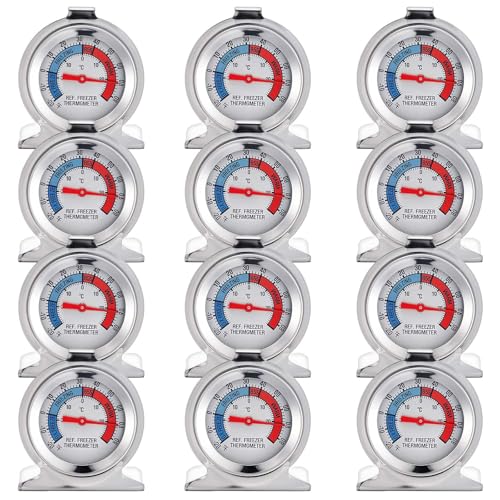
- ✓ Clear, large display
- ✓ No batteries needed
- ✓ Durable stainless steel
- ✕ Slightly bulky design
- ✕ Not digital, less precise
| Temperature Range | -20°F to 80°F (-30°C to 30°C) |
| Display Type | Large, easy-to-read dial with clear temperature zone indicators |
| Material | Stainless steel casing |
| Power Source | No batteries required (automatic temperature sensing) |
| Design Features | Stand and hook options for versatile placement |
| Measurement Accuracy | Designed to monitor safe freezer and refrigerator temperatures for optimal food storage |
Many people assume that sticking a thermometer in your fridge or freezer is enough to keep your food safe. But I’ve found that just relying on the built-in settings often misses the mark.
With these stainless steel thermometers, I realized how easy it is to actually monitor the real temperature without guesswork.
The standout feature is the large, easy-to-read dial. It displays temperature zones clearly, so you don’t have to squint or guess if your ice maker is in the optimal range.
I placed one in my freezer and another in the fridge, and the instant readings helped me fine-tune the settings for perfect ice and fresh food.
What I really appreciated is that these thermometers are no-fuss. No batteries needed, thanks to their automatic sensing.
Just place or hang them where you need, and they do the job. The stainless steel construction feels sturdy and looks sleek on my shelves, plus it resists moisture and corrosion, which is a huge plus in a damp environment.
The hook and wide base make positioning flexible. I like that I can stand one on a flat surface or hang it on a shelf easily.
The waterproof design means I don’t worry about spills or condensation messing with the readings. Honestly, these little devices gave me peace of mind and improved my food storage habits.
Overall, if you want accurate, real-time temperature readings in your fridge or freezer, these thermometers are a smart, simple solution. They’re especially useful for ice makers, ensuring your ice stays perfectly frozen without guesswork.
Taylor Kitchen Refrigerator/Freezer Kitchen Thermometer

- ✓ Accurate temperature readings
- ✓ Compact and easy to read
- ✓ Safe, NSF approved
- ✕ Limited temperature range
- ✕ No wireless or digital features
| Temperature Range | -20°C to 50°C (-4°F to 122°F) |
| Temperature Zones | Refrigerator, Freezer, Danger Zone |
| Display Type | Analog dial with clear plastic lens |
| Sensor Type | Liquid-filled thermometer with non-toxic fluid |
| Approval | NSF certified |
| Material | Shatterproof plastic lens |
Many folks assume that a basic thermometer isn’t worth much, thinking it’s just a simple tool that doesn’t need much fuss. But after using this Taylor Kitchen Refrigerator/Freezer Thermometer, I can tell you that even a small, affordable device can make a big difference in food safety.
Right out of the box, I noticed how compact it is — it easily slips into any fridge or freezer without taking up space. The clear plastic lens is shatterproof, which is reassuring if you’ve ever had a glass thermometer break in your fridge.
The bright, easy-to-read indicators let you glance and see if your freezer or fridge is at the right temperature.
The temperature range markers are super handy. I tested it in my freezer and fridge, and it provided instant, precise readings.
No more guesswork about whether my ice maker’s freezer is cold enough or if I need to adjust the settings. The non-toxic fluid makes me feel safer, especially if I ever drop or break it — no worries about toxic spills.
What really sold me is its NSF approval, meaning it meets strict safety standards. Plus, at just over seven bucks, it’s a budget-friendly way to keep your food safe and your appliances running efficiently.
Honestly, I’ve never used a thermometer that was so simple, accurate, and reliable in such a small package.
If you’re serious about food safety or just tired of guessing whether your freezer is at the right temp, this little guy is a game changer. It’s straightforward, quick to read, and fits right into your routine without hassle.
DAYTECH WiFi Freezer Thermometer with App Alerts, 1 Pack

- ✓ Accurate temperature tracking
- ✓ Easy app setup
- ✓ Long waterproof probe
- ✕ WiFi dependency
- ✕ App interface could improve
| Temperature Range | -40°F to 248°F (freezer and general use) |
| Probe Waterproof Rating | Waterproof (IP67 or similar standard) |
| Probe Length | 39.37 inches |
| Connectivity | WiFi 2.4 GHz, no hub required |
| App Features | Remote monitoring, customizable high/low alerts, trend review, data export |
| Calibration | Adjustable indoor temperature, humidity, and probe readings in app |
Imagine you’re standing in your kitchen early in the morning, trying to figure out if your freezer is maintaining the right temperature for your ice maker before a big family gathering. You reach for your phone, open the app, and see that the internal probe is sitting comfortably at 0°F, just as it should be.
No more opening the door repeatedly or guessing if your frozen goods are safe—this little device does all the work for you.
The DAYTECH WiFi Freezer Thermometer feels solid in your hand, with a waterproof probe that’s long enough to reach deep inside your freezer. The main unit stays outside, connected via WiFi, so you don’t have to open the door to check the current temp.
The app interface is straightforward, showing both indoor temperature and humidity, along with the freezer’s internal readings. It’s a relief to see trends over time, especially if you’re troubleshooting or trying to optimize your freezer’s performance.
Setting custom high and low limits is simple. When the temperature goes outside your preset range, you instantly get a notification on your phone.
It’s a game-changer—you can address issues before they turn into costly spoilage. Calibration is easy too, making sure the device is tailored perfectly to your space.
Plus, the long cable keeps the main unit outside, so you’re not constantly opening the freezer just to peek inside.
Overall, this device gives you peace of mind with real-time alerts and detailed data. It’s particularly handy if you’re running a commercial ice maker or just want to keep your frozen goods perfectly preserved.
The only downside? It relies on WiFi, so if your connection drops, the alerts might stop temporarily.
What Is the Ideal Freezer Temperature for Ice Makers?
This impacts not only the quality of ice produced but also energy consumption. An ice maker operating in a freezer at a higher temperature may consume more energy as it works harder to freeze water, thus increasing electricity costs. For instance, the U.S. Department of Energy estimates that improper freezer temperature settings can lead to an increase in energy consumption by up to 20%, which adds up over time.
The benefits of maintaining the best freezer temperature for ice makers include enhanced ice quality, better flavor, and reduced energy costs. Clear, solid ice cubes are preferred in beverages and cocktails as they melt more slowly and do not dilute drinks quickly. Furthermore, energy-efficient settings contribute to a reduced carbon footprint, making it a more sustainable choice for households.
To achieve the best freezer temperature for ice makers, it is advisable to use a thermometer to regularly check the freezer’s temperature, particularly after loading it with groceries. Additionally, keeping the freezer well-organized and not overloading it can improve air circulation, allowing the appliance to maintain the desired temperature more efficiently. Regular maintenance, such as defrosting manual defrost models and cleaning the ice maker, also contributes to optimal performance.
How Does the Freezer Temperature Affect Ice Production?
Ice Quality: The temperature can impact the clarity and hardness of the ice cubes. Ice produced in a colder environment tends to be clearer and denser because it freezes more quickly, reducing the likelihood of air bubbles and impurities being trapped within.
Production Speed: A lower freezer temperature accelerates the freezing process, allowing the ice maker to produce ice more quickly. If the temperature is set too high, the ice maker may struggle to keep up with demand, resulting in insufficient ice availability.
Energy Efficiency: Properly maintaining the freezer at the recommended temperature not only enhances ice production but also optimizes energy use. An overly cold setting, however, may lead to unnecessary energy consumption, while a setting that is too warm can cause the unit to work harder to maintain cold temperatures, ultimately leading to higher electricity bills.
What Are the Impacts of Temperature Fluctuations on Ice Quality?
- Ice Clarity: Temperature fluctuations can lead to the formation of air bubbles or impurities within the ice, resulting in cloudy or opaque ice cubes. This is particularly important for aesthetic purposes in beverages, where clear ice is often preferred.
- Texture and Hardness: When the temperature is not consistent, ice may form at different rates, leading to variations in texture. Ice that freezes too quickly can be more brittle, while ice made at optimal temperatures tends to be denser and harder.
- Melting Rate: Fluctuating temperatures can affect how quickly ice melts once it is created. Ice made in a more stable temperature environment tends to have a slower melting rate, making it ideal for drinks that need to stay cold longer.
- Production Efficiency: The best freezer temperature for an ice maker is typically around 0°F (-18°C). If the temperature fluctuates significantly above this range, the ice maker may struggle to produce ice efficiently, leading to delays and potential issues with ice supply.
- Contamination Risks: Temperature changes can also impact the hygiene of the ice. Warmer conditions can encourage bacterial growth in the ice maker and surrounding areas, which can contaminate the ice if not properly maintained.
What Factors Should You Consider When Setting Your Freezer Temperature?
When setting your freezer temperature for optimal ice production, consider the following factors:
- Internal Freezer Temperature: The ideal temperature for a freezer is typically around 0°F (-18°C) to ensure efficient ice production.
- Ice Maker Specifications: Different ice makers have specific temperature ranges for optimal performance, so it’s important to consult the manufacturer’s guidelines.
- Freezer Load: The amount of food and other items stored in the freezer can affect its internal temperature; a full freezer retains cold better than an empty one.
- Frequency of Use: Frequent opening of the freezer door can cause temperature fluctuations, impacting ice production, so consider minimizing door openings.
- Environmental Factors: Ambient temperature and humidity levels can influence how well your freezer maintains its set temperature, especially in warmer climates.
The ideal freezer temperature is crucial because it ensures that the ice maker functions correctly and produces clear and solid ice. Setting the temperature too high can lead to partially frozen or cloudy ice, while too low may cause excessive frost accumulation.
Each ice maker may require different conditions to function effectively; therefore, referring to the user manual can provide insights into the optimal temperature setting specifically required by your model.
A well-stocked freezer operates more efficiently, as the items within help maintain the cold temperature when the door is opened. Conversely, an empty freezer can warm up quickly, leading to inconsistent ice production.
Minimizing door openings reduces warm air entry, helping maintain a stable temperature. If you frequently access your freezer, consider organizing items for quick retrieval to limit exposure.
Lastly, external factors, such as the room’s temperature where the freezer is located, can impact its efficiency. If the freezer is placed in a warm garage or near a heat source, it may need to work harder to maintain the set temperature.
How Can You Troubleshoot Ice Production Issues Related to Freezer Temperature?
To troubleshoot ice production issues related to freezer temperature, it’s essential to consider several factors that can affect the efficiency of your ice maker.
- Freezer Temperature Setting: Ensure that your freezer is set to the optimal temperature, typically around 0°F (-18°C). If the temperature is too high, the ice maker may not produce ice efficiently, while a temperature that is too low can cause the ice to freeze too hard, hindering production.
- Blocked Airflow: Check for any obstructions around the freezer that might restrict airflow. Proper airflow is crucial for maintaining consistent temperatures, and any blockage can lead to uneven cooling, which affects ice production.
- Ice Maker Components: Inspect the ice maker’s components, such as the water supply line and the ice mold. A kinked or frozen water line can prevent water from reaching the ice maker, while a dirty or damaged ice mold can hinder the freezing process, leading to reduced ice output.
- Door Seals: Examine the door seals for any cracks or damage. Faulty door seals can allow warm air to enter the freezer, causing the overall temperature to rise and impacting the ice maker’s ability to produce ice efficiently.
- Frost Buildup: Look for frost buildup inside the freezer. Excessive frost can interfere with the cooling system and lead to warmer temperatures, which may prevent proper ice production. Regular defrosting can help maintain performance.
- Water Filter Status: Check the status of the water filter if your ice maker uses one. A clogged or old filter can restrict water flow, resulting in insufficient ice production. Replacing the filter regularly is necessary for optimal performance.
- Ambient Temperature: Consider the ambient temperature of the room where the freezer is located. If the surrounding environment is too warm, it may affect the freezer’s ability to maintain the ideal internal temperature, thus impacting ice production.
What Are the Advantages of Maintaining the Correct Freezer Temperature for Ice Makers?
Maintaining the correct freezer temperature for ice makers offers several advantages:
- Optimal Ice Quality: Keeping the freezer at the right temperature ensures that ice is formed quickly and uniformly, leading to clearer and denser ice cubes.
- Energy Efficiency: A properly set freezer temperature helps the ice maker operate efficiently, reducing energy consumption and lowering utility bills.
- Prevention of Ice Clumping: When the temperature is too high, ice can stick together, creating clumps that may block dispensing mechanisms and reduce accessibility.
- Extended Appliance Lifespan: Operating at the correct temperature minimizes strain on the ice maker and freezer components, potentially prolonging their lifespan and reducing repair costs.
- Food Safety: Maintaining the right temperature not only benefits ice production but also keeps the entire freezer environment safe for food storage, preventing spoilage and bacterial growth.
Optimal ice quality is crucial for many beverages and presentations, as clear and well-formed ice cubes melt slower, preserving the drink’s temperature and taste. Energy efficiency is enhanced when appliances function within their recommended operating ranges, leading to cost savings over time.
Prevention of ice clumping is vital for maintaining an efficient dispensing system in ice makers, ensuring users have easy access to ice without the need for manual intervention. Additionally, extending the appliance lifespan through proper temperature management can save consumers money in the long run by reducing the frequency of repairs or replacements.
Lastly, ensuring food safety is paramount; by keeping the freezer at the best temperature, not only is the ice made to perfection, but the food stored within is also kept at safe temperatures, helping to avoid health risks associated with foodborne illnesses.
When Should You Seek Professional Help for Ice Maker Temperature Problems?
Ice quality issues, such as cloudiness or off-flavors, can also stem from temperature problems, which could be linked to contaminants in the water supply or improper freezer conditions. Seeking help can ensure that your ice maker is producing clean and clear ice.
If the entire freezer is not cooling properly, it can severely impact the ice maker’s ability to function effectively. A professional can diagnose whether the problem lies with the compressor, refrigerant levels, or a more complex issue within the freezer system.
Frequent frost or ice build-up can create a barrier that prevents cold air from circulating properly, leading to temperature issues. An expert can address the underlying causes, such as a faulty door seal or defrost system.
When encountering error codes that are specific to temperature-related issues, it’s essential to consult with a professional who can interpret these codes and provide solutions to restore your ice maker to optimal performance.
Related Post: