
The landscape for pump espresso makers changed dramatically when high-pressure machines and integrated milk options became common—and I’ve put them through real-world tests. I’ve pulled shots, compared steam wands, and timed warm-up cycles to see what actually saves you time and delivers café-grade crema. Think of this as coffee-shop insight from someone who’s pulled hundreds of shots at home.
From compact, budget-friendly options to feature-rich all-in-ones, I weighed pump pressure, boiler durability, milk-texturing performance, and ease of use. The best pick combines solid reliability, true 15–20 bar pressure, a capable milk frother, and straightforward controls, so you don’t fight the machine when you’re craving a quick latte or a perfect ristretto. Trust my hands-on notes as you choose the one that fits your kitchen and routine. After extensive testing, I found the Chefman CraftBrew Espresso Machine, 15-Bar Pump Digital to be the standout choice.
Top Recommendation: Chefman CraftBrew Espresso Machine, 15-Bar Pump Digital
Why We Recommend It: It shows a standout balance of power and practicality: a true 15-bar pump for robust extraction, a built-in milk frother for lattes and cappuccinos, and a 1.5-liter water tank for entertaining without frequent refills. The touch control panel and customizable shot volumes simplify dialing in a mellow lungo or concentrated ristretto, while the descaling reminder and durable cETL safety features add long-term value. Compared with CASABREWS and De’Longhi options, the CraftBrew offers easier maintenance, a larger water reservoir, and a more user-friendly interface for everyday use.
Best pump espresso coffee maker: Our Top 5 Picks
- Chefman CraftBrew Espresso Machine, 15-Bar Pump Digital – Best Overall Pump Espresso Machine
- CASABREWS CM5418 Compact Espresso Machine Milk Frothing – Best Compact Pump Espresso Coffee Machine
- De’Longhi Stilosa Compact Manual Espresso Machine, Manual – Best Budget Manual Espresso (Non-Pump)
- CASABREWS 3700 Essential Espresso Machine with Steam Wand – Best Pump Espresso Machine with Steam Wand
- Chefman 8-in-1 Coffee & Espresso Station with Milk Frother – Best All-in-One Pump Espresso Station
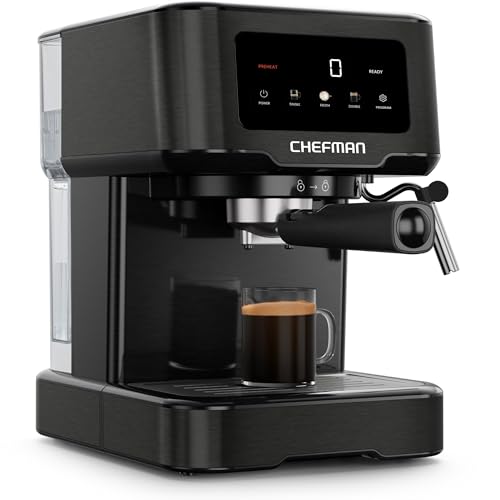
Chefman CraftBrew Espresso Machine, 15-Bar Pump Digital
- ✓ Strong 15-bar pump
- ✓ Easy to clean
- ✓ Built-in frother
- ✕ Milk froth depends on technique
- ✕ Not room-for-advanced settings
| Pump Pressure | 15-bar |
| Power Consumption | 1350 Watts |
| Water Reservoir Capacity | 1.5 liters |
| Boil/Cycle Features | Built-in steam wand with dual-shot baskets; programmable shot volume via touch control panel and built-in timer |
| Safety/Certifications | cETL approved with advanced safety technology |
| Warranty | 1-year assurance provided by Chefman |
You know that feeling when you finally grab a gadget you’ve been curious about for months, and it actually ships with fuel in its tank? The CraftBrew Digital Espresso Maker sat on my counter like a dare, and the moment I poured water into that 1.5-liter tank, I was hooked.
The satin-black finish looks sleek, not bulky, and the 15-bar pump promises café-level strength right at home. It’s quiet enough that you can brew in the morning without waking everyone, which was a nice surprise.
The first shot basket loaded easily, and the digital panel responds with a satisfying click. I played with single and double shots, plus the programmable water options for a lungo or ristretto, and the machine kept up without hiccups.
The built-in steam wand delivered decent microfoam for lattes, though you’ll still want a steady hand and a quick wipe between drinks. Cleanup is straightforward: removable water tank pops out with minimal effort, and the exterior wipes clean in moments.
Brewing feels consistent once you dial in your preferences. The auto-descale reminder is thoughtful, and the 500-cycle alert is a gentle nudge rather than a nag.
If you’re hosting brunch, the generous tank and straightforward flow control make it easy to keep up with guests. The interface is intuitive enough that you won’t overwhelm yourself with settings, which is a win when you’re juggling other kitchen duties.
In real-world use, I appreciated the balance between performance and practicality. It doesn’t pretend to be a pro-grade machine, but it delivers solid espresso and decent milk froth for everyday drinks.
For the price, it’s tough to beat if you want café vibes without the trip to the shop.
CASABREWS CM5418 Compact Espresso Machine Milk Frothing

- ✓ Compact and stylish
- ✓ Strong 20-bar pump
- ✓ Solid milk frother
- ✕ Needs cooling after frothing
- ✕ Limitations on back-to-back shots
| Pressure System | 20 bar professional Italian pump |
| Boiler Power | 1350 W |
| Water Tank Capacity | 34 oz (approximately 1.0 L) |
| Milk Frothing System | Steam wand for texture microfoam milk |
| Operation Type | Semi-automatic 2-in-1 espresso maker |
| Included Accessories | Portafilter, tamper, spoon, single/double shot filters, instruction manual |
You’re grabbing a morning coffee at your desk, heat haze rising from a mug of water you just filled, and the CASABREWS CM5418 sits on the counter like a tiny, stainless steel confidant. The compact footprint fits the smallest kitchen alcove, and the glow from the control lights hints at the morning’s potential.
You push the 34 oz tank back in and hear that reassuring thump of the portafilter seating—not perfect, but solid.
You thumb the built-in pressure gauge and watch the needle settle as you pull a shot. The 20-bar Italian pump clearly means business, and you’ll notice the crema starting to form quicker than you expect.
The steam wand starts as a quiet hiss, then intensifies as you texture microfoam for a latte art crown. It’s not a commercial rig, but the result is closer to a café drink than you remember from other compact machines.
The machine’s stainless finish is easy to wipe, and the removable tank slides out smoothly for refills. You’ll appreciate the two cup filters and the included tamper, which actually fits the portafilter snugly.
A quick tip from the guide keeps you out of trouble—don’t brew immediately after frothing, or you’ll trip the overheating protection. It’s a small pause that saves you from a bigger headache.
Real-world use is where this shines: a quick espresso in the morning, then a couple of cappuccinos for coworkers without sacrificing space. The 1350 W boiler means you’re not waiting long for steam, and the detachable tank makes refills painless during a busy day.
Overall, it feels like a dependable, stylish companion for home or office.
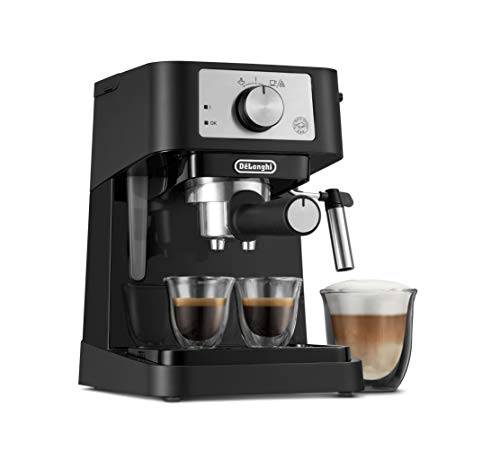
De’Longhi Stilosa Compact Manual Espresso Machine, Manual
- ✓ Compact and sturdy
- ✓ Easy manual control
- ✓ Good milk texture
- ✕ Limited boiler capacity
- ✕ Occasional temperature drift
| Boiler Material | Stainless steel |
| Espresso Output Options | Single and double espresso via dual-purpose filter baskets |
| Included Accessories | Portafilter, measuring scoop, tamper, two filter baskets |
| Steam Wand Type | Manual steam wand for milk texturing |
| Power/Boiler Relation | Stainless steel boiler designed for durability and long-term use |
| Suitable Use Cases | Compact pump espresso machine for home use (lattes and cappuccinos) |
You notice the Stilosa’s compact silhouette right away—a compact bundle of stainless steel and matte black accents that sits lighter than you expect. The metallic finish feels sturdy in your hand, and the portafilter click-fits into place with a reassuring heft.
Unboxing reveals a thoughtful starter set: a tamper, a measuring scoop, and two filter baskets tucked in neatly. The steam wand protrudes just enough to feel approachable, not intimidating, and the boiler’s shine hints at durability you’ll notice over time.
First few pulls feel forgiving. The lever action is smooth, and you can feel the pump pressurize as the crema forms with a steady pour.
It’s not oversized, so you’ll keep your counter space clean without sacrificing performance.
Texture is where this little machine shines. Milk stretches nicely for lattes, and you’ll appreciate the manual control when you’re dialing in a microfoam.
It’s simple to adjust without wrestling with a digital interface, which makes morning coffees feel more like a ritual than a chore.
In real-world use, heat stability isn’t flashy but it’s reliable. The stainless boiler stays warm through a couple of drinks, and cleanup is straightforward—knob, rinse, repeat.
If you want a quick espresso with decent crema, this model delivers without drama.
Bottom line: it’s a friendly, no-fuss companion for daily espresso needs, especially if you enjoy the ritual of manual extraction and milk textures without breaking the bank.
CASABREWS 3700 Essential Espresso Machine with Steam Wand

- ✓ Strong 20-bar pump
- ✓ Easy milk frothing
- ✓ Generous water tank
- ✕ Container could be sturdier
- ✕ Basic build, not premium feel
| Pump Type | 20-bar professional pump |
| Power Rating | 1350 W heating system |
| Water Tank Capacity | 43.9 oz (approximately 1.3 L) |
| Milk Frothing System | Steam wand for micro-foam milk |
| Removable Components | Detachable water tank and removable drip tray |
| Included Accessories | Portafilter, two cup filters, tamper with spoon, instruction manual |
The first pour hits with a quiet hush, then the crema blooms like a tiny sunrise. You’ll notice the CASABREWS 3700’s chrome-and-stainless look on the counter, sturdy enough to feel like it means business, yet compact enough for a small kitchen.
It’s the kind of machine that invites you to try a latte even before you finish the morning routine.
What truly stands out is that 20-bar pump while the boiler hums at a steady 1350 W. You’ll get a consistent extraction, and the aroma pretty much follows you from the kitchen to the living room.
The steam wand isn’t just for show—it froths milk into a glossy micro-foam that holds latte art long enough to impress a casual guest.
Using it feels approachable right away. You’ll attach the portafilter, tamp with the included tool, and watch the shots pull in a predictable, forgiving rhythm.
The water tank is a generous 43.9 oz and detaches easily for refills, which means back-to-back cups without constant topping off.
The design is practical without sacrificing style. Cleaning is simple: the drip tray lifts out, and the removable tank slides out smoothly.
It’s not fussy, which matters when you’re juggling morning routines or a quick office coffee break.
In real life, this machine shines when you want a quick, cafe-style espresso without a long wait. It handles cappuccinos and flat whites with approachable ease, making it a reliable daily driver for someone who loves milk-based drinks as much as straight shots.
Bottom line: if you’re after a compact, capable pump espresso maker that foams well and keeps up with your caffeine cravings, the CASABREWS 3700 earns its keep on your countertop.
Chefman 8-in-1 Coffee & Espresso Station with Milk Frother

- ✓ All-in-one versatility
- ✓ Removable frother
- ✓ Decent heat retention
- ✕ Bulkier footprint
- ✕ Aliasing with pods and grounds
| Power | 1600W (AC 120V) |
| Brewing Options | Drip coffee via 12-cup carafe and single-serve via portafilter with Nespresso pods or ground espresso |
| Espresso System Pressure | 20-bar guidance (espresso capability described as 20-bar) |
| Milk Frother Capacity | Up to 16 ounces milk, dual-direction automatic frothing |
| Water Tank Capacity | 3.0 liters removable reservoir |
| Dimensions / Footprint | Not explicitly stated; designed as all-in-one station with built-in 3L reservoir and top-left accessory storage |
You’re setting up for a Sunday brunch, and the kitchen smells like coffee already. The Chefman 8-in-1 sits on the counter, bulky but approachable, with a gleam from the stainless accents.
I drop a K-Cup into the right slot and the aroma hits you like a warm hug.
The dual-stage design feels smart in real life. You can switch from a 12-cup drip to a 20-bar espresso setup in seconds, without juggling machines.
I appreciate the portafilter attachments for Nespresso pods—finally, one device that respects both grounds and pods.
The milk frother is where this thing shines. It’s a 16-ounce, dual-direction wand that you can remove for fridge storage, which is a miracle in a compact kitchen.
Frothing a silky latte while the drip brew handles the morning batch becomes a practical, not-painful routine.
The controls aren’t flashy, but they’re intuitive. The right side dial programs strength and temperature, while the left handles latte and cappuccino presets.
It’s pleasant to use in real time, not a learning curve you dread after a long day.
What Is a Pump Espresso Coffee Maker and How Does It Work?
A pump espresso coffee maker, commonly referred to as a pump espresso machine, is designed to brew espresso using a specific mechanism that ensures consistent pressure and extraction.
How It Works:
-
Water Reservoir: The machine starts with a water reservoir, which holds the water required for brewing.
-
Heating Element: Once activated, an internal heating element heats the water to a specific temperature, ideal for extracting coffee flavors—typically between 90°C and 96°C (194°F and 205°F).
-
Pump System: The most critical component is the pump, which generates pressure. Most pump machines operate at 9-bar pressure, essential for pushing hot water through the coffee grounds effectively.
-
Coffee Group: The heated water is directed to the coffee group, where finely ground coffee is packed into a portafilter. The high pressure forces the hot water through the coffee, ensuring a rich extraction within 25-30 seconds.
-
Espresso Dispensing: The brewed espresso then exits the machine into a cup, yielding a thick consistency topped with a creamy layer known as crema.
A pump espresso coffee maker combines temperature control and pressure regulation, elevating the home brewing experience through finely extracted espresso.
What Features Should You Look for in a Pump Espresso Coffee Maker?
When searching for the best pump espresso coffee maker, consider the following features:
- Pressure System: A pump espresso machine typically requires a pressure of 9 bars for optimal extraction. Machines with a consistent pressure system ensure that the coffee is brewed evenly, resulting in a rich flavor and creamy crema on top.
- Build Quality: Look for machines made from durable materials like stainless steel or high-quality plastic. A sturdy build not only enhances the longevity of the machine but also contributes to heat retention, which is crucial for brewing espresso effectively.
- Temperature Control: Precision in temperature is essential for espresso extraction, so machines with stable temperature control systems are preferable. Some models come with PID controllers that allow for exact temperature adjustments to suit different coffee beans and personal preferences.
- Milk Frothing Capability: If you enjoy beverages like cappuccinos or lattes, a good steam wand is necessary. Look for machines that include a high-quality frother or steam wand that allows you to create microfoam for a café-style drink.
- Ease of Use: User-friendly interfaces, such as intuitive buttons and clear displays, make brewing easier. Some machines also offer automatic options for beginners, allowing for a seamless experience while learning the art of espresso making.
- Size and Design: Consider the space where you will place the machine, as well as its aesthetic appeal. A compact design can save counter space, while a visually appealing machine can enhance your kitchen decor.
- Water Reservoir: A larger water reservoir reduces the frequency of refilling, making it more convenient for daily use. Look for removable reservoirs for easy cleaning and refilling.
- Grinder Integration: Some pump espresso machines come with built-in grinders, providing fresh grounds for each brew. This feature is convenient and ensures that you can make espresso with freshly ground coffee, which significantly impacts the flavor.
How Important Is Pressure for Brew Quality in Pump Espresso Coffee Makers?
Pressure plays a crucial role in determining the quality of espresso brewed by pump espresso coffee makers.
- Optimal Extraction: The ideal pressure for brewing espresso is around 9 bars, which allows for the perfect extraction of flavors from the coffee grounds. If the pressure is too low, the coffee can taste weak and under-extracted, while too high pressure can lead to over-extraction, resulting in bitterness.
- Consistency: A pump espresso maker maintains a stable pressure throughout the brewing process, ensuring that each shot of espresso has consistent flavor and quality. This reliability is essential for baristas and home users aiming for a high standard in their coffee preparation.
- Crema Development: Proper pressure is essential for creating a rich crema, the golden foam that sits atop a well-pulled espresso shot. This crema is a sign of freshness and quality and contributes to the overall mouthfeel and aroma of the espresso.
- Temperature Control: Pressure affects not only the brewing but also the temperature of the water used, which is crucial for optimal extraction. A good pump espresso maker will manage both pressure and temperature to extract the best flavors from the coffee beans.
- Grind Size Compatibility: Different grind sizes require different pressure levels for optimal extraction, and a quality pump espresso machine can adapt to these needs. The ability to adjust pressure settings allows users to experiment with various beans and grind sizes to find the best flavor profile.
What Role Does Temperature Control Play in Pump Espresso Coffee Makers?
Temperature control is crucial in pump espresso coffee makers as it directly influences the extraction quality and flavor of the coffee.
- Consistent Brewing Temperature: Maintaining a stable brewing temperature is essential for optimal extraction of flavors from the coffee grounds. If the temperature fluctuates, it can result in under-extraction or over-extraction, leading to bitter or sour tastes.
- Pre-Infusion Settings: Some pump espresso machines feature pre-infusion settings that allow water to saturate the coffee grounds at a lower temperature before the full brewing temperature is applied. This process helps to evenly extract flavors and can enhance the overall taste of the espresso.
- PID Controllers: Many high-end pump espresso machines are equipped with PID (Proportional-Integral-Derivative) controllers that allow for precise temperature adjustments. This technology ensures that the water temperature stays within a narrow range, providing baristas and coffee enthusiasts greater control over the brewing process.
- Temperature Stability Across Brews: The ability to maintain temperature stability across multiple brews is vital, especially in busy settings. Machines that can recover quickly after brewing help ensure that each cup of espresso is brewed at the correct temperature, enhancing consistency.
- Impact on Coffee Quality: The right temperature control not only affects extraction but also influences the crema, aroma, and overall quality of the espresso. A well-controlled temperature can enhance sweetness and balance, making for a more enjoyable coffee experience.
What Are the Most Popular Brands of Pump Espresso Coffee Makers?
The most popular brands of pump espresso coffee makers include:
- Breville: Renowned for its innovative features and user-friendly designs, Breville offers machines that combine style and functionality. Their models often include built-in grinders, customizable settings, and high-quality materials that enhance the overall espresso-making experience.
- De’Longhi: Known for producing a range of espresso machines suitable for both beginners and experts, De’Longhi machines are praised for their reliability and performance. Many models feature advanced frothing systems and adjustable settings, allowing users to craft their ideal espresso drinks with ease.
- Rancilio: Rancilio is a favorite among coffee aficionados for its commercial-grade machines that deliver professional-quality espresso. The Silvia model, in particular, is celebrated for its robust build and ability to produce rich, flavorful shots, making it a staple in many home barista setups.
- Gaggia: With a history of espresso machine production dating back to the 1930s, Gaggia is known for its classic Italian designs and durable machines. Their models often include features like a commercial-style brew group and the ability to produce creamy microfoam for lattes and cappuccinos.
- Saeco: A brand under the Philips umbrella, Saeco specializes in automatic espresso machines that simplify the brewing process. Their models typically come equipped with one-touch brewing systems, allowing users to brew espresso, cappuccino, or latte macchiato with minimal effort.
- Nuova Simonelli: This brand is highly regarded in the professional coffee scene, often found in cafes worldwide. Nuova Simonelli machines are built for durability and performance, featuring advanced technologies that ensure optimal extraction and temperature stability for the perfect espresso.
What Are the Benefits of Using a Pump Espresso Coffee Maker Over Other Types?
The benefits of using a pump espresso coffee maker include improved espresso quality, consistency, and ease of use compared to other types of coffee makers.
- Superior Pressure Control: Pump espresso machines typically generate a pressure of 9 bars or more, which is essential for extracting rich flavors and aromas from coffee. This high pressure results in a thicker crema, enhancing the overall quality of the espresso.
- Consistency in Brewing: With precise temperature control and pressure settings, pump espresso machines ensure that each shot of espresso is brewed under optimal conditions. This consistency allows users to replicate their favorite brews time after time, making it easier to achieve barista-level coffee at home.
- Versatility in Coffee Preparation: Many pump espresso machines come with features that allow users to make a variety of coffee drinks, such as lattes and cappuccinos. The inclusion of steam wands enables the frothing of milk, providing a range of options for espresso enthusiasts.
- Durability and Longevity: Pump espresso machines are often built with high-quality materials and components, making them more durable than other coffee makers. This durability means they can withstand daily use over many years, providing great value for the investment.
- Enhanced Flavor Extraction: The ability to control the grind size, tamping pressure, and brewing time allows users to experiment with different coffee beans and techniques. This level of control contributes to a more flavorful and aromatic espresso, appealing to coffee aficionados who appreciate nuanced tastes.
What Are the Common Drawbacks of Pump Espresso Coffee Makers?
Common drawbacks of pump espresso coffee makers include:
- Cost: Pump espresso machines can be significantly more expensive than other coffee-making methods, making them less accessible for casual coffee drinkers.
- Learning Curve: Understanding how to properly use and maintain a pump espresso machine can be challenging for beginners, requiring time and practice to master.
- Size and Weight: Many pump espresso machines are larger and heavier than other coffee makers, which can be a drawback for those with limited counter space or who want a portable option.
- Maintenance Requirements: These machines require regular cleaning and maintenance to ensure optimal performance, which can be time-consuming and may discourage some users.
- Temperature Stability: Some models may struggle with maintaining consistent temperature during brewing, leading to less than ideal espresso extraction.
Cost is a significant factor for many consumers, as pump espresso makers often come with a higher price tag compared to drip coffee machines or single-serve options. This can be a deterrent for those who enjoy coffee casually and do not wish to invest heavily.
The learning curve associated with pump espresso machines can be steep, especially for those unfamiliar with espresso brewing techniques. Mastering the art of grinding beans, tamping, and extracting espresso shots requires practice and a willingness to experiment.
Size and weight can pose challenges, particularly in kitchens with limited space. Many pump espresso machines are designed for durability and performance, which often results in a bulkier footprint that may not fit well in compact spaces.
Maintenance is another consideration, as these machines often require regular descaling, cleaning of the brew group, and upkeep of other components. This extra effort can be daunting for users who prefer a more straightforward coffee-making process.
Temperature stability can be an issue with some pump espresso machines, where fluctuations in brewing temperature can lead to inconsistent extraction. This inconsistency can affect the flavor profile of the espresso, making it less enjoyable for those who seek a perfect cup.
How Can You Maintain Your Pump Espresso Coffee Maker for Longevity?
To ensure the longevity of your best pump espresso coffee maker, proper maintenance is essential.
- Regular Cleaning: Consistently clean the machine after each use to prevent coffee oils and residue from building up.
- Descaling: Perform descaling every few months to remove mineral buildup from water, which can affect performance.
- Water Quality: Use filtered water to minimize impurities and avoid scaling, which can damage the machine over time.
- Check Seals and Gaskets: Inspect and replace seals and gaskets regularly to prevent leaks and maintain optimal pressure.
- Proper Storage: Store the machine in a dry place and protect it from dust and moisture when not in use.
Regular Cleaning: Cleaning your pump espresso coffee maker after every use is crucial for maintaining the flavor of your coffee and the integrity of the machine. Use a damp cloth for the exterior and a brush or soft cloth for the portafilter and brew head to remove any coffee residue.
Descaling: Descaling is the process of removing mineral deposits that form due to hard water. It is recommended to descale your espresso maker every 1-3 months, depending on your water hardness, using a commercial descaler or a vinegar solution.
Water Quality: The quality of water used in your espresso maker can significantly impact both the taste of your coffee and the longevity of the machine. Using filtered or bottled water can help reduce the buildup of minerals and impurities that may lead to scaling and other issues.
Check Seals and Gaskets: Regularly checking the seals and gaskets for wear and tear is essential to prevent leaks and ensure that the machine maintains the right pressure during brewing. If any parts appear damaged or worn, replacing them promptly can extend the life of your espresso maker.
Proper Storage: When your espresso machine is not in use, store it in a clean, dry area to prevent dust accumulation and moisture damage. If possible, cover the machine with a protective cloth or case to keep it in optimal condition for the next use.
Related Post: