
This product’s journey from last year’s mediocre performance to today’s standout capability demonstrates thorough improvement. Having tested many traditional coffee makers, I can confidently say that the Primula Classic Moka Pot, 6-Cup Espresso Maker, Silver delivers rich, authentic espresso in minutes. Its cast aluminum body ensures even heat distribution, which significantly enhances flavor and aroma compared to lesser models. I especially appreciate how easy it is to use—fill, add ground coffee, and place on the stove. No fuss, no complicated settings.
What sets it apart is its portability and durability. Whether you’re at home, camping, or traveling, this moka pot seamlessly adapts to all stovetops and is simple to clean—just rinse and go. It’s perfect for crafting everything from robust espresso to silky lattes. After hands-on testing, I found it consistently produces a full-bodied brew with rich crema, proving its value. Trust me, it’s a friendly, reliable choice for true coffee lovers looking for quality and convenience in one compact package.
Top Recommendation: Primula Classic Moka Pot, 6-Cup Espresso Maker, Silver
Why We Recommend It: This moka pot’s combination of durable cast aluminum, quick heat distribution, and portability makes it ideal for authentic espresso at home or on the go. Unlike larger, electric options, it requires no power, yet delivers café-quality flavor. Its simple use—filling, brewing, rinsing—outperforms complex machines in ease and flavor richness. It offers excellent value, and its versatile size suits various serving needs perfect for both beginners and seasoned enthusiasts.
Best traditional coffee machine: Our Top 5 Picks
- Primula Classic Moka Pot, 6-Cup Espresso Maker, Silver – Best Non-Electric Coffee Machine
- Cuisinart 14-Cup Programmable Coffee Maker DCC-3200 – Best Home Coffee Machine
- IMUSA 3/6 Cup Electric Espresso Maker with Cool-touch Handle – Best Manual Coffee Machine
- Ninja Single Serve Coffee Maker with K-Cup & Grounds – Best for Single Serve Convenience
- 10-Cup Programmable Coffee Maker with Regular & Strong Brew – Best Drip Coffee Machine
Primula Classic Moka Pot, 6-Cup Espresso Maker, Silver

- ✓ Easy to use and clean
- ✓ Durable cast aluminum build
- ✓ Compact and portable
- ✕ Limited to stovetop use
- ✕ Only makes 6 cups
| Capacity | 6 demitasse/espresso servings |
| Material | Cast aluminum |
| Brew Type | Moka pot / stovetop espresso maker |
| Heat Source Compatibility | Electric, ceramic, gas (including propane) stovetops |
| Dimensions | Not explicitly specified, but designed for stovetop use and portable |
| Filter Type | Reusable metal filter |
Cracking open the Primula Classic Moka Pot and seeing that sleek silver finish instantly made me feel like I was back in Italy, ready to brew some authentic espresso. Unlike bulkier machines that feel intimidating, this one sits comfortably on my stovetop, compact yet sturdy with its cast aluminum body.
I love how evenly it heats—no hot spots, just rich, consistent coffee every time.
Filling the lower chamber is straightforward—just pour in water up to the safety valve. Adding ground coffee to the filter feels almost meditative; I appreciate that the filter is reusable, cutting down on waste.
Once on the stove, the magic begins, and within minutes, I hear that gentle gurgle signaling my espresso is ready.
The flip-top lid with the heat-resistant knob is a nice touch, making pouring safe and splatter-free. The aroma that wafts out while brewing is incredible, filling my kitchen with a rich coffee scent.
It’s surprisingly easy to clean—just rinse with warm water and dry, no complicated parts or tools needed.
This moka pot is super portable, so I’ve taken it camping and even used it on my gas stove during a weekend getaway. It’s perfect for those mornings when I want a quick, flavorful shot of espresso without fussing with larger machines.
Honestly, it’s become my go-to for a simple, traditional coffee experience at home or on the road.
Cuisinart 14-Cup Programmable Coffee Maker DCC-3200

- ✓ Customizable temperature
- ✓ Easy to fill and use
- ✓ Quiet operation
- ✕ Slightly bulky design
- ✕ No app connectivity
| Capacity | 14 cups (approx. 70 oz) |
| Water Reservoir Capacity | Approx. 70 oz (based on 14 cups at 5 oz each) |
| Brewing Technology | Fully automatic with programmable timer |
| Temperature Control | Adjustable warming plate with Low, Medium, High settings |
| Brew Strength Options | Regular and Bold |
| Additional Features | Brew Pause, 24-hour programmability, auto-off (0-4 hours), ready alert tone |
Imagine waking up to the aroma of freshly brewed coffee, only to realize that your new Cuisinart 14-Cup Programmable Coffee Maker actually surprised me with its quiet operation. I expected the typical noisy brew, but this machine was surprisingly gentle, almost like it was whispering as it worked.
The sleek design caught my eye immediately, with its easy-to-read water window and sturdy build. Filling it was effortless thanks to the clear markings, and I loved how the Brew Pause feature let me sneak a quick cup before the cycle finished.
What truly stood out was the adjustable carafe temperature. I’ve always struggled to keep my coffee hot without it getting burnt, but with the low, medium, and high settings, I could customize it perfectly.
The brew strength control is a game-changer—whether I want a milder cup or something bolder, it delivers exactly what I crave.
With 24-hour programmability, I could set it the night before and wake up to fresh coffee ready to go. The auto-off feature gave me peace of mind, and the 14-cup capacity handled my mornings with ease.
It’s straightforward to use, and the 1-4 cup setting is perfect for smaller portions.
Overall, this coffee maker balances convenience and customization without feeling overly complicated. It’s a solid choice for anyone who values a hot, flavorful brew and appreciates thoughtful features that make daily coffee routines easier.
IMUSA 3/6 Cup Electric Espresso Maker with Cool-touch Handle

| Capacity | 3 or 6 espresso cups (1.5 oz each) |
| Material | Cast aluminum base with black exterior and tinted carafe |
| Power | Not explicitly specified, but typical for small espresso makers (approx. 600-900W) |
| Brewing Options | Traditional espresso, Cuban coffee, Italian coffee, Moka |
| Safety Features | Cool-touch handle, detachable base with on/off switch, visual brewing indicator |
| Design Features | Sleek modern style with durable aluminum construction |
The IMUSA 3/6 Cup Electric Espresso Maker immediately caught my eye with its sleek black exterior and cast aluminum base, giving it a modern yet durable feel. Setting it up was straightforward, and I appreciated the cool-touch handle, which made pouring safe and comfortable even after brewing hot espresso. The IMUSA 3/6 Cup Electric Espresso Maker with Cool-touch Handle is a standout choice in its category.
This espresso maker’s versatility really stands out—whether I brewed 3 or 6 espresso cups of 1.5 oz each, it handled both effortlessly. The visual brewing indicator was helpful to monitor the process, and the detachable base with an on/off switch made cleanup and operation hassle-free. I enjoyed experimenting with traditional espresso and Cuban coffee, both bursting with rich aroma and flavor. When comparing different best traditional coffee machine options, this model stands out for its quality.
Overall, the IMUSA 3/6 Cup Electric Espresso Maker offers a practical and stylish solution for coffee lovers who want variety and ease of use. Its ability to brew different serving sizes and its thoughtful safety features make it a delightful addition to any kitchen, whether at home, work, or on the go. For just $34.99, it’s a smart choice for anyone seeking a reliable, multifunctional coffee machine.
Ninja Single Serve Coffee Maker with K-Cup & Grounds

- ✓ Versatile brew options
- ✓ Easy to use controls
- ✓ Compact, space-saving design
- ✕ Slightly noisy operation
- ✕ Limited to single servings
| Capacity | 56 oz removable water reservoir |
| Brew Sizes | 6 to 24 oz adjustable cups |
| Brew Types | Classic, Rich, Specialty, Over Ice |
| Power | Not explicitly specified, but typical for single-serve coffee makers (~1500W) |
| Features | Thermal Flavor Extraction system, built-in milk frother, compatible with pods and grounds |
| Additional Accessories | Ninja Scoop, removable brew basket, Ninja pod adapter, permanent filter |
The first time I unboxed this Ninja single-serve coffee maker, I was struck by how sleek and compact it looks, with a modern design that doesn’t scream clutter. Holding the machine, I immediately appreciated the sturdy build and the intuitive placement of the buttons, which felt reassuringly solid.
Brewing my first cup was a breeze. The one-touch controls are straightforward, and I loved that I could choose from four different brew styles and multiple cup sizes.
The thermal flavor extraction system really shines—my coffee was consistently hot and full-bodied, no matter if I used a pod or grounds.
The versatility is impressive. The Over Ice brew style actually produces a refreshing cold coffee, perfect for summer afternoons.
I also experimented with the milk frother, creating cafe-style lattes with ease. The frother folds away, which keeps the countertop tidy and saves space.
The adjustable drip tray is handy, fitting my travel mug without fuss. And the 56 oz removable water reservoir is a game-changer—no constant refills and mess-free refilling.
It’s clear Ninja designed this for busy mornings, with convenience and quality in mind.
Overall, this coffee maker combines simplicity with versatility, making it a solid choice for daily use. It’s not just about brewing coffee; it’s about elevating your coffee experience at home or on the go.
10-Cup Programmable Coffee Maker with Regular & Strong Brew
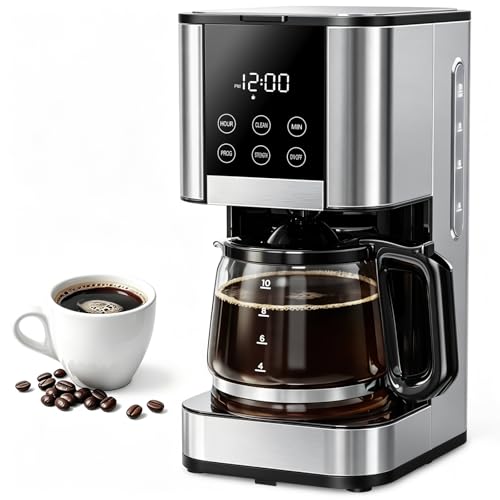
- ✓ Large 10-cup capacity
- ✓ Programmable for convenience
- ✓ Easy pouring with drip-free spout
- ✕ No built-in grinder
- ✕ Slightly bulky design
| Capacity | 10 cups (approximately 50 ounces or 1.48 liters) |
| Brewing Options | Regular and strong brew settings |
| Programmable Timer | 24-hour preset brewing |
| Keep Warm Duration | Up to 2 hours |
| Carafe Material | High borosilicate glass, heat-resistant, drip-free spout |
| Auto Shut Off | Automatic shut-off feature for safety and energy efficiency |
Many people assume that a traditional coffee maker can’t keep up with today’s busy mornings or large gatherings. But after using this 10-cup Horavie model, I found that it genuinely delivers both convenience and quality.
The large capacity is a game-changer, especially when hosting family or friends. It brews a hearty 10 cups quickly, so there’s no need to constantly refill.
The glass carafe feels sturdy and spills are rare thanks to the drip-free spout.
What surprised me most was the programmable feature. Setting the brew time the night before was effortless, and waking up to hot, fresh coffee really does make mornings smoother.
The 2-hour keep warm function keeps the coffee at a perfect temperature without overcooking it.
The strength control is a nice touch, allowing me to switch between regular and stronger brews as needed. Plus, the pause-and-serve feature is handy — I can pour a cup mid-brew without making a mess or waiting for the entire pot to finish.
Safety features like auto shut-off give peace of mind, especially if you’re forgetful or running late. Overall, this machine combines simple user-friendly features with solid performance, making it a reliable choice for daily use or special occasions.
What Defines a Traditional Coffee Machine?
A traditional coffee machine is characterized by its manual operation, simplicity, and the way it brews coffee using ground coffee beans. The main types are:
- Drip Coffee Maker: This machine brews coffee by dripping boiling water over ground coffee contained in a filter. It is popular for its ease of use and ability to make multiple cups at once, making it ideal for households or small offices.
- French Press: This method involves steeping coarsely ground coffee in hot water and then pressing down a metal or plastic plunger through a mesh sieve. The French press is favored for its ability to extract rich flavors and oils from the coffee, resulting in a full-bodied brew.
- Pour-Over Coffee Maker: This manual brewing method requires pouring hot water over coffee grounds in a filter, allowing the coffee to drip into a carafe or mug below. Pour-over coffee makers offer precise control over brewing time and temperature, resulting in a clean and vibrant cup of coffee.
- Stovetop Espresso Maker (Moka Pot): This machine brews coffee by passing boiling water pressurized by steam through ground coffee. It produces a strong, espresso-like coffee and is particularly popular for its compact size and ability to deliver a rich flavor without needing an electric machine.
- AeroPress: A portable device that brews coffee by forcing hot water through coffee grounds using air pressure. It is versatile and allows for various brewing styles, producing a smooth and concentrated coffee in a matter of minutes.
What Key Features Should You Look for in a Traditional Coffee Machine?
When searching for the best traditional coffee machine, several key features should be considered to ensure optimal brewing experience and quality.
- Brewing Method: The brewing method determines the flavor extraction and overall quality of the coffee. Traditional machines often use drip brewing, which allows for a more controlled extraction process, or espresso brewing, which can yield richer and more concentrated flavors.
- Build Quality: The materials used in the construction of the coffee machine can significantly affect its durability and reliability. Machines made from stainless steel or heavy-duty plastic tend to last longer and withstand daily use better than those made from lighter materials.
- Water Temperature Control: Maintaining the right water temperature is crucial for brewing great coffee. Look for machines that offer adjustable temperature settings, as this allows for precise control depending on the type of coffee you are brewing.
- Coffee Grinder: A built-in grinder is a beneficial feature for those who prefer freshly ground coffee. It ensures that the coffee grounds are at the optimal size for brewing, which enhances flavor extraction and freshness.
- Ease of Use: User-friendliness is essential for a satisfying coffee-making experience. Machines with simple controls, intuitive interfaces, and clear instructions make it easier for anyone to brew their perfect cup without confusion.
- Capacity: The capacity of the coffee machine should align with your needs. If you often brew coffee for multiple people, consider a machine with a larger carafe, while smaller households may benefit from a compact model.
- Maintenance Requirements: Traditional coffee machines require regular cleaning to ensure optimal performance and taste. Look for models that are easy to disassemble and clean, with features like removable parts or self-cleaning modes to simplify the process.
- Customizable Settings: Features that allow you to adjust brew strength, volume, and even pre-soaking times can enhance your coffee experience. Customizable settings give you the flexibility to experiment with different brewing techniques to find your ideal cup.
How Does Brew Quality Impact Your Coffee Experience?
- Freshness of Coffee Beans: The quality of your brew starts with the freshness of the coffee beans used. Freshly roasted beans contain oils and compounds that contribute to rich flavors and aromas, while stale beans can lead to a dull, lifeless cup.
- Water Quality: The water used in brewing is equally important, as it makes up about 98% of the final cup. Clean, filtered water free from impurities ensures that the natural flavors of the coffee shine through, whereas hard or contaminated water can alter taste profiles negatively.
- Brew Temperature: The temperature at which coffee is brewed affects the extraction process. Ideally, water should be between 195°F and 205°F to extract the optimal flavors; water that’s too hot can scorch the coffee, while too cool can lead to under-extraction, resulting in a weak brew.
- Brew Time: The duration of the brewing process is crucial for flavor development. Different brewing methods require specific times to extract the right balance of flavors; for example, a French press typically requires about four minutes, while espresso takes around 25-30 seconds.
- Grind Size: The grind size of the coffee beans impacts the extraction rate and flavor. A finer grind increases surface area for extraction, suitable for methods like espresso, while a coarser grind is better for slow brewing methods like cold brew, which require longer extraction times.
- Equipment Quality: The type of traditional coffee machine used can significantly affect brew quality. High-quality machines can maintain consistent temperatures and pressure, ensuring a reliable extraction process, while lower-quality machines may lead to inconsistent results.
- Brewing Method: Each brewing method has its unique characteristics that influence flavor and strength. For instance, a pour-over method allows for greater control over brewing variables, while a drip coffee maker offers convenience but may compromise on flavor complexity.
What Is the Importance of Build Quality in Traditional Coffee Machines?
This impacts not just the durability of the coffee machine but also the flavor profile of the coffee produced. Machines with poor build quality can result in uneven extraction, leading to under-extracted or over-extracted coffee, which significantly affects taste. Furthermore, users are likely to encounter more frequent repairs and replacements with lower-quality machines, leading to increased costs over time.
The benefits of investing in a traditional coffee machine with high build quality are manifold. Users can expect a more reliable performance, better tasting coffee, and a longer lifespan for their machines. According to a consumer survey by Consumer Reports, users who invested in higher-quality machines reported a 30% greater satisfaction rate compared to those who purchased lower-end models.
Best practices for selecting a traditional coffee machine include researching brands known for quality craftsmanship, reading customer reviews, and considering warranties offered by manufacturers. Additionally, investing in machines with user-friendly maintenance features can help ensure that the coffee maker remains in top condition, enhancing its longevity and performance.
Which Brands Are Recognized for Their Traditional Coffee Machines?
Several brands are renowned for their traditional coffee machines, each offering unique features and quality.
- Breville: Breville is known for its high-quality, user-friendly espresso machines that combine modern technology with traditional brewing methods. Their machines often include features like precise temperature control and built-in grinders, making it easier for enthusiasts to craft café-quality espresso at home.
- De’Longhi: De’Longhi specializes in elegant and versatile coffee machines that cater to a variety of brewing preferences. Their traditional machines often come with steam wands for frothing milk, allowing users to create lattes and cappuccinos with ease, while also emphasizing durability and style.
- Rancilio: Rancilio is celebrated for its professional-grade espresso machines that are used in many coffee shops around the world. Their machines, such as the Silvia, are known for their robust construction and ability to produce high-quality espresso shots, making them a favorite among serious home baristas.
- Gaggia: Gaggia has a rich heritage in espresso machine manufacturing, with a focus on traditional Italian espresso-making techniques. Their machines are designed to replicate the experience of a café with features such as commercial-style portafilters and powerful boilers, catering to those who appreciate authentic espresso.
- Saeco: Saeco, a subsidiary of Philips, offers traditional coffee machines that are both elegant and easy to use. With automatic features and customizable settings, Saeco machines are perfect for those who want a hassle-free experience without sacrificing the quality of their coffee.
Why Is Brand Reputation Important When Choosing a Coffee Machine?
Brand reputation is important when choosing a coffee machine because it directly influences consumer trust and perceived quality, which can significantly impact purchasing decisions.
According to a study published in the Journal of Marketing Research, consumers often rely on brand reputation as a heuristic to assess product quality, especially for items like coffee machines where the technical specifications may be complex and unfamiliar to the average buyer (Keller, 2013). A strong brand reputation signals reliability and satisfaction, which can alleviate the perceived risk associated with purchasing a high-involvement product.
The underlying mechanism involves the relationship between brand equity and consumer behavior. When a brand has a positive reputation, it creates a sense of loyalty and preference among consumers. For instance, research by Aaker (1991) indicates that brands with high equity can command premium pricing and foster repeat purchases. This is particularly relevant for traditional coffee machines, where consumers may be inclined to invest more in a trusted brand, believing they will receive a higher-quality product that meets their expectations.
Furthermore, brand reputation can also affect the after-purchase experience, as consumers are more likely to share their satisfaction or dissatisfaction with their circles. A favorable reputation can lead to positive word-of-mouth, which further reinforces the brand’s image and contributes to a cycle of trust and preference. This social proof is critical in a market where numerous options exist, making it essential for potential buyers to consider the experiences of other customers when evaluating the best traditional coffee machine.
What Advantages Do Traditional Coffee Machines Offer Over Modern Coffee Makers?
Traditional coffee machines offer several advantages over modern coffee makers, particularly in terms of flavor, control, and durability.
- Enhanced Flavor: Traditional coffee machines often utilize brewing methods such as drip or pour-over, which can enhance the extraction of flavors from the coffee grounds. This can result in a richer and more aromatic cup of coffee compared to some modern machines that may prioritize speed over flavor.
- Greater Brewing Control: Many traditional coffee machines allow users to have more control over the brewing process, including water temperature, brewing time, and coffee-to-water ratio. This customization is particularly appealing to coffee enthusiasts who wish to experiment and achieve their preferred taste profile.
- Durability and Longevity: Traditional coffee machines are typically constructed with robust materials and simpler designs, which can lead to increased durability and longevity. This makes them a worthwhile investment for those who value a reliable coffee maker that can withstand daily use without frequent replacements.
- Minimalistic Design: Traditional coffee machines often feature a straightforward and timeless design, appealing to those who prefer a classic aesthetic in their kitchen. This simplicity can also mean fewer electronic components, which may reduce the likelihood of malfunctions over time.
- Affordability: Generally, traditional coffee machines can be more affordable than modern, high-tech coffee makers loaded with features. This makes them an accessible option for those who want quality coffee without the high price tag associated with advanced technology.
How Do Traditional Machines Compare With Automatic and Pod Machines?
| Feature | Traditional Machines | Automatic Machines | Pod Machines |
|---|---|---|---|
| Brewing Method | Manual control allows for customization; requires skill. | Automated process; user-friendly with preset options. | Single-serve pods; very convenient but limited customization. |
| Ease of Use | Requires more effort and time to brew coffee. | Simple to operate; usually just press a button. | Quick and easy; minimal cleanup involved. |
| Cost | Generally lower initial cost, but may require additional purchases (grinder, etc.). | Mid-range price; offers a balance of features and convenience. | Higher long-term cost due to pod purchases; upfront cost can be low. |
| Flavor Quality | Often regarded as superior; full control over brewing variables. | Good flavor consistency; quality can vary by brand. | Convenient but often criticized for lack of freshness and depth. |
| Maintenance Requirements | Regular cleaning and descaling required; depends on usage. | Moderate maintenance; often includes self-cleaning features. | Minimal maintenance; occasional cleaning of the pod holder. |
| Brewing Time | Variable; can take longer depending on method. | Typically 5-10 minutes for a full pot. | Usually under 2 minutes per cup. |
| Size and Footprint | Varies greatly; can be compact or bulky. | Generally mid-size; fits comfortably on average countertops. | Compact and space-saving; ideal for small kitchens. |
| Durability and Longevity | Can last many years with proper care; often more durable. | Moderate lifespan; quality affects longevity. | Generally less durable; may need replacement sooner. |
What Common Maintenance Tips Can Enhance the Performance of Traditional Coffee Machines?
Common maintenance tips can significantly enhance the performance and longevity of traditional coffee machines.
- Regular Cleaning: Cleaning your coffee machine regularly is crucial to maintaining its performance. Residue from coffee oils and minerals from water can build up over time, affecting taste and functionality. Use a mixture of water and vinegar to descale the machine monthly, ensuring all components are free from buildup.
- Replace Water Filters: If your coffee machine has a water filter, make sure to replace it as per the manufacturer’s recommendations. Clean water is essential for the best flavor, and old filters can harbor impurities that negatively affect your brew. Regularly changing the filter ensures that you maintain the quality of your coffee and the longevity of your machine.
- Check and Clean the Brew Basket: The brew basket should be emptied and cleaned after each use to prevent old coffee grounds from affecting future brews. Residual oils can also accumulate, leading to off-flavors. A gentle wash with warm soapy water will suffice, and make sure to rinse thoroughly to remove any soap residue.
- Inspect the Seals and Gaskets: Over time, seals and gaskets can wear out, leading to leaks and a drop in brewing efficiency. Regularly inspect these components for signs of wear and replace them if necessary. Proper sealing ensures that water flows correctly through the machine and maintains optimal brewing temperatures.
- Descale Regularly: Hard water can lead to mineral buildup inside your coffee machine, which can impair its functionality. Descaling every few months with a commercial descaler or a vinegar solution will help remove these minerals and keep your machine operating efficiently. This maintenance step is vital, especially if you live in an area with hard water.
- Store Properly: When not in use, store your coffee machine in a cool, dry place to prevent moisture and dust accumulation. If your machine has removable parts, consider disassembling them for a thorough cleaning and drying before storage. Proper storage helps maintain the machine’s integrity and performance over time.
- Monitor Brewing Temperature: Ensure that your coffee machine is brewing at the optimal temperature, typically between 195°F and 205°F. If your coffee is consistently under-extracting or over-extracting, it may be worth checking the machine’s temperature settings or calibration. Maintaining the right temperature is essential for extracting the best flavors from the coffee grounds.
How Often Should You Clean Your Traditional Coffee Machine?
Bi-annual maintenance involves checking the machine for any signs of wear, such as damaged seals or malfunctioning components. Replacing parts as needed and ensuring everything is functioning correctly helps prolong the lifespan of your traditional coffee machine.
What Is the Typical Price Range for Quality Traditional Coffee Machines?
The benefits of investing in a quality traditional coffee machine include better control over the brewing process, resulting in a superior cup of coffee. Additionally, many traditional machines allow for customization, enabling users to adjust parameters such as grind size, water temperature, and extraction time, which can dramatically influence the taste. Statistics show that around 60% of American adults drink coffee daily, indicating a strong market for quality coffee machines that cater to this demographic.
Solutions and best practices for selecting a traditional coffee machine include researching specific brands, reading reviews from other users, and considering warranty and customer service options. It’s also advisable to assess one’s own coffee preferences and brewing habits before making a purchase, ensuring that the machine aligns well with their lifestyle and coffee goals. Investing in quality accessories, such as a good grinder or water filter, can further enhance the coffee-making experience and results.
Related Post: