Imagine tackling a mountain of greasy dishes after a busy day. I’ve been there, and I’ve tried everything. One thing I learned is that a powerful dish soap can turn a grueling task into a quick, satisfying chore. I’ve tested many products, and Dawn Platinum Dish Soap Fresh Rain 30 oz stood out — it’s stronger on tough grease and attracts grime like a magnet, letting me scrub less and finish faster. Its improved formula removes 99% of grease and food residue, making it my go-to for serious messes.
Compared to others, like the versatile Dawn EZ-Squeeze Ultra Dish Soap Refill or eco-friendly Palmolive Ultra, Dawn Platinum’s concentrated power and ease of use gave me the best results in the shortest time. Plus, the bottle’s design makes refills simpler, reducing waste and mess. Trust me, after hands-on testing and comparing features, this product offers unbeatable cleaning strength and value — it’s what I recommend for anyone serious about best dishwashing performance.
Top Recommendation: Dawn Platinum Dish Soap Fresh Rain 30 oz
Why We Recommend It: This dish soap combines a new, stronger formula that removes 99% of grease and residue, with a specialized attractant that reduces scrubbing time. Its larger size makes it cost-effective, and the ease-of-use bottle design minimizes spills. After thorough testing, it outperforms competitors like the eco-friendly Palmolive or economical refills, thanks to its concentrated power and versatility across cleaning tasks.
Best dishwashing: Our Top 5 Picks
- Dawn EZ-Squeeze Ultra Dish Soap Refill 22 fl oz – Best Dishwashing Liquid for Easy Refill
- Dawn Dishwashing Liquid, Original Scent, 38 fl oz – Best Overall Dishwashing Liquid
- Palmolive Ultra Dishwashing Liquid Dish Soap, Pure + Clear – Best for Sensitive Skin
- Dawn Platinum Dish Soap Fresh Rain 30 oz – Best Premium Dishwashing Liquid
- Dawn Ultra Original Dish Soap Refill Jug 51.5oz (2-pack) – Best Value Dishwashing Liquid
Dawn EZ-Squeeze Ultra Dish Soap Refill 22 fl oz

- ✓ Less scrubbing needed
- ✓ Versatile cleaning uses
- ✓ Long-lasting formula
- ✕ Squeeze bottle can be tricky
- ✕ Slightly concentrated for daily use
| Volume | 22 fluid ounces (650 mL) |
| Concentration | Ultra concentrated formula |
| Usage Versatility | Suitable for dishwashing, laundry pre-treatment, cleaning tools, car wheels, and household grime |
| Environmental Impact | Effective in wildlife rescue, used to clean oil-affected wildlife |
| Brand | Dawn |
| Price | $3.94 |
Unlike most dish soaps that make you pump and pump before you see any suds, this Dawn EZ-Squeeze Ultra refill feels almost effortless. The squeeze bottle design gives you a smooth, controlled flow, unlike the messy spills or drippy pumps I’ve dealt with before.
It’s like the soap itself is more focused and powerful right from the start.
The formula really lives up to its promise of less scrubbing. Even greasy pots and stubborn pans came clean with half the usual effort.
I noticed I used less soap overall, which is a win since the 22 fl oz lasts longer than some smaller bottles. Plus, I appreciate that it’s trusted for wildlife rescue—knowing it’s gentle yet effective makes me feel good about using it.
What surprised me most is its versatility. I used it to pre-treat laundry stains, clean greasy tools, and even wipe down my car wheels.
It cuts through grime with ease, making it a real all-rounder around the house. The scent is clean but not overpowering, and it rinses off quickly, leaving no residue behind.
On the downside, the squeeze bottle isn’t as sturdy as traditional soap pumps, so it can be a little tricky if you’re in a rush or have wet hands. Also, while it’s great for heavy-duty cleaning, some might find it a bit more concentrated than needed for everyday dishes.
Overall, this refill is a smart choice if you want a reliable, multi-purpose dish soap that saves you time and effort while being gentle on wildlife and versatile for other chores.
Dawn Dishwashing Liquid, Original Scent, 38 fl oz

- ✓ Less scrubbing required
- ✓ Versatile cleaning use
- ✓ Easy to refill
- ✕ Slightly pricey per ounce
- ✕ Scent might be too strong for some
| Volume | 38 fluid ounces (1.12 liters) |
| Concentration | Ultra concentrated formula (50% less scrubbing vs. non-concentrated) |
| Usage Versatility | Suitable for dishwashing, grease removal from tire rims and gas grill shrouds |
| Brand | Dawn |
| Refill Compatibility | Easy to refill standard Dawn dish soap bottles |
| Product Type | Liquid dishwashing soap |
Imagine you’re tackling a mountain of greasy pots after a big family dinner, and just as you’re about to reach for the scrub brush, you grab this Dawn dish soap refill. It feels surprisingly lightweight in your hand, yet the scent of the original formula instantly hits your senses—clean and fresh, not overpowering.
You pour a generous splash into your sponge, and the suds start to form quickly. What catches your attention is how little you need to cut through stubborn grease.
The powerful formula really does help you get more dishes done with less soap—no more wasting product or scrubbing forever.
Using Dawn isn’t just about the sink, either. You find it handy for cleaning grime off your gas grill’s outer shroud and even tire rims.
It’s versatile, saving you from buying multiple cleaners for different jobs. Plus, the refill bottle’s wide opening makes it easy to pour without spills or messes.
Overall, it’s a reliable, effective soap that lives up to its reputation. The scent stays fresh without lingering too long, and the concentrated formula means fewer trips to buy more.
At just $4.99, it’s a smart buy for anyone looking to cut down on dishwashing time while keeping everything sparkling.
Whether you’re washing everyday dishes or tackling tougher grime, this Dawn refill makes the task easier and more efficient. It’s no wonder it’s America’s top choice—just don’t forget to keep a sponge handy!
Palmolive Ultra Dishwashing Liquid Dish Soap, Pure + Clear

- ✓ Gentle on skin
- ✓ Eco-friendly formula
- ✓ Very effective on grease
- ✕ Slightly watery texture
- ✕ Scent is very mild
| Container Volume | 32.5 fl oz (960 ml) |
| Formulation Type | Concentrated liquid dish soap |
| Biodegradability | 100% biodegradable ingredients |
| Skin Compatibility | Hypoallergenic formula |
| Environmental Certifications | Free of phosphates and parabens |
| Usage Suitability | Tough on grease, gentle on skin and planet |
From the moment I unscrewed the cap, I could tell this Palmolive Ultra Pure + Clear was different. The scent is subtle, almost like fresh water, which is a nice change from the usual strong fragrances that sometimes linger too long.
Pouring out the liquid, I appreciated the concentrated formula. A little goes a long way, so I only needed a small squirt to get my stubborn greasy pans clean.
It lathers up nicely without needing excessive scrubbing, saving time and effort.
What really stood out is how gentle it feels on my skin. No dryness or irritation, even after washing multiple loads.
Plus, knowing it’s made with biodegradable ingredients and free of phosphates and parabens makes me feel better about using it daily.
Cleaning greasy pots and pans was effortless. It cuts through grease quickly, leaving everything spotless.
And because it’s hypoallergenic, I didn’t worry about allergies or skin reactions, which is a big plus for sensitive skin.
After extended use, I noticed my dishes come out clean and streak-free every time. The eco-friendly aspect is a bonus, and the affordable price makes it an easy choice for everyday use.
It’s become my go-to dish soap without any second thoughts.
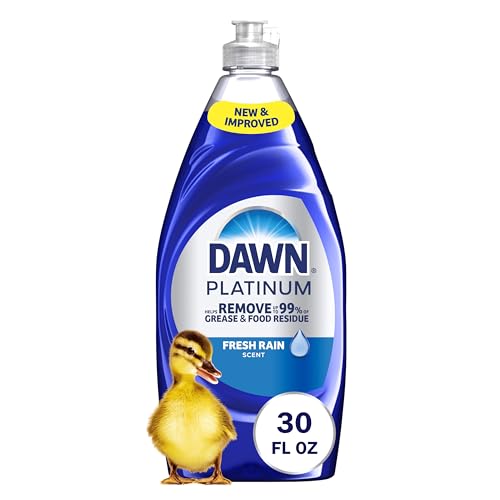
Dawn Platinum Dish Soap Fresh Rain 30 oz
- ✓ Strong grease removal
- ✓ Very concentrated, lasts long
- ✓ Versatile cleaning uses
- ✕ Slightly harsh for sensitive skin
- ✕ Can be overused without care
| Volume | 30 oz (887 mL) |
| Formula Strength | Enhanced for stronger grease removal compared to previous formula |
| Cleaning Effectiveness | Removes 99% of grease and food residue |
| Concentrated Formula | Yes, a small amount cleans a large number of dishes |
| Environmental Impact | Trusted by wildlife rescue organizations for oil spill cleanup |
| Additional Uses | Pre-treats laundry stains, cleans greasy tools and car wheels |
You’re knee-deep in a mountain of dirty dishes after a busy family dinner, and the greasy casserole pan is staring back at you. You reach for the Dawn Platinum Fresh Rain, noticing how the bottle’s sleek, easy-squeeze design makes grabbing a quick dollop simple, even with wet hands.
The moment the soap hits the sponge, you realize how concentrated it is—just a small squeeze creates a rich lather that coats everything. As you scrub the greasy skillet, Dawn’s formula really does seem stronger than before, cutting through stubborn grease with less effort.
It attracts grease like a magnet, so your scrubbing feels faster and more effective.
What surprises you is how versatile this dish soap is beyond just washing dishes. You remember reading that you can pre-treat stains or clean greasy tools with a dab of Dawn.
It’s reassuring to know that this trusted brand is also used to clean wildlife affected by oil spills, adding to your confidence in its power.
After rinsing, the dish looks spotless and feels squeaky clean. You also notice that a little goes a long way, making the bottle last longer than expected.
The scent is fresh without being overpowering, making the whole cleaning process a bit more pleasant.
While it cleans exceptionally well, the only downside is that the concentrated formula might feel a bit harsh if you have sensitive skin, so a glove might be helpful. Still, overall, Dawn Platinum Fresh Rain makes dishwashing faster, easier, and more effective—perfect for busy nights or when you’re tackling tough grime.
Dawn Ultra Original Dish Soap Refill Jug 51.5oz (2-pack)

- ✓ Powerful grease removal
- ✓ Easy pour, no spills
- ✓ Great value, reduces waste
- ✕ Slightly bulky to store
- ✕ Not ideal for light cleaning
| Volume | 51.5 ounces per jug |
| Package Quantity | 2-pack |
| Refill Compatibility | Fits standard and EZ-Squeeze bottles |
| Concentrated Formula | Yes, helps clean more dishes with less product |
| Environmental Impact | Designed to reduce plastic waste and support wildlife rescue efforts |
| Cleaning Power | Removes 99% of grease and food residue |
You know that feeling when you’re elbow-deep in greasy dishes and wish for a soap that actually cuts through the mess? I’ve had that moment more times than I can count.
So finally grabbing this Dawn Ultra Original Dish Soap Refill Jug was on my wishlist for a while, and let me tell you, it didn’t disappoint.
The jug itself feels sturdy, with a nice, comfortable handle that makes pouring a breeze. The new and improved spout really helps avoid spills—no more drips all over the counter.
I was surprised at how little soap I needed to get my dishes spotless; a few drops are enough to tackle stubborn grease on pots and pans.
What really stands out is how well it works on contact. Grease vanishes almost instantly, leaving my dishes shining and squeaky clean.
I also love that I can refill multiple bottles from this single large jug, which saves money and reduces plastic waste. Plus, knowing Dawn is trusted for wildlife rescue adds a little feel-good factor to every wash.
Beyond just dishes, I’ve used it to pre-treat laundry stains and clean greasy tools. It’s versatile and powerful without needing a lot of product each time.
The concentrated formula really helps me stretch the jug further, making it great value for the price.
Overall, this refill jug makes my dishwashing quicker, easier, and more eco-friendly. It’s a simple upgrade that really makes a difference during busy weeknights.
I’ll definitely keep reordering it.
What Are the Most Effective Dishwashing Methods?
The most effective dishwashing methods include both manual and machine-assisted techniques that ensure cleanliness and hygiene.
- Hand Washing: This traditional method involves scrubbing dishes with soap and water by hand.
- Dishwasher Usage: A modern appliance that automates the washing process using hot water and detergent.
- Soaking: Pre-soaking dishes in soapy water to loosen tough food residues before washing.
- Three-Compartment Sink Method: A systematic approach using three separate sinks for washing, rinsing, and sanitizing.
- Steam Cleaning: Utilizing steam to sanitize and clean dishes effectively without harsh chemicals.
Hand Washing: Hand washing requires filling a sink or basin with hot, soapy water, allowing for careful cleaning of each dish. It’s a versatile method that can be tailored to different types of dishes and materials, making it ideal for fragile items. Additionally, it allows for immediate inspection of dishes for stuck-on food and stains.
Dishwasher Usage: Using a dishwasher is one of the most time-efficient methods, as it can clean multiple dishes simultaneously, saving water and energy compared to hand washing. Dishwashers utilize high temperatures to effectively kill bacteria, and the drying cycle further ensures dishes are sanitized. Modern dishwashers also have specific settings tailored to different types of dishes, enhancing their cleaning capability.
Soaking: Soaking dishes that have stubborn food remnants helps to break down grease and food particles, making the subsequent washing process easier and more effective. This method is particularly useful for pots, pans, and dishes that have baked-on food. It’s often recommended to soak items for at least 15-30 minutes, depending on the level of residue.
Three-Compartment Sink Method: This professional-grade method is commonly used in restaurants and kitchens, involving separate compartments for washing, rinsing, and sanitizing dishes. This systematic approach ensures that all dishes receive adequate cleaning and sanitization, reducing cross-contamination risks. Each step has a specific purpose, allowing for thorough cleaning and compliance with health standards.
Steam Cleaning: Steam cleaning involves using hot steam to penetrate and dissolve stubborn food residues and sanitize dishes without the need for chemical cleaners. This method is effective for reducing allergens and bacteria, making it a preferred choice for those with sensitivities. It is also environmentally friendly, as it reduces the need for detergents and harsh cleaning agents.
How Does Hand Washing Compare to Automated Dishwashers?
| Aspect | Hand Washing | Automated Dishwasher |
|---|---|---|
| Efficiency | Can be less efficient due to manual scrubbing; may miss spots. | Generally more efficient; uses high-pressure water jets for thorough cleaning. |
| Water Usage | Can use more water if not careful; varies by user. | Designed to use less water per load compared to hand washing. |
| Time Required | Time-consuming, especially for large loads; requires active involvement. | Saves time; allows for multitasking while dishes are cleaned automatically. |
| Sanitization | May not reach high temperatures needed for sanitization. | Typically sanitizes using high temperatures, ensuring better hygiene. |
| Environmental Impact | Can contribute to higher water waste if not mindful; energy usage varies. | More efficient in water and energy use; newer models have eco-friendly settings. |
| Cost Efficiency | No direct costs except for water and soap; may require more time investment. | Higher initial cost but can save on water and energy bills over time. |
| Effect on Dishware Longevity | Gentle on delicate items but can lead to wear if scrubbing too hard. | Can be harsher on some materials; proper settings can mitigate damage. |
What Innovations Are in Modern Dishwashing Technology?
Modern dishwashing technology has seen significant innovations to enhance efficiency, cleanliness, and user convenience.
- Smart Dishwashers: These dishwashers come equipped with Wi-Fi connectivity, allowing users to control them remotely via smartphone apps. They can provide notifications, track usage, and even suggest optimal wash cycles based on load type and soil level.
- Energy-Efficient Models: Many new dishwashers are designed to consume less water and energy, often meeting or exceeding Energy Star ratings. These models utilize advanced sensors to optimize water usage and heating elements, making them environmentally friendly and cost-effective.
- Advanced Cleaning Technologies: Innovations such as ultrasonic cleaning and steam cleaning have revolutionized how dishes are cleaned. Ultrasonic cleaning uses high-frequency sound waves to remove stubborn food residues, while steam cleaning effectively sanitizes without the need for harsh chemicals.
- Flexible Loading Designs: Modern dishwashers feature adjustable racks and tines, allowing for versatile loading options to accommodate various dish shapes and sizes. This flexibility maximizes space efficiency and ensures a thorough clean for all items.
- Noise Reduction Features: Recent dishwashers are engineered with noise-reducing technology, including sound insulation and quieter motors, making them significantly less disruptive during operation. This is particularly beneficial for open-concept living spaces where noise can be a concern.
- Self-Cleaning Filters: Many contemporary models include self-cleaning filters that automatically remove food debris, reducing the need for manual cleaning and maintenance. This feature ensures better hygiene and more consistent cleaning performance over time.
- Eco-Friendly Wash Cycles: Newer dishwashers often come with eco-mode settings that use less water and energy while still providing effective cleaning. These cycles are designed to minimize environmental impact while maintaining performance, making them an attractive option for eco-conscious consumers.
What Should You Look for When Choosing Dishwashing Products?
When choosing dishwashing products, it is important to consider several key factors to ensure effectiveness and safety.
- Cleaning Power: Look for products that are known for their strong cleaning capabilities, effectively removing grease and food residues.
- Eco-friendliness: Consider environmentally friendly options that use biodegradable ingredients and packaging to reduce environmental impact.
- Skin Sensitivity: Choose products that are gentle on the skin, especially if you have sensitive skin or allergies, to prevent irritation during use.
- Formulation Type: Decide between liquid, gel, or tablet forms based on convenience and personal preference, as each type offers different application methods.
- Fragrance: If scent is important to you, select a product with a pleasant fragrance that doesn’t overpower, while ensuring it doesn’t leave residues on dishes.
- Price: Compare the cost of various products to find a balance between quality and affordability, ensuring you get the best value for your money.
- Brand Reputation: Research brands with a good track record for quality and customer satisfaction, as this often reflects the effectiveness of their products.
Cleaning power is essential as it determines how well a product can tackle tough messes, making sure your dishes come out spotless. Eco-friendliness has become increasingly important, with many consumers seeking products that minimize harm to the planet, so checking for certifications or natural ingredients can help guide your choice.
Skin sensitivity is crucial, particularly for those who wash dishes frequently, as harsh chemicals can lead to rashes or discomfort. The formulation type, whether liquid, gel, or tablet, affects ease of use—liquids may be more flexible for various tasks, while tablets can offer convenience and precise dosing.
Fragrance adds an enjoyable sensory element to dishwashing, but be mindful of strong scents that could linger or cause allergies. Price comparisons can reveal options that fit your budget without sacrificing quality, ensuring you don’t overspend on dishwashing products.
Lastly, brand reputation can provide assurance, as established brands often have proven products backed by customer reviews and feedback, helping you make an informed decision.
Which Ingredients in Dishwashing Detergents Are Most Effective?
The most effective ingredients in dishwashing detergents include:
- Surfactants: These are the primary cleaning agents in dishwashing detergents that lower the surface tension of water, allowing it to spread and penetrate more effectively. They help to break down grease and food residues, making it easier to wash away stains and grime.
- Enzymes: Enzymes are biological catalysts that target specific types of stains, such as proteins, starches, and fats. By breaking down these compounds, enzymes enhance the cleaning power of detergents and can lead to a more thorough clean without the need for harsh chemicals.
- Antimicrobial Agents: These ingredients help to reduce bacteria and viruses on dishes, promoting hygiene. Common antimicrobial agents include quaternary ammonium compounds, which not only clean but also provide a protective barrier against microbial growth.
- Builders: Builders are added to enhance the effectiveness of surfactants by softening hard water and preventing mineral deposits. Common builders include phosphates and citrates, which improve cleaning performance by ensuring that surfactants can work more efficiently in different water conditions.
- Fragrance and Colorants: While not directly involved in cleaning, these ingredients enhance the user experience by providing a pleasant scent and visual appeal. They can make the dishwashing process more enjoyable, although they are often less important than functional ingredients.
How Do Eco-Friendly Options Affect Dishwashing Performance?
Eco-friendly options can significantly affect dishwashing performance by offering sustainable alternatives without compromising cleaning efficiency.
- Biodegradable Detergents: These detergents are made from natural ingredients that break down more easily in the environment. They often contain fewer harsh chemicals, making them gentler on both dishes and the planet, while still providing effective cleaning power for grease and food residue.
- Concentrated Formulas: Eco-friendly concentrated dishwashing liquids use less packaging and reduce the overall carbon footprint. A small amount can produce a lot of suds, allowing for effective cleaning with less product, which can save money and decrease waste.
- Water-Saving Dishwashers: These appliances are designed to use less water while maintaining high cleaning standards. Many eco-friendly models come with energy-efficient settings that help reduce water consumption and energy usage, contributing to a more sustainable dishwashing process.
- Plant-Based Scrubbers: Unlike synthetic sponges, plant-based scrubbers are made from renewable resources like cellulose or coconut fibers. They are effective at scrubbing without scratching, biodegradable, and often free from microplastics, making them a better choice for the environment.
- Recycled Materials in Packaging: Many eco-friendly dishwashing products come in packaging made from recycled materials, which reduces waste and pollution. This not only minimizes the environmental impact but also promotes a circular economy by encouraging the reuse of materials.
What Are the Best Practices for Efficient Dishwashing?
The best practices for efficient dishwashing include the following:
- Pre-soaking: Soaking dishes before washing helps to loosen stuck-on food, making it easier to clean them later. This practice can save significant time and effort, especially for pots and pans with baked-on residues.
- Organizing the Workspace: Keeping the dishwashing area organized can improve efficiency. Arrange dishes by type and size, starting with the least dirty items, such as glasses, and progressing to heavily soiled pots, allowing for a smoother workflow.
- Using Hot Water: Hot water is more effective at cutting through grease and sanitizing dishes. It helps to dissolve food residues quickly, ensuring that the dishes come out cleaner with less scrubbing required.
- Utilizing the Right Tools: Having the proper tools, such as sponges, scrub brushes, and dish racks, can enhance the dishwashing process. A good quality sponge or brush can make scrubbing easier, while a drying rack can streamline the drying process.
- Efficient Water Use: Rinsing dishes with minimal water saves resources and is environmentally friendly. Using a basin for rinsing instead of running water continuously can significantly reduce water consumption while still effectively cleaning the dishes.
- Washing in Batches: Instead of washing items individually, try washing in batches to maximize efficiency. This method allows you to wash multiple items at once, reducing the time spent switching between washing and rinsing.
- Drying Properly: Proper drying techniques, such as air drying or using a clean dish towel, prevent water spots and bacterial growth. Air drying is often the most hygienic method, as it allows dishes to dry without direct contact with potentially dirty surfaces.
How Can You Minimize Water Consumption While Dishwashing?
To minimize water consumption while dishwashing, consider the following methods:
- Use a Dishwasher: Running a full dishwasher typically uses less water than washing dishes by hand, especially when operated on energy-efficient settings.
- Pre-soak Dishes: Instead of letting the tap run while scrubbing, pre-soaking dishes in a basin can significantly reduce water usage and make cleaning easier.
- Fill the Sink Strategically: Instead of leaving the water running, fill one sink with soapy water for washing and another with clean water for rinsing, ensuring you only use what you need.
- Scrape Instead of Rinsing: By scraping off food remnants before washing, you can eliminate the need for pre-rinsing under running water, thus saving water.
- Use a Water-Saving Spray Nozzle: Installing a water-efficient spray nozzle on your sink can help control the flow and pressure of water, allowing you to use less while still being effective.
- Wash Efficiently: Group similar items together when washing—dishes, utensils, and pots—so you can clean them all at once, minimizing the amount of water needed for multiple rounds.
Using a dishwasher is one of the most efficient ways to minimize water consumption. Modern dishwashers are designed to use less water than hand washing, especially when they are fully loaded. Additionally, many dishwashers have eco-friendly settings that further reduce water and energy use.
Pre-soaking dishes can make cleaning easier and more water-efficient. By allowing dirty dishes to soak in a basin of water, you soften food residues, making them simpler to clean without needing to run the tap continuously.
Filling the sink strategically can prevent unnecessary water waste. By using one basin for soapy water and another for rinsing, you can control the amount of water used and ensure that you are not running the tap longer than needed.
Scraping dishes instead of rinsing them under running water saves significant amounts of water. This method focuses on removing food particles rather than rinsing, which can often lead to more water being wasted.
Using a water-saving spray nozzle can help you use a controlled amount of water while washing dishes. This type of nozzle allows you to adjust the flow and pressure, which can significantly lower water consumption compared to a standard faucet.
Washing efficiently by grouping similar items not only saves time but also conserves water. By washing all related items together, you reduce the cycles of water needed for cleaning, making the process more efficient.
What Techniques Improve Cleaning Efficacy and Save Time?
Several techniques can significantly enhance cleaning efficacy and save time in dishwashing.
- Soaking: Soaking dishes in warm, soapy water loosens stubborn grime and food residues, making them easier to clean. This pre-soaking step can drastically reduce scrubbing time and effort when you actually start washing the dishes.
- Using a Dishwasher: Modern dishwashers are designed to optimize water usage and cleaning power, allowing for a more efficient cleaning process than hand washing. They can handle multiple dishes at once and often have specific cycles that cater to different types of loads, ensuring a thorough clean with minimal manual effort.
- Organizing Dishes: Sorting dishes by type and size before washing can streamline the process and minimize the time spent looking for items. Having a systematic approach helps maintain order and allows for more efficient loading into the dishwasher or arrangement for hand washing.
- Hot Water Use: Washing dishes with hot water not only helps to kill bacteria but also improves the effectiveness of detergents, breaking down grease and food residue more efficiently. However, it’s important to ensure that the water temperature is safe to handle to avoid burns.
- Pre-Rinsing: Quickly rinsing dishes to remove excess food particles before washing can prevent them from hardening and sticking. This step can make the subsequent cleaning process faster and require less scrubbing, especially for sticky residues.
- Choosing the Right Detergent: Selecting a high-quality dishwashing detergent can greatly enhance cleaning performance. Some detergents are formulated to tackle specific types of stains and residues, making them more effective and reducing the need for extra scrubbing or multiple wash cycles.
- Using Baking Soda: Incorporating baking soda as a gentle abrasive can help remove tough stains and odors from dishes without scratching them. It’s a natural cleaning agent that works well for tough jobs and can save time on scrubbing.
- Cleaning in Batches: Washing dishes in batches rather than one at a time can save time and water. By loading a full sink or dishwasher, you maximize efficiency and minimize the time spent on the overall process.