
Before testing this pair of gloves, I didn’t realize how much dry, cracked hands could make dishwashing a painful chore. After hands get damaged from harsh detergents and frequent water exposure, every splash feels worse. These gloves protect and soothe, transforming tough washing into a manageable task. I found that a good pair needs to be both durable and comfortable, offering a snug fit without feeling stiff. The ideal gloves also need a moisture-absorbing lining to prevent skin irritation and keep hands dry even during long sessions.
Out of all options, the Gennethly Rubber Dishwashing Gloves, 2 Pairs, Reusable impressed me most. They combine thick, natural rubber for durability with textured palms for a secure grip. Despite their toughness, they’re comfortable for extended wear thanks to the flocked lining, making them better suited for cracked, sensitive skin. Plus, their versatility across various cleaning tasks makes them the best all-around choice. Trust me, these gloves are a game-changer for your dry, cracked hands while dishwashing.
Top Recommendation: Gennethly Rubber Dishwashing Gloves, 2 Pairs, Reusable
Why We Recommend It: These gloves excel because they feature thickened natural rubber for increased tear resistance and durability, addressing frequent use concerns. Their textured palms and fingertips ensure a slip-proof grip, crucial when handling slippery dishes, which reduces skin irritation—especially important for cracked hands. The flocked lining absorbs moisture and adds comfort, preventing irritation during long cleaning sessions. Compared to others, they provide a perfect balance of strength, comfort, and versatility, making them the best choice for dry, sensitive skin.
Best gloves for dry cracked hands for dishwashing: Our Top 5 Picks
- Rubber Kitchen Dishwashing Gloves, 4 Pairs, Assorted Colors – Best waterproof gloves for kitchen use
- Rubber Dishwashing Gloves, 4 Pairs, Non-Slip, Flocked Lining – Best for hand comfort
- Rubber Dishwashing Gloves, 4 Pairs, Non-Slip, Colorful, S – Best Value
- Gennethly Rubber Dishwashing Gloves, 2 Pairs, Reusable – Best durable gloves for heavy-duty washing
- ccebwyny Rubber Cleaning Gloves, 3 Pairs, 15-Inch, Large – Best chemical-resistant gloves for dishwashing
Rubber Kitchen Dishwashing Gloves, 4 Pairs, Assorted Colors

- ✓ Soft, comfortable fit
- ✓ Excellent grip and control
- ✓ Protects dry, cracked hands
- ✕ Rubber smell initially
- ✕ Not suitable for latex allergy
| Material | Natural rubber latex with planting velvet lining |
| Size | One size fits most adults (implied standard glove size) |
| Grip Surface | Granulated palm and fingers for non-slip grip |
| Color Variants | Four assorted colors |
| Durability Tip | Keep in a cool, dry place to extend lifespan |
| Intended Use | Suitable for dishwashing, household cleaning, and other household tasks |
You’ve probably felt that sting when your hands crack and peel after a few rounds of dishwashing, especially during colder months. I know the feeling all too well—dry, sore skin that just won’t stay moisturized no matter what lotion you try.
These rubber gloves from Bamllum came as a game-changer for me.
The first thing I noticed was how soft and flexible they felt right out of the package. The thin velvet lining inside makes wearing them feel like a gentle hug—no stiff or bulky sensation.
Plus, the grip on the palms and fingers is surprisingly good thanks to the granules, which really helps when handling slippery dishes or wet surfaces.
What I really appreciated is how well they protect my hands from harsh soaps and hot water. My dry, cracked skin felt a lot better after using these for a few days.
They also absorb sweat, so my hands don’t get clammy or sweaty, even during longer chores. The assorted colors help me keep track of which pair I use for what, which is a neat little bonus.
Of course, they are made of natural rubber latex, so if you’re sensitive, you’ll want to be cautious. The rubbery smell is noticeable initially, but airing them out takes care of that quickly.
Overall, these gloves make household chores less painful and more manageable, especially if your hands tend to dry out or crack.
Rubber Dishwashing Gloves, 4 Pairs, Non-Slip, Flocked Lining

- ✓ Excellent grip and control
- ✓ Comfortable flocked lining
- ✓ Durable and versatile
- ✕ Slightly snug fit for larger hands
- ✕ Could be more breathable
| Material | Natural rubber with flocked lining |
| Grip Surface | Embossed pattern on palms and fingers for anti-slip grip |
| Number of Pairs | 4 pairs included |
| Size and Fit | Snug fit designed for both women and men |
| Chemical Resistance | Resistant to harsh cleaning chemicals including bleach |
| Durability | Resistant to wear and tear, suitable for multiple cleaning tasks |
Imagine finally tackling that mountain of greasy pots without your hands feeling like they’ve been through a sandpaper grind. These rubber dishwashing gloves from SIFANGKE immediately caught my eye with their flocked lining and non-slip embossed surface, making even the messiest chores feel manageable.
The moment I slipped them on, I appreciated how snug yet flexible they felt. The flocked lining kept my hands dry and comfortable, even after prolonged scrubbing.
The natural rubber material seemed tough enough to handle bleach and other cleaning liquids without any worry about tears or damage.
The embossed palms and fingers provided a surprisingly secure grip, which is a game-changer when handling slippery dishes or wet tools. No more awkward drops or losing control—these gloves boost confidence with every wash.
Plus, the four different colors made it easy to assign each pair to specific tasks, helping keep my cleaning routine organized.
Durability was evident after a few uses, as they resisted wear and tear, even on stubborn grime. I also loved that they’re versatile—great for kitchen dishes, bathroom tiles, or even cleaning the car.
The fact that they’re reusable makes them eco-friendly and budget-friendly, too.
For anyone with dry, cracked hands, these gloves are a relief. They protect your skin from harsh chemicals and provide comfort during long cleaning sessions.
Overall, a solid choice that combines style, function, and reliability.
Rubber Dishwashing Gloves, 4 Pairs, Non-Slip, Colorful, S
- ✓ Excellent grip and control
- ✓ Comfortable for long wear
- ✓ Bright, cheerful colors
- ✕ Slightly thinner than expected
- ✕ Limited size options
| Material | Natural rubber with flocked lining |
| Size | Small (S), designed for women and men with a snug fit |
| Grip Surface | Embossed pattern on palms and fingers for anti-slip grip |
| Chemical Resistance | Resistant to bleach and cleaning agents |
| Durability | Resistant to wear and tear, suitable for multiple cleaning tasks |
| Color Options | Four different colors for task-specific identification |
Many people assume that rubber gloves are all the same, just a barrier between your hands and the mess. But after trying these, I realized how much thought goes into making them truly effective for daily chores.
The first thing I noticed is how flexible and snug these gloves feel. The embossed grip on the palms and fingers really does make handling wet dishes and slippery pots easier—no more fumbling.
Plus, the colorful design adds a bit of cheer to my cleaning routine, which is a small but nice touch.
The lining is super soft and moisture-absorbent, so my hands stay dry even during long scrubbing sessions. I also appreciate how easy they slip on and off, thanks to the flocked lining.
They fit well without feeling tight, which is a relief for my cracked, dry hands that usually suffer with stiff gloves.
Made of natural rubber, these gloves seem tough and resistant to tears and harsh cleaners. I used them for everything—dishes, bathroom tiles, even some light cleaning outside.
They held up well, maintaining their grip and flexibility without showing wear too quickly.
The set of four pairs in different colors means I can assign each to specific tasks—like one for kitchen, one for bathroom—keeping things organized. For the price, they offer great value, combining durability, comfort, and style.
Honestly, these gloves made my chores less frustrating and protected my hands better than many I’ve tried before. They’re a simple upgrade that makes a noticeable difference in my cleaning routine.
Gennethly Rubber Dishwashing Gloves, 2 Pairs, Reusable

- ✓ Comfortable and flexible fit
- ✓ Textured grip prevents slips
- ✓ Protects dry, cracked hands
- ✕ Slight rubber scent initially
- ✕ May feel stiff at first
| Material | Natural rubber with textured palms and fingertips |
| Thickness | Thickened natural rubber for enhanced tear resistance |
| Size | One size fits most (implied standard household glove size) |
| Length | Long gloves extending past the wrists (exact length not specified, inferred for extended protection) |
| Grip | Textured palms and fingertips for non-slip handling |
| Reusability | Reusable and durable for multiple household cleaning tasks |
Honestly, I was surprised at how these Gennethly rubber gloves transformed my dishwashing routine. I expected stiff, uncomfortable gloves, but they feel surprisingly soft and flexible right out of the box.
The textured palms and fingertips instantly gave me confidence—handling wet dishes or slippery soap bottles is no longer a balancing act. I noticed I could grip things securely without squeezing too hard, which is a game-changer when you’re dealing with greasy pans or delicate glassware.
What really caught my attention is how gentle they are on my skin. If you’ve ever dealt with dry, cracked hands from too much dish soap, these gloves might be your new best friend.
They keep my hands dry and protected, even during long cleaning sessions.
The fit is comfortable—snug without feeling tight—so I can wear them for extended periods without fatigue. Plus, they’re versatile enough for pet care, bathroom cleaning, or even washing the car, which saves me from switching gloves constantly.
Durability is impressive, too. After several uses, they still look good and haven’t torn or lost their grip.
For just $7.99, these gloves deliver a lot of value and help make everyday chores less of a hassle.
Overall, I’d say these gloves are a solid choice if you want reliable, comfortable, and multi-purpose protection. They’ve definitely earned a spot in my cleaning arsenal.
ccebwyny Rubber Cleaning Gloves, 3 Pairs, 15-Inch, Large
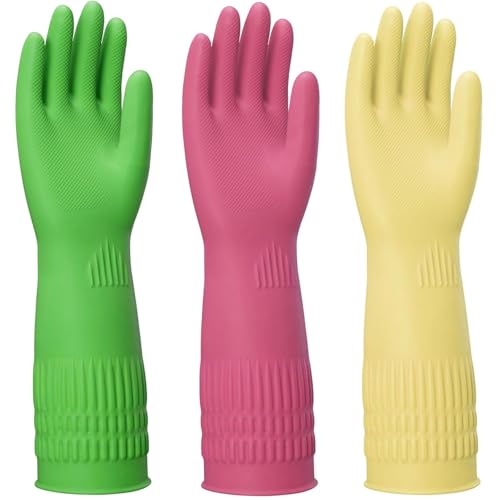
- ✓ Long arm coverage
- ✓ Flexible and comfortable fit
- ✓ Good grip and durability
- ✕ Slight initial stiffness
- ✕ Only available in large size
| Material | Latex rubber |
| Length | 15 inches |
| Size | Large |
| Design Features | Extended arm coverage, splash protection |
| Number of Pairs | 3 |
| Intended Use | Dishwashing and household cleaning |
What immediately catches your eye about these ccebwyny Rubber Cleaning Gloves is the impressive 15-inch length. It covers not just your hands but extends well up your arms, making splash accidents almost impossible to worry about.
During my time using them, I noticed how snug yet comfortable the fit is. The rubber material is flexible enough to move with your hands, so you don’t feel restricted while scrubbing or rinsing.
Plus, the textured surface on the palms gives a better grip on slippery dishes and sponges.
The extended arm design truly shines when you’re dealing with stubborn grease or deep sinks. It keeps water and soap splashes away from your skin, which is a huge relief if your hands are cracked or sensitive.
I also appreciated how easy they are to put on and remove, thanks to the smooth lining inside.
They feel sturdy but not bulky, so you can work efficiently without feeling weighed down. The three pairs provide good value, letting you switch between tasks or replace them as needed.
Whether you’re washing dishes, cleaning the bathroom, or handling messy chores, these gloves hold up well.
One minor downside is that the rubber can feel a little stiff at first, but it softens with use. Also, they’re only available in large size, which might not fit everyone perfectly.
Still, for dry, cracked hands, these gloves make a real difference in comfort and protection.
What Are the Signs That You Need Gloves for Dishwashing?
There are several signs that indicate you need gloves for dishwashing, especially if you have dry, cracked hands:
- Visible Dryness and Cracking: If your hands appear dry with visible cracks, it’s a clear signal that they need protection.
- Frequent Irritation: Experiencing irritation or redness after washing dishes can suggest that your skin is sensitive to dishwashing detergents.
- Recurrent Skin Conditions: If you often suffer from conditions like eczema or psoriasis, using gloves can help prevent flare-ups.
- Increased Sensitivity: A heightened sensitivity to heat or cold can indicate that your skin barrier is compromised, necessitating the use of gloves.
- Allergic Reactions: If you notice allergic reactions such as rashes or itching after dishwashing, gloves may help protect against irritants.
Visible dryness and cracking can lead to discomfort, and wearing gloves can create a barrier against harsh soaps and hot water that exacerbate these conditions. Frequent irritation suggests that the chemicals in dishwashing liquids are too harsh for your skin, making gloves an essential protective measure. If you have recurrent skin conditions, gloves not only provide a barrier but also help keep moisture locked in, aiding in skin recovery.
Increased sensitivity to temperature can make dishwashing a painful chore, and gloves can help insulate your hands from extremes. Lastly, allergic reactions can be a sign that your skin is reacting negatively to substances in the soap; using gloves can prevent direct contact and help maintain skin health.
What Features Should You Consider When Choosing Gloves for Dry Cracked Hands?
When choosing gloves for dry cracked hands, especially for dishwashing, several key features should be considered to ensure comfort and protection.
- Material: The material of the gloves plays a crucial role in their effectiveness. Latex, nitrile, and rubber are commonly used materials; latex provides flexibility and comfort, while nitrile is more durable and resistant to chemicals. Rubber gloves, on the other hand, are excellent for waterproofing but may not be as breathable.
- Size and Fit: Selecting the right size is essential for both comfort and functionality. Gloves that are too tight can restrict movement and cause additional irritation to dry skin, while oversized gloves may not provide the necessary dexterity for handling dishes effectively.
- Thickness: The thickness of the gloves can affect their protection level and sensitivity. Thicker gloves offer more protection against hot water and harsh detergents, while thinner gloves provide better tactile feedback, allowing for greater control when washing delicate items.
- Interior Lining: An interior lining, such as a soft cotton layer, can enhance comfort, especially for prolonged use. This lining can help absorb moisture from sweaty hands and provide a gentle barrier against rough glove materials, reducing the risk of further irritation.
- Length: The length of the gloves can provide additional protection for the wrists and forearms. Longer gloves help prevent water and cleaning agents from reaching the skin, which is particularly beneficial for individuals with dry, cracked skin who need to minimize exposure to irritants.
- Grip: A good grip is essential for safe handling of slippery dishes. Gloves with textured surfaces or raised patterns can enhance grip, preventing accidents and ensuring that you can handle items securely without worrying about them slipping from your hands.
- Ease of Cleaning: Gloves that are easy to clean and dry quickly are practical for regular use. Look for gloves that can be rinsed off and hung to dry without retaining moisture, as this helps maintain hygiene and prevents the growth of bacteria.
- Allergy Considerations: For those with sensitive skin or allergies, it’s important to choose gloves made from hypoallergenic materials. Avoiding latex gloves is advisable for individuals with latex allergies, and opting for nitrile or vinyl can provide a safer alternative.
How Do Different Materials Impact the Effectiveness of Dishwashing Gloves?
The effectiveness of dishwashing gloves can vary significantly based on the materials used in their construction.
- Latex: Latex gloves are known for their excellent flexibility and comfort, making them easy to put on and take off. However, they may not be the best choice for individuals with latex allergies and can wear out quickly when exposed to hot water or harsh detergents.
- Nitrile: Nitrile gloves provide a high level of durability and are resistant to punctures and tears, making them ideal for heavy-duty dishwashing. They are also latex-free, which makes them suitable for those with latex sensitivities, and they offer a good grip when handling slippery dishes.
- Rubber: Rubber gloves are highly effective for protecting hands against hot water and strong detergents, providing a good barrier against moisture. They are generally thicker and can be more cumbersome to wear for extended periods, but their durability makes them a popular choice for rigorous dishwashing tasks.
- Vinyl: Vinyl gloves are lightweight and offer a more affordable option, though they tend to be less durable and can tear easily. They are suitable for light dishwashing tasks and are a good choice for individuals looking for disposable options, but they do not provide the same level of protection against chemicals as nitrile or rubber gloves.
- Neoprene: Neoprene gloves are known for their excellent resistance to heat and chemicals, making them suitable for heavy-duty cleaning tasks. They are also more flexible than rubber gloves, providing a comfortable fit while still ensuring strong protection against moisture and harsh substances.
Why Is the Right Size and Fit Crucial for Comfort During Dishwashing?
Choosing gloves that fit properly is essential when it comes to dishwashing, especially for those with dry, cracked hands. An improper size can lead to discomfort, reduced dexterity, and even additional skin irritation.
Importance of Size and Fit:
-
Comfort: Gloves that are too tight can restrict movement and lead to fatigue in your hands. In contrast, gloves that are too loose can slip off, making tasks more cumbersome.
-
Protection: A snug fit ensures that the gloves stay in place while washing, preventing water and harsh dishwashing liquids from seeping in and further aggravating dry skin.
-
Dexterity: Properly fitted gloves enhance your grip on dishes and utensils. This is critical for handling slippery items and helps to avoid accidents in the kitchen.
-
Long-Term Use: Investing in the right size ensures the gloves last longer. Poorly fitting gloves can tear or wear out quickly, leading to more replacements and increased exposure to irritants.
In summary, selecting gloves that are the right size and fit is crucial for maintaining comfort and protecting the skin while dishwashing.
What Types of Gloves Are Best for Mitigating Dryness While Washing Dishes?
The best gloves for mitigating dryness while washing dishes include various materials and designs tailored for optimal protection and comfort.
- Rubber Gloves: Rubber gloves are a popular choice for dishwashing as they provide a waterproof barrier that protects hands from harsh dish soaps and hot water.
- Silicone Gloves: Silicone gloves are flexible and durable, allowing for better grip while being resistant to heat and chemicals, making them ideal for dishwashing.
- Neoprene Gloves: Neoprene gloves offer excellent insulation and protection from irritants, helping to keep hands dry and comfortable even during prolonged exposure to water.
- Latex-Free Gloves: For those with latex allergies, latex-free gloves made from materials like vinyl or nitrile offer a safe alternative while still providing a good level of protection against moisture.
- Fleece-Lined Gloves: Fleece-lined gloves not only protect against water but also provide additional warmth, which can be beneficial in cooler environments where dishwashing might lead to dry skin.
Rubber gloves are often available in various sizes and lengths, ensuring a snug fit that prevents water from seeping in, thus keeping hands dry and reducing the chance of developing dry, cracked skin. They are also easy to clean and can be reused multiple times, making them a practical choice for frequent dishwashers.
Silicone gloves stand out due to their unique design that incorporates scrubbing bristles, allowing users to wash dishes without needing a separate sponge. This not only saves time but also reduces the exposure of hands to potentially drying dishwashing liquids.
Neoprene gloves are thicker than typical rubber gloves, providing enhanced protection against both hot water and cleaning chemicals. They are especially useful for individuals who wash dishes frequently and need a durable glove that can withstand repeated use without degrading.
Latex-free gloves are essential for individuals with sensitivities, as they prevent allergic reactions while still offering a protective barrier against moisture and irritants. Their lightweight nature allows for dexterity, enabling users to handle dishes without sacrificing comfort.
Fleece-lined gloves are particularly useful in colder climates, combining the protective features of traditional dishwashing gloves with a warm lining that helps prevent skin from drying out due to cold air and water. They are a great option for those who wash dishes in less-than-ideal temperature conditions.
Are Latex Gloves a Good Choice for Sensitive Skin During Dishwashing?
When considering protective gear for sensitive skin while dishwashing, latex gloves can be a suitable option, but there are also other alternatives to consider.
- Latex Gloves: Latex gloves are known for their flexibility and comfort, making them a popular choice for many. However, they can cause allergic reactions in some individuals, which is a significant consideration for those with sensitive skin.
- Nitrile Gloves: Nitrile gloves are a great alternative to latex, as they are latex-free and offer excellent resistance to punctures and chemicals. They provide a snug fit and are less likely to cause skin irritation, making them a safer option for those with sensitive skin.
- Neoprene Gloves: Neoprene gloves combine the benefits of rubber and synthetic materials, offering a soft and comfortable fit. They are also resistant to chemicals and provide insulation, which can help protect hands from hot water during dishwashing.
- Rubber Gloves: Traditional rubber gloves are thicker and provide substantial protection against water and detergents. While they may be less flexible than latex or nitrile options, they are generally safe for sensitive skin and provide a barrier against harsh cleaning agents.
- Silicone Gloves: Silicone gloves are gaining popularity due to their durability and easy cleaning. They are also heat-resistant and can be used for a variety of tasks, including dishwashing, without causing skin irritation.
How Do Nitrile Gloves Compare for Dishwashing in Terms of Comfort?
| Aspect | Nitrile Gloves | Comfort Level |
|---|---|---|
| Thickness | Medium thickness offers good protection without sacrificing flexibility. | Comfortable for extended use, but may vary by brand. |
| Grip Quality | Excellent grip, even when wet, reducing the chances of slipping. | Enhances comfort as it reduces hand fatigue during washing. |
| Allergy Information | Hypoallergenic, suitable for those with latex allergies. | Minimizes irritation for sensitive skin. |
| Durability | Resistant to punctures and tears, lasting longer than latex or vinyl. | Less frequent need for replacements enhances comfort. |
| Heat Resistance | Good resistance to heat, suitable for warm water use. | Maintains comfort in warm conditions. |
| Chemical Resistance | Offers protection against a variety of household chemicals. | Provides peace of mind while washing with strong detergents. |
| Price Range | Typically priced between $10-$25 per box, depending on quantity. | Cost-effective considering durability and comfort. |
What Are Some Top Brands Known for Quality Dishwashing Gloves?
Some top brands known for quality dishwashing gloves include:
- Playtex: Playtex is renowned for its durable and flexible dishwashing gloves that provide great protection against hot water and harsh detergents. Their gloves often feature a soft cotton lining for comfort, which can help prevent skin irritation and cracking.
- Mrs. Meyer’s Clean Day: This brand offers eco-friendly dishwashing gloves made from natural rubber and are free from harmful chemicals. They are designed to be both stylish and functional, providing a comfortable fit while protecting hands from drying out during dishwashing tasks.
- O’Keeffe’s: While primarily known for its skincare products, O’Keeffe’s also offers gloves that are specifically designed for people with dry and cracked hands. Their gloves are made with a special formulation that helps retain moisture and can be worn while washing dishes to protect sensitive skin.
- Rubbermaid: Rubbermaid provides a variety of cleaning products, including robust dishwashing gloves that are ideal for heavy-duty use. Their gloves are often textured for improved grip and are designed to withstand prolonged exposure to water and cleaning agents.
- Vileda: Vileda is known for its high-quality cleaning solutions, including dishwashing gloves that offer excellent protection and flexibility. Their gloves are designed with a soft inner lining and outer latex layer, making them comfortable to wear while providing a barrier against drying agents.
How Can You Improve Hand Health While Using Gloves?
Improving hand health while using gloves can be achieved through several effective strategies:
- Choose the Right Material: Select gloves made from latex, nitrile, or vinyl, which are designed to be both durable and comfortable. Latex provides a good fit and flexibility, while nitrile is more resistant to chemicals and punctures, making it ideal for dishwashing tasks.
- Moisturize Before Wearing Gloves: Applying a rich hand cream or lotion before putting on gloves can create a barrier that helps retain moisture. Look for products containing ingredients like glycerin or shea butter, which can deeply hydrate and protect dry, cracked skin.
- Use Gloves with Lining: Opt for gloves that have a soft inner lining, as this can prevent irritation and enhance comfort during prolonged use. The lining helps wick moisture away from the skin, reducing the risk of sweat buildup that can lead to dryness.
- Ensure a Proper Fit: Wearing gloves that fit snugly without being too tight is essential for hand health. A well-fitted glove allows for better dexterity and prevents the skin from rubbing against the material, which can cause irritation and exacerbate dryness.
- Take Breaks: Regularly removing gloves to allow your hands to breathe can help maintain their moisture balance. Taking short breaks while washing dishes gives your skin a chance to recover from any moisture loss caused by prolonged glove wear.
- Clean and Dry Gloves Properly: After each use, wash the gloves according to the manufacturer’s instructions and ensure they are thoroughly dried before storing. Proper maintenance prevents the growth of bacteria and mold, which can lead to skin irritations and further dryness.
What Alternative Treatments Exist for Dry Cracked Hands?
Several alternative treatments can effectively alleviate the discomfort of dry, cracked hands, especially for those who frequently wash dishes.
- Moisturizing Gloves: These gloves are designed to lock in moisture while providing a protective barrier against irritants.
- Hydrating Creams: Specialized creams containing ingredients like glycerin and hyaluronic acid can deeply hydrate the skin.
- Overnight Treatments: Applying a thick layer of cream and wearing cotton gloves overnight can significantly improve skin hydration.
- Natural Oils: Oils such as coconut, olive, or almond oil can nourish the skin and provide a protective layer.
- Hand Masks: These are like facial masks but designed specifically for hands, delivering intense moisture and nourishment.
Moisturizing Gloves: These gloves are usually lined with a soft, moisturizing material or infused with hydrating agents that help restore moisture while keeping hands protected from harsh soaps and hot water. They can be worn during dishwashing or while performing other tasks that may irritate dry skin, making them a practical choice for frequent hand washers.
Hydrating Creams: Creams that are rich in humectants like glycerin and urea draw moisture into the skin and help maintain hydration. Regular application after washing hands can create a barrier that prevents moisture loss, making them effective for those struggling with persistent dryness.
Overnight Treatments: This method involves applying a rich, emollient cream to the hands and covering them with cotton gloves before sleeping. This allows the cream to penetrate deeply without being wiped off during daily activities, resulting in softer skin by morning.
Natural Oils: Oils such as coconut oil are known for their moisturizing properties and ability to create a barrier on the skin that locks in moisture. They can also have anti-inflammatory effects, which can soothe any irritation that accompanies dryness, making them a great natural alternative.
Hand Masks: Hand masks are designed to provide a concentrated dose of hydration, often containing ingredients like shea butter, aloe vera, and vitamin E. They are typically easy to use, simply applied for a set period, and can leave hands feeling significantly softer and more supple after use.
Related Post: